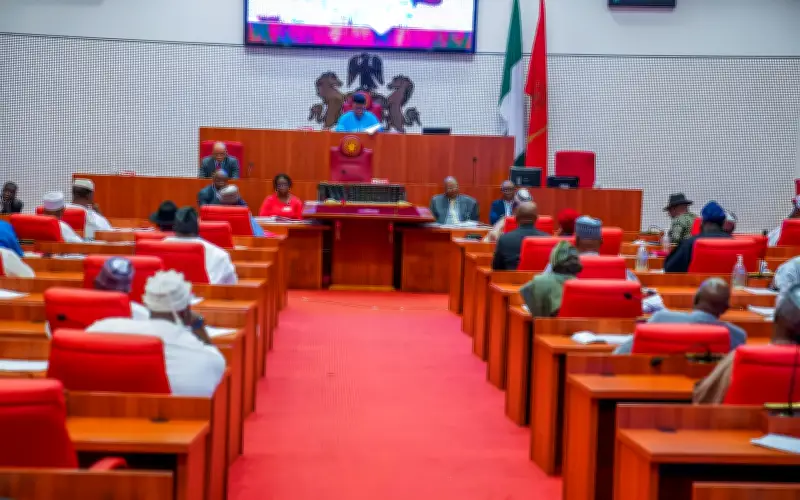
The Nigerian Senate has granted a two-week extension to its ad hoc committee investigating the expenditure of over $30 million on the Safe Schools Programme, a federal security initiative launched in 2014 to protect students and schools from attacks. The upper chamber also broadened the committee's mandate to include an inquiry into education-related funds managed by the Tertiary Education Trust Fund (TETFund), the Nigerian Education Loan Fund (NELFUND), and the Universal Basic Education Commission (UBEC). Additionally, the committee will now examine how education support funds administered by the Federal Ministry of Humanitarian Affairs and Poverty Alleviation and the National Social Investment Programme Agency (NSIPA) were utilized.
Motion for Extension and Expansion
The resolution was adopted after the Senate considered a motion moved by the committee chairman, Orji Kalu, who sought both an expansion of the terms of reference and additional time to conclude the investigation. The 13-member ad hoc committee was originally constituted on 27 November 2025, following a motion by Abdullahi Yahaya (APC, Kebbi North), who raised concerns over rising student kidnappings and attacks on schools and worship centres across the country. At that time, the Senate directed the committee to submit its report within four weeks. However, nearly eight months later, the committee requested more time to complete its assignment.
Reasons for the Extension
Mr Kalu, who represents Abia North Senatorial District, argued that the investigation into the Safe Schools Programme would be incomplete without examining the activities of federal agencies responsible for education funding, student welfare, humanitarian assistance, and social intervention programmes. “The issues surrounding student security, educational infrastructure funding, and social intervention schemes for vulnerable learners across the country are deeply interwoven. Investigating the Safe Schools Initiative without reviewing these complementary bodies will result in fragmented legislative oversight,” Mr Kalu told his colleagues.
He also cited recent primary elections held by political parties as a hindrance, preventing committee members from conducting oversight visits to some locations they were expected to inspect. “There are some areas we haven’t covered. Party nominations have affected us, and it made it impossible for us to go to places we’re supposed to go,” he added. Senate President Godswill Akpabio put the motion to a voice vote, and a majority of senators supported it. Mr Akpabio approved the extension and expanded scope.
Background of the Safe Schools Programme
The Safe Schools Programme was introduced in the wake of the Chibok schoolgirls' abduction in 2014. It was designed to operate at different levels, including state-led efforts and national coordination through agencies such as the Nigeria Security and Civil Defence Corps (NSCDC) and the Safe School Parents Watch Network. The programme aimed to protect students and schools from attacks amid rising insecurity in Nigeria.
Rising Insecurity and Recent Attacks
Nigeria continues to battle persistent insecurity marked by frequent kidnappings, armed attacks, and violent assaults on communities, schools, and places of worship. On 17 November 2025, terrorists armed with sophisticated weapons stormed Government Girls Comprehensive Secondary School in Maga, Kebbi State, abducting 25 schoolgirls from their dormitory, killing the school's vice principal, and injuring a local security guard. The students were freed on 23 November. On 19 November 2025, terrorists attacked Christ Apostolic Church in Eruku, Kwara State, killing three worshippers and abducting 38 others, who were later freed. On 21 November 2025, armed men invaded St. Mary's Catholic Primary and Secondary Schools in Papiri, Niger State, abducting 303 pupils, students, and staff, triggering widespread outrage.
On 15 May, gunmen raided three schools in Oriire Local Government Area, Oyo State, abducting dozens of pupils and three teachers. Two of the three teachers were killed in captivity: Michael Oyedokun was beheaded, and John Olaleye, a pastor, was also killed. The abducted schoolchildren and their teacher were rescued last week after 56 days in captivity in a coordinated operation involving the military and other security agencies.