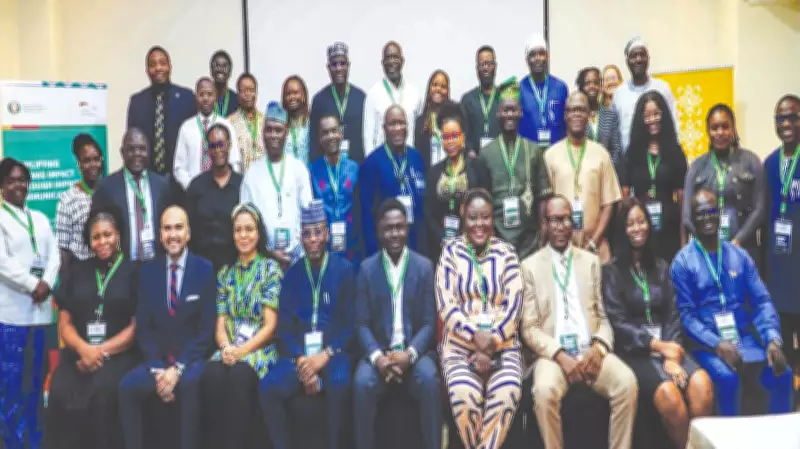
Representatives of Nigerian government institutions, civil society, and regional and international organizations gathered in Lagos recently to chart a path toward a credible information space ahead of the 2027 general elections. The two-day meeting, themed 'Meeting of Nigerian Regulators on Information Integrity in the Context of the Upcoming Elections,' aimed to ensure that social media becomes a free marketplace of ideas where freedom of speech is protected, platforms respect their own rules, and content violating national laws is moderated.
UNESCO Praia Model Policy Preview
On the first day, members of the United Nations Educational, Scientific and Cultural Organization (UNESCO) previewed the forthcoming Practical Guide for Regulatory Bodies implementing the Praia Model Policy for Information Integrity in West Africa and the Sahel. In his speech, Ebuebu noted, 'Nigeria is not merely adopting international frameworks. We are helping to write them. Our experience, our challenges, and our regulatory innovations will inform how this Guide is deployed across the entire region. That is both an honor and a profound responsibility.'
Global Risks of Misinformation
Speaking in a similar vein, Michel Kenmoe, West Africa Advisor for Communication and Information at the UNESCO Regional Office for West Africa, cited the World Economic Forum's Global Risks Reports since 2024, where misinformation and disinformation consistently rank among the top short-term global risks facing humanity. He stated, 'These threats are no longer peripheral digital concerns; they have become systemic risks affecting democratic participation, electoral integrity, social cohesion, peace and security, and public trust.'
INEC Keynote Address
In his keynote address, Lawrence Bayode, Director of Information and Communication Technology (ICT) at the Independent National Electoral Commission (INEC), noted, 'Today, elections are no longer contested only at polling units. They are contested in the digital space — in narratives, in algorithms, in viral content, and increasingly, in AI.' Speaking on the topic 'Safeguarding Electoral Truth in the Digital Age: A Collective Responsibility,' he suggested, 'If we fail to protect the information environment, we risk undermining even the most credible electoral processes. Let this meeting not end as a conversation. Let it become a turning point. A moment where institutions moved from awareness to action; isolation to coordination; intention to implementation. Together, we can ensure that in Nigeria, truth is not drowned by noise, trust is not eroded by manipulation, and democracy is not weakened by misinformation.'
International Support
In his goodwill remarks, Carlos Rojas-Arbulú, Head of Office and Senior Trade Commissioner at the Deputy High Commission of Canada to Nigeria in Lagos, said, 'Canada is pleased to support this meeting to advance a regional Information Integrity Policy Framework, strengthening digital platform governance in ways that promote transparency, accountability, and citizen interests. This work aligns closely with Canada's Africa Strategy, which emphasizes democratic governance, digital resilience, and partnerships that reinforce institutions and expand civic space.'
Lilian Seffer, Head of the Strategic Communication Component at GIZ Nigeria and ECOWAS, stated, 'This discussion is highly relevant for Nigeria and the wider ECOWAS region. Digital platforms increasingly shape political discourse, elections, public health, climate action, and social cohesion. At the same time, responsibilities for responding to these challenges are often spread across different institutions, making coordination and dialogue especially important.' She added that the Guide for Regulators on Information Integrity, building on the UNESCO Guidelines for the Governance of Digital Platforms and the Praia Action Plan on Information Integrity in West Africa and the Sahel, provides a useful basis for discussion. It encourages practical, rights-based, and context-specific approaches to platform governance and information integrity. Saying effective responses to disinformation require cooperation, she added regulators, media, civil society, researchers, and regional institutions all have important roles to play. In conclusion, Seffer assured, 'German cooperation remains committed to supporting regional stakeholders in strengthening strategic communication, institutional coordination, and inclusive dialogue on emerging digital governance challenges.'
Participating Bodies
Participating regulatory bodies included the NBC, National Information Technology Development Agency (NITDA), Nigeria Data Protection Commission (NDPC), INEC, National Human Rights Commission (NHRC), Federal Ministry of Justice, Federal Ministry of Information and National Orientation, Nigerian Police Force Cybercrime Unit, and Advertising Regulatory Council of Nigeria (ARCON). Civil society organizations working to counter election disinformation and promote human rights and responsible social media usage also attended, including co-organizers Media Rights Agenda (MRA) and TechSocietal, as well as Accountability Lab, Centre for Journalism Innovation and Development (CJID), Digi Africa Lab, International Press Centre (IPC), FactMattersNG, Media and Information Literacy and Intercultural Dialogue Foundation (MILID Foundation), Nigerian Guild of Editors, Paradigm Initiative, Socio-Economic Rights and Accountability Project (SERAP), TechHer, Wikimedia Foundation, and Yiaga Africa.
Funding and Support
The event was supported by Global Affairs Canada (GAC) and further funded by GIZ through the Organisational Development (OD)/ISE II Programme and the EU Support to ECOWAS in Peace, Security and Governance (EPSG) Project, co-financed by the European Union (EU) and the German Federal Ministry for Economic Cooperation and Development (BMZ). While the OD/ISE II Programme is implemented by GIZ, the EPSG Project is implemented under a Multi-Partner Contribution Agreement (MPCA) by GIZ, Expertise France (EF), and the Fundación para la Internacionalización de las Administraciones Públicas (FIAP).