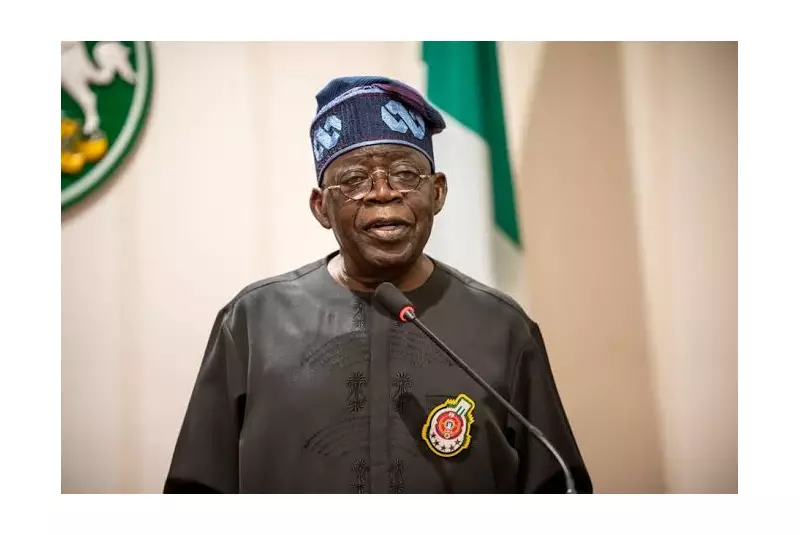
President Bola Tinubu has given his official approval to a stringent new debarment policy designed to hold government contractors accountable for substandard or abandoned projects.
Policy Details and Enforcement
The Director-General of the Bureau of Public Procurement (BPP), Adebowale Adedokun, unveiled the policy in Abuja. He explained that it grants the government the authority to blacklist contractors who fail to deliver quality work, both within Nigeria and on international platforms.
"If a contractor does a bad job, fails to deliver quality work, or abandons a project after collecting government funds, we will recommend the blacklisting of that company," Adedokun stated. He emphasized that the policy is not merely punitive but also aims to reward competence, ensuring that reliable contractors continue to receive government support.
Visible Improvements and Financial Savings
Adedokun pointed to ongoing major infrastructure projects as evidence of rising standards, urging Nigerians to observe the work on corridors like the Lagos-Calabar and Abuja-Kaduna-Kano roads. He attributed the improvement to stricter oversight, where all equipment purchases must meet specified standards.
The BPP boss disclosed significant financial benefits from recent reforms, noting that the agency saved the Federal Government approximately ₦1.1 trillion in just one year. This was achieved by blocking inflated contract sums through a dedicated Price Intelligence Unit that benchmarks costs.
"If a hospital was proposed at ₦10 billion and benchmarking shows it should cost ₦9 billion, that ₦1 billion saved can now be used for other projects," he illustrated, adding that such savings have allowed agencies to procure more with their budgets.
New Focus on Local Content and Inclusion
In line with President Tinubu's Renewed Hope Agenda, Adedokun announced that the BPP will intensify the enforcement of local content policies. This includes introducing community-based procurement and special initiatives aimed at empowering women, youths, and vulnerable groups.
"We are going to enforce the Nigerian First policy... And with all of this, the women affirmative procurement—these are new things the President wants to unleash," he said, explaining that these groups will have specific projects allocated to them.
Adedokun expressed confidence that these comprehensive reforms in public procurement will curb corruption, enhance service delivery, and contribute to poverty reduction. "Let's put Nigerian people first, and with that, we can achieve the dream of a Nigeria that works for everyone," he concluded.