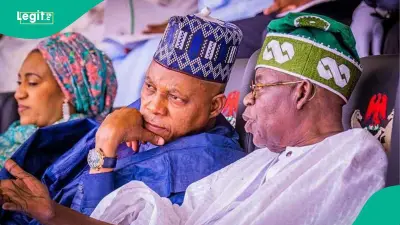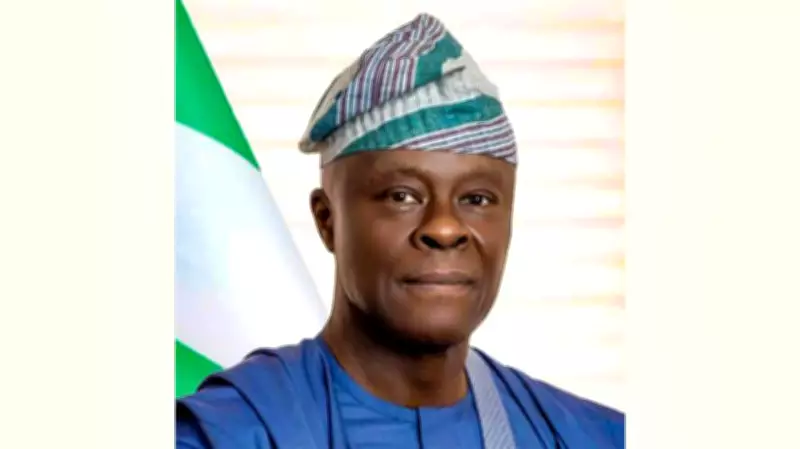
The removal of Wale Edun as Nigeria's Minister of Finance is not an isolated administrative adjustment. It is a revealing moment that lays bare a deeper and more troubling question about governance under President Tinubu: Is there still room for truth within the corridors of power?
Sequence of Events Leading to Edun's Exit
The events leading to Edun's exit are grounded in verifiable public statements, institutional engagements, and observable policy shifts. In September 2025, while addressing stakeholders of the Buhari Organisation at the Presidential Villa, President Tinubu made a bold declaration: 'Today I can stand here before you to brag, Nigeria is not borrowing. We have met our revenue target for the year and we met it in August.' This was a definitive statement of fiscal position, projecting strength and sufficiency.
Less than three months later, at the House of Representatives in December 2025, Wale Edun presented a starkly different account. He stated that the Federal Government was likely to miss its 2025 revenue target by approximately N30 trillion and had already borrowed about N14.1 trillion to bridge fiscal gaps. This contradiction between political optimism and fiscal reality was neither subtle nor reconcilable.
Collision Between Political Narrative and Fiscal Reality
Within weeks of Edun's disclosure, key components of his authority, particularly in revenue generation and fund management, were reassigned to the Minister of State. No formal explanation was offered to the Nigerian public. The conclusion was immediate: Edun had fallen out of favour. His removal merely formalised what had already become evident.
This raises a question of grave national importance: what happens when a Finance Minister is effectively penalised for telling the truth? Wale Edun's record does not suggest incompetence. He was central to some of the most consequential and politically costly economic reforms, including navigating the aftermath of fuel subsidy removal, advancing foreign exchange unification, and improving Nigeria's debt service-to-revenue ratio from 97% in 2023 to approximately 68% by mid-2024.
Historical Parallels and Governance Concerns
The political theorist Hannah Arendt warned that the erosion of the boundary between truth and falsehood is a defining feature of declining political systems. Similarly, George Orwell noted that in times of pervasive deception, telling the truth assumes a subversive character. Examples from Robert Mugabe's Zimbabwe and Nicolas Maduro's Venezuela show that when leaders prefer praise to truth, policy failure becomes inevitable.
If a President publicly declares that the nation is not borrowing, while the Finance Minister confirms substantial borrowing and a massive revenue shortfall, the issue transcends miscommunication. It becomes a question of credibility. The silence that followed, with no presidential aide offering a coherent reconciliation, signals either indifference or discomfort.
Implications for Economic Management
When a Finance Minister is sidelined after presenting inconvenient data, a message is sent across government: alignment is valued above accuracy. Civil servants become cautious, advisers become guarded, and technocrats learn that survival depends on being agreeable. Such a culture is dangerous. Economic policy cannot be sustained on optimism alone. Markets respond to credibility, and citizens bear the cost of miscalculation.
The Lagos metaphor of a 'one chance molue' is unsettlingly relevant: the vehicle appears functional, but beneath the surface lies deception. Nigeria must not become such a vehicle. Leadership is strengthened by correction, not diminished by contradiction. A President who encourages ministers to present unvarnished realities demonstrates confidence, not weakness.
Wale Edun's exit is a signal that the space for honest engagement within government may be narrowing. For a nation grappling with debt pressures and economic uncertainty, the margin for error is thin. To navigate such terrain requires accuracy, not applause; frankness, not flattery. If those entrusted with managing the economy cannot speak freely, policy becomes compromised, and consequences are inevitable.
The path forward demands a recalibration where truth is restored to its rightful place at the centre of governance. Without it, even well-intentioned reforms will falter. When truth becomes unwelcome, error is assured, and when error persists unchecked, decline is a certainty.