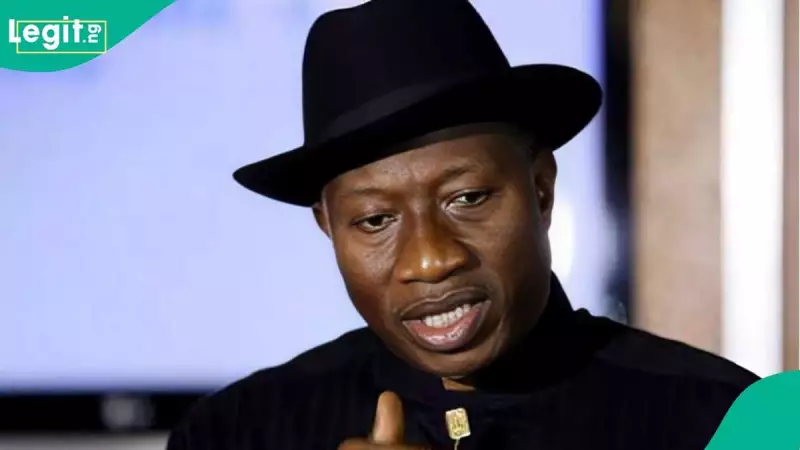
In a significant revelation, the former acting chairman of Nigeria's Economic and Financial Crimes Commission (EFCC), Ibrahim Magu, has detailed why ex-President Goodluck Jonathan was never summoned for interrogation concerning the controversial $2.1 billion arms procurement scandal.
The Legal Limitation That Shielded Jonathan
According to disclosures in a newly launched book, From Soldier to Statesman: The Legacy of Muhammad Buhari by Dr. Charles Omole, Magu stated that investigators hit a critical legal wall. Official records and memos scrutinized by the EFCC failed to establish a direct authorization formally approving the disbursed funds for campaign purposes.
This absence of a paper trail explicitly tying the money to electoral activities severely limited the commission's scope for summoning the former president. The book, launched at the Presidential Villa in Abuja, examines pivotal moments of security spending and political power during the Jonathan administration.
Internal PDP Crisis and Dasuki's Rising Power
The situation fueled major internal strife within the then-ruling Peoples Democratic Party (PDP). Senior party figures found themselves entangled in EFCC investigations over alleged diversion of the arms funds. The scandal also dramatically altered power dynamics within the government's top echelons.
The book notes that former National Security Adviser (NSA), Colonel Sambo Dasuki (rtd), became exceptionally powerful as authority for procurement and other sensitive duties shifted to his office. This accumulation of influence led some observers to perceive Dasuki as operating almost as a "co-president" alongside Jonathan, especially amid reported disagreements with the then Defence Minister, Aliyu Gusau.
The fallout was stark within the party leadership. Former PDP national chairman, Adamu Mu'azu, was reportedly wanted for questioning but had gone into hiding. Similarly, former party spokesman, Olisa Metuh, resisted refunding N400 million linked to the deal, declaring he would rather starve. Metuh was subsequently arrested.
Expanded Probes and Legal Hurdles
Following recommendations by the Military Procurement Audit Committee, former President Muhammadu Buhari directed the EFCC to extend its investigation. The probe widened to include 17 serving and retired military officers, many from the Nigerian Air Force, alongside several companies flagged for questionable contracts linked to the Office of the NSA and the Air Force.
Magu, through the author, expressed frustration over how corruption cases were often stalled by formidable legal defenses. He lamented that politically exposed persons who allegedly steal public funds often reserve a significant portion specifically for hiring top legal representation, exploiting any gaps in the investigation.
While many suspects were questioned and released, the sheer scale of the probe underscored the depth of concerns regarding defence spending during that era. In a related development, the EFCC has also recently summoned former Attorney-General of the Federation, Abubakar Malami, for an interview concerning separate matters.