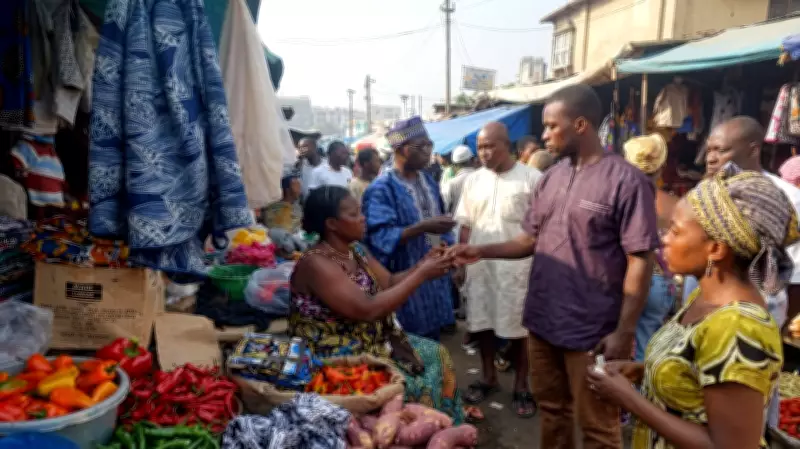
All levels of government in Nigeria should be both concerned and ashamed of the high poverty rate and deteriorating living conditions among citizens. Sadly, this damning rating has persisted over the years, despite the enormous resources available for exploitation to benefit the majority. The lack of a positive turnaround points to half-hearted measures and policies driven by an absence of political will to serve the people sincerely. President Bola Tinubu and the 36 state governors must, amidst current efforts to uplift the country, demonstrate the will to substantially reduce poverty and want.
World Bank Sounds Alarm on Child Development
The World Bank has recently expressed concern over worsening living conditions for Nigerian children. In its April 2026 Nigeria Development Update titled 'Nigeria's Tomorrow Must Start Today: The Case for Early Childhood Development', the organisation laments a deep early childhood development crisis, warning that weak outcomes in health, nutrition, and learning are undermining long-term productivity and economic growth.
Financial Insecurity Hits 94% of Nigerians
Last month, Piggyvest, described as the first online savings and investment app in West Africa, released a report stating that only six per cent of Nigerians feel financially secure. Twenty-eight per cent reported earning no income at all, while 30 per cent earn less than N100,000 per month in 2025.
Government Policies to Blame
The cause of the early childhood development crisis, the 94 per cent financially insecure Nigerians, and the 28 per cent zero-earning citizens is firmly attributable to government policies, both current and past. Nigerians are increasingly impoverished because successive governments have failed to perform their constitutional duties. Section 14(2)(b) of the Constitution states unequivocally that 'the security and welfare of the people shall be the primary purpose of government'.
Furthermore, Section 17 charges the government with establishing a social order that ensures welfare and is founded on Freedom, Equality, and Justice. Subsection 3(a) requires that all citizens have opportunity for securing adequate means of livelihood and suitable employment. Subsection 3(f) urges protection of children, young persons, and the aged against exploitation and neglect. These responsibilities fall on the government as formulator and implementer of state policy. The fact that Nigerians suffer multidimensional poverty globally defined cannot but be blamed on the warped way the government runs the country and applies its vast resources.
Global Standards for Government Responsibility
Globally, as the World Economic Forum highlights, it is the government's responsibility first to protect the country and its people from internal lawlessness and external aggression. Second, the government provides goods and services that citizens alone cannot provide. Third, it must invest in human capital to build valuable and productive manpower, and finance capital goods such as large-cost-intensive infrastructure including power supply, rail and road networks.
To ensure governments serve the people's interests, the United Nations established the 17 Sustainable Development Goals (SDGs) in 2015, which 193 member countries are to meet by 2030. The first goal is to end poverty in all its forms everywhere. The second is Zero Hunger, and the third is Good Health and Wellbeing. Other SDGs include Quality Education, Gender Equality, Decent Work and Economic Growth, and Peace, Justice and Strong Institutions. These goals are attainable only to the extent of political will and moral commitment of each government. Sadly, despite available resources, successive Nigerian governments have failed miserably.
Nigeria's Poor Global Rankings
The Sustainable Development Report 2025 ranks Nigeria 147th out of 193 UN member countries with a score of 54.68 per cent, behind Algeria (79th, 70.09 per cent), Egypt (91st, 69.09 per cent), Ghana (120th, 63.13 per cent), Mali (141st, 56.33 per cent), and Benin Republic (134th, 57.77 per cent).
The 2025 Global Hunger Index (GHI) ranks Nigeria 115th out of 123 countries surveyed with a score of 32.8. The GHI score is calculated on a 100-point scale where 0 is best (no hunger) and 100 is worst. For Nigeria, 19.9 per cent of the population is undernourished, 33.8 per cent of children under five are stunted, 11.6 per cent are wasted, and 10.5 per cent die before their fifth birthday. With a score of 32.8, Nigeria's hunger level is classified as serious.
Failure to Meet Abuja Declaration
On April 27, 2001, African Union governments adopted the Abuja Declaration, setting a target of allocating at least 15 per cent of national budgets to improve health care. Nigeria, which hosted the meeting, has not met this target in the past decade. The 2025 budgetary allocation to health was N2.56 trillion, or 5.15 per cent of the total federal budget, lower than the previous year's 5.61 per cent and far below the Abuja Declaration requirement.
Corruption and Misplaced Priorities
Nigerian governments must end the injudicious use of public funds that contributes to impoverishment. There is a crucial need to embark on projects that serve the greatest number of people, such as rail transport, the cheapest and most effective means of transportation worldwide. Misplaced priorities constitute a betrayal of constitutional obligations.
Official corruption is rife in the public sector and significantly drains development resources. According to the World Bank, corruption erodes trust, weakens democracy, hampers economic development, and exacerbates inequality, poverty, social division, and environmental crisis. It is hardly surprising that more Nigerians have fallen below the poverty line, from 40 per cent in 2019 to an estimated 62 per cent in 2026, according to Finance in Africa.
Leadership, to adapt from former U.S. President Franklin D. Roosevelt, is a place of moral leadership. Therefore, it is highly immoral for any government to, by acts of omission or commission, be the agent of debasement of lofty values, social degeneracy, and national underdevelopment. This is beyond a betrayal of public trust; it is perfidy.