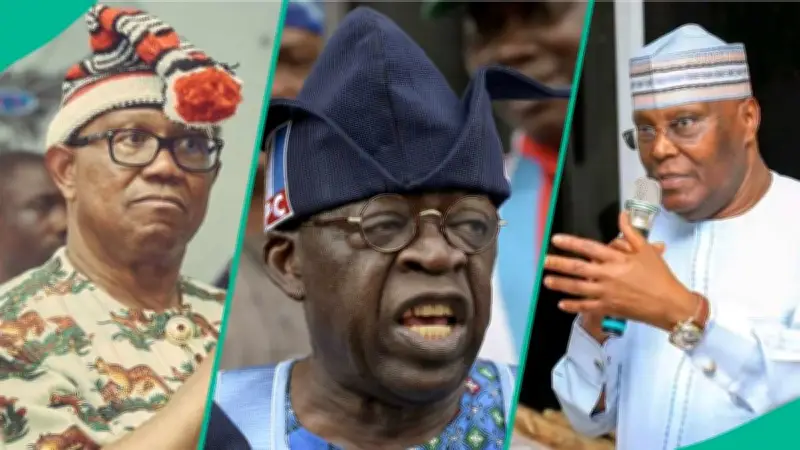
The opposition's plan to present a single presidential candidate against President Bola Tinubu in the 2027 election has fractured, as multiple parties that previously pledged unity have now fielded their own candidates. According to a report by The Punch on July 27, 2026, the Ibadan summit communiqué, signed in April 2027 by prominent opposition figures, has largely been ignored as parties pursue separate tickets.
The summit, held in Ibadan, Oyo State, brought together leaders such as former Vice-President Atiku Abubakar, Oyo State Governor Seyi Makinde, Peter Obi, former Kano Governor Rabiu Kwankwaso, and former ministers Rotimi Amaechi and Rauf Aregbesola. Over ten parties signed the communiqué, including the Peoples Democratic Party (PDP), the Peoples Redemption Party (PRP), the New Nigeria Peoples Party (NNPP), and the Action Democratic Party (ADP).
Parties Field Candidates Despite Earlier Unity Pledge
By the Independent National Electoral Commission's (INEC) May 30 deadline for party primaries, key opposition figures had secured tickets on separate platforms. Atiku and Amaechi emerged as the presidential and vice-presidential candidates of the African Democratic Congress (ADC). Makinde became the Allied People's Movement (APM) presidential candidate, while Obi and Kwankwaso flew the flag of the New Democratic Congress (NDC).
This fragmentation highlights the difficulty of sustaining a broad coalition against an incumbent president, even as the opposition seeks to unseat Tinubu, who is expected to seek re-election on the All Progressives Congress (APC) ticket.
PDP Factions Divided Over Consensus Candidate
The PDP, Nigeria's main opposition party, is itself split. The Tanimu Turaki-led faction remains open to a joint candidacy. Its National Publicity Secretary, Ini Ememobong, stated: "The issue is still under review... No single opposition party can afford to operate in isolation if the goal is to present a formidable challenge to the incumbent."
However, the rival Abdulrahman Mohammed-led faction, backed by Federal Capital Territory Minister Nyesom Wike, outright rejects the alliance. Spokesman Jungudo Mohammed declared: "We are not in any alliance with anybody. We have our own presidential candidate, governorship candidates, and other candidates."
Atiku's camp attempted a middle ground. His spokesperson, Phrank Shaibu, noted that while parties have complied with the Electoral Act by fielding candidates, "discussions on areas of cooperation and collaboration... will continue within the framework of the law."
Other Opposition Parties Rule Out Joint Ticket
NDC National Leader Seriake Dickson, whose party unveiled the Obi-Kwankwaso ticket, said the party was "not ready to discuss anything on the opposition fielding a single presidential candidate for the 2027 election for now." Labour Party spokesman Ken Asogwa confirmed his party was "not part of the Ibadan summit arrangement," though he left the door open to future coalition talks.
Accord party and a faction of the ADC led by Nafiu Bala Gombe also distanced themselves from the summit's resolutions. PRP National Chairman Hakeem Baba-Ahmed, however, said opposition parties remained open to alliances, emphasizing that removing the Tinubu administration is the primary goal, whether achieved individually or collectively.
APC Dismisses Opposition Strategy
The ruling APC has brushed aside the opposition's disarray. Its Director of Publicity, Bala Ibrahim, said: "We are not worried because we know it is an issue that is dead on arrival. Since we were able to defeat them individually, defeating them collectively will not be a problem." Ibrahim's confidence reflects the APC's dominance and the opposition's inability to unite effectively.
In related analysis, artificial intelligence tool ChatGPT reportedly predicted that the APC is likely to win the 2027 presidential election, citing low voter turnout and the Tinubu administration's efforts to stabilize the economy as factors. The prediction, while not definitive, underscores the uphill battle facing opposition parties.