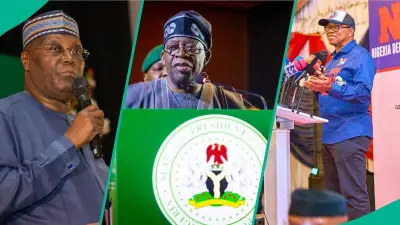
As Nigeria approaches the 2027 presidential election, candidates have emerged, but the process is fraught with challenges. While the All Progressives Congress (APC) remains stable due to incumbency, major opposition parties like the Peoples Democratic Party (PDP) and the African Democratic Congress (ADC) are plagued by disputes and court cases over parallel primaries and duplicate candidate lists. The Social Democratic Party (SDP) is also affected. The Independent National Electoral Commission (INEC) must determine which parties will appear on the ballot within a set timeframe, but after 27 years of the Fourth Republic, parties are reluctant to hold free and fair primaries. Godfathers prefer to anoint candidates, and governors have lost their role as checks on the federal government. The system is trending toward a single administrator supported by a weak legislature. INEC's efforts to take sides and over-regulate the political space add to the uncertainty.
Contentious Primaries
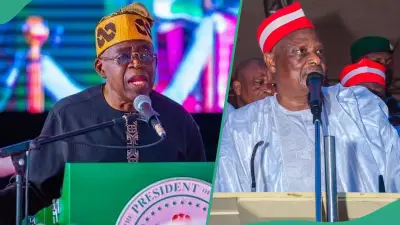
The APC effortlessly elected President Bola Tinubu as their flagbearer with 10,999,162 votes, a victory that was not surprising given his incumbency. However, the party treats this as a significant achievement, believing these numbers are already in the bank for the real election. The worry is that these numbers are not verifiable. APC members boast that the party alone could elect the president in 2027, surpassing the 8.7 million votes Tinubu polled in 2023. The opposition suspects the numbers are inflated and may be used to justify a future landslide declaration that is not earned. INEC is responsible for making primaries transparent, as party membership registers are now with the electoral body to ensure internal democracy. However, the primaries became a contest for governors to post exaggerated numbers for President Tinubu. The opposition fears that the APC may carry this untamed zeal into the general elections.
There was also the drama of Stanley Osifo, who challenged President Tinubu. Many observers consider this a needless stunt and a waste of money, as Osifo reportedly invested around N100 million to buy the Expression of Interest and Nomination forms. While it is his democratic right to contest, he should be investigated by financial crime agencies for tax compliance and the source of his wealth. In these hard times, a presidential contest should not be reduced to costly jokes.
In the ADC, former Vice President Atiku Abubakar won the primary, but other contenders, Rotimi Amaechi and Mohammed Hayatu-Deen, cried foul and alleged irregularities. The ADC leadership proposed resolving the flagbearer challenge by consensus, but the other aspirants insisted on a direct primary. After results from about 13 states were tallied, Amaechi and Hayatu-Deen claimed the process was rigged. The ADC announced that Atiku had won by a huge margin, and reconciliations are ongoing. Atiku must embrace reconciliation, as his inability to manage Nyesom Wike's political emotions in 2023 was costly for the PDP. The PDP is now a caricature of its former self due to miscalculations in its 2023 presidential primary. The ADC must learn from this and reconcile well.
Despite the fractious opposition, the ADC appears set to regain balance after losing members to the Nigeria Democratic Congress (NDC). With Atiku on the ticket, the party may begin to chart a course across Nigeria's divided political landscape. Peter Obi is the sole candidate of the NDC. Obi is reportedly shy of contested primaries that require mobilizing delegates and paying stipends, which he calls inducement. He left the ADC because his chances of emerging as flagbearer were bleak. At the NDC, he was crowned effortlessly due to his huge presence and mass appeal. Obi came with Rabiu Musa Kwankwaso, a fellow former governor and crowd puller. Other formidable presidential candidates include Donald Duke (Peoples Redemption Party), Governor Seyi Makinde (Allied Peoples Movement), Adewole Adebayo (Social Democratic Party), and Omoyele Sowore (African Action Congress). Former President Goodluck Jonathan is also being pressured to join a faction of the disfigured PDP.
Window of Opportunity
The lineup for 2027 is not final, as other parties are yet to finalize their details, and court cases are ongoing. Depending on how they are treated, the lineup could see further adjustments. Among ongoing electoral litigation, a case instituted by the Youth Party (YP) and the SDP challenges the legality of INEC's regulations and timetable. Justice Umar of the Federal High Court, Abuja, ordered that INEC went beyond its powers on timelines for submission of candidates' lists and parties' membership registers. This could be a game changer. The general impression is that some INEC regulations were designed to favor the ruling party and are contrary to the Electoral Act 2026. Justice Umar ordered INEC to adjust its timetable in line with the Act. What INEC does with the order is crucial. Political office seekers have responded swiftly, especially those who felt schemed out in the APC primaries. They are trooping to other parties. Former Minister of Digital Economy and Communications, Isa Pantami, grabbed the governorship ticket of the PDP in Gombe State. Senator Ovie Omo-Agege of Delta Central resigned from the APC and got a waiver to fly the NDC ticket for the Senate in 2027. The season for transfers has just begun if the window opens till September.
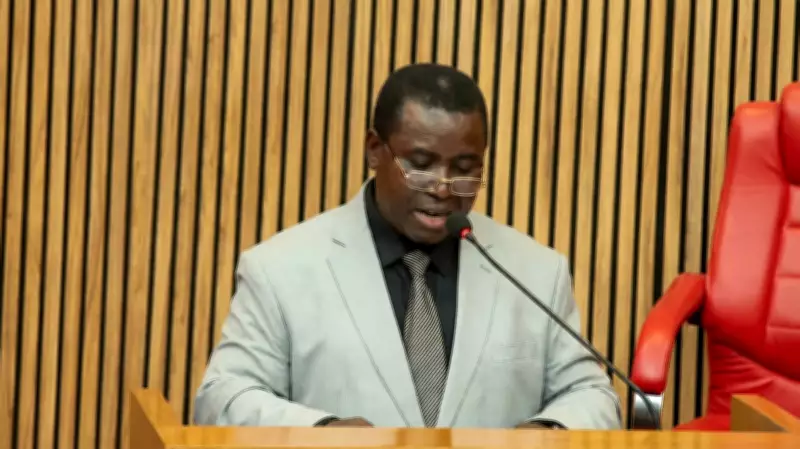
However, for INEC, the order might disrupt arrangements and fixtures for 2027. A reordered timetable could affect the entire election year. INEC is in a better position to know the implications. Feelers indicate that the Commission has indicated interest to appeal the judgment and is considering applying for a stay pending the appeal. The Movement for Credible Elections (MCE), a coalition of civil societies, is worried that the integrity of the 2027 elections might be jeopardized given the manner INEC has appealed the judgment. MCE said it is equally concerned that INEC seeks a stay of the judgment pending the determination of the appeal. In a statement signed by Dr. Usman Bugaje (chair), Dr. Obiageli Ezekwesili (co-chair), Dr. Hadjia Bilkisu Magoro (deputy chair), and Wale Okunniyi (Head of Secretariat), MCE counseled that INEC does not require early submission of candidates' names since it uses party names and logos in ballot papers. The Movement said: “there is therefore no operational basis for compelling political parties to conclude primaries in May or submit candidates’ lists months earlier than the law requires.” MCE suggested that what INEC got for itself is an unnecessarily early timeline that imposes avoidable pressure on political parties, undermines internal democracy, and increases the risk of procedural errors that will later fuel litigation.
Equally troubling for MCE is the perception that INEC might be construed as descending into the arena instead of staying neutral. “Public trust is the most valuable asset of any electoral umpire. When INEC becomes a litigant against political parties over a timetable issue, it risks being perceived as an interested party rather than a neutral regulator. Such perceptions—even if unintended—can weaken trust and confidence among political actors and voters ahead of the 2027 elections.” Drawing from data on an already dangerously low public confidence in INEC, MCE illustrated with recent data by Afrobarometer’s survey of just 23 percent of Nigerians expressing trust in INEC. MCE said: “This is an electoral emergency. At a time when the country is already anxious about preparations for the 2027 elections, INEC should be taking every possible step to rebuild trust, not engaging in actions that risk pushing trust in the institution toward complete collapse. An appeal on a matter where the law is already clear sends the wrong signals to a public whose faith in the electoral process is already dangerously low.” Not done, MCE further counseled that INEC’s mandate is to enforce the law, not to contest it. INEC is required to implement the law impartially. Appealing a judgment that merely affirms and clarifies the Electoral Act may be interpreted as the Commission taking sides. This perception alone can damage the legitimacy of the electoral process, the Coalition stated.
The election year 2027 is looking dicey. There is induced instability in the system, with the intention to weaken popular participation. If there is no popular participation, it is no longer democracy. This is the time to seize the window of opportunity to intervene. And it is the responsibility of the judiciary to stabilize the polity and avert political logjam.