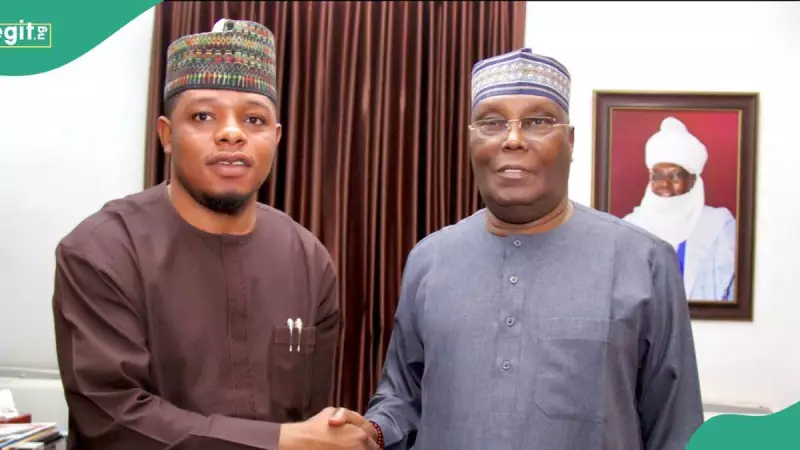
In a significant political development, former Vice President Atiku Abubakar hosted a prominent chieftain of the ruling All Progressives Congress (APC), Honourable Obidike Chukwuebuka, at his Abuja residence on Friday, December 5. The meeting is widely seen as part of intensifying maneuvers to build a formidable opposition coalition ahead of the 2027 general elections.
Building Bridges Across Party Lines
The courtesy visit by the youthful APC figure, who previously served as Director General of the Conference of APC Support Groups, adds a new layer to Atiku's recent political activities. Following the meeting, Atiku took to his official social media platforms to make a pointed declaration about his political strategy. He stated that his doors remain open to young Nigerians from all political blocs, emphasizing that the energy and vision of the youth are central to the nation's progress.
This engagement is particularly notable as it occurred less than two weeks after Atiku formally sealed his defection to the African Democratic Congress (ADC). He had publicly confirmed this move in Adamawa State on November 24, marking a decisive end to his long, albeit turbulent, association with the Peoples Democratic Party (PDP). His media aide, Abdulrasheed Shehu, characterized the switch as a necessary and bold political realignment.
The ADC Coalition Strategy Takes Shape
Political analysts interpret Atiku's alignment with the ADC as the cornerstone of an emerging grand coalition designed to mount a serious challenge to President Bola Ahmed Tinubu in the 2027 presidential race. The ADC is reportedly attracting other major political figures, including Peter Obi, Rotimi Amaechi, David Mark, and Nasir El-Rufai. This broad mix of interests and regional influence is believed to position the party as a viable platform capable of drawing support from a wide spectrum of the electorate.
Atiku's departure from the PDP was attributed to what he described as irreconcilable differences and a departure from the party's core values. The 78-year-old politician, who served as Vice President from 1999 to 2007, has a history of political mobility. His career includes a presidential run on the ticket of the defunct Action Congress in 2007, a return to the PDP, a stint with the APC in 2014, and subsequent presidential bids under the PDP banner in 2019 and 2023.
Contrasting Views on 2027 Prospects
While Atiku's activities suggest a confident push for the presidency, not all influential voices share this optimism. In a recent development, the Oba of Lagos, Oba Rilwan Akiolu, publicly dismissed the possibility of Atiku ever becoming Nigeria's president. Speaking during events marking his 82nd birthday and 22nd year on the throne at his Iga Iduganran Palace, the monarch stated that destiny would not favour Atiku's ambition. He described President Tinubu's rise to power as divinely ordained and called for national support for the current administration's vision.
This stark contrast in perspectives underscores the high-stakes nature of the early politicking for the 2027 elections. Atiku's open-door policy towards youth across party lines, exemplified by the meeting with APC's Obidike Chukwuebuka, is clearly a strategic attempt to build a fresh, cross-party consensus and redefine his political base ahead of the next electoral contest.