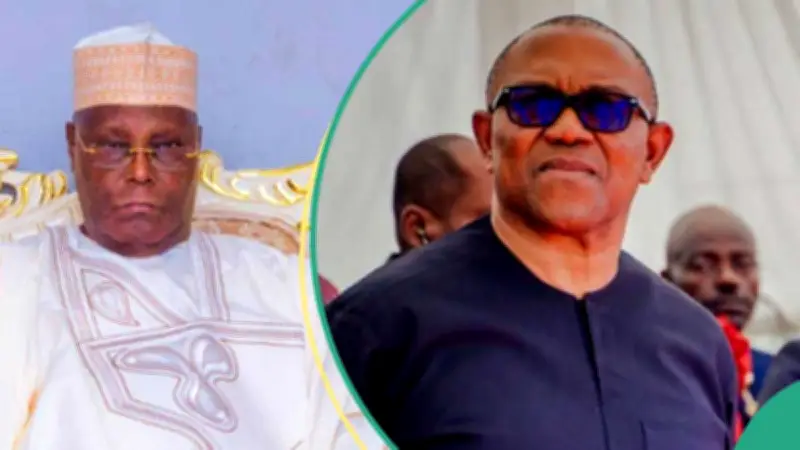
The political camps of former Vice President Atiku Abubakar and former Anambra State governor Peter Obi have separately rejected calls by the political pressure group G-100 for the opposition to field one presidential candidate against President Bola Tinubu in the 2027 general elections. As reported by The Punch on Sunday, August 23, both camps acknowledge the importance of opposition cooperation, but neither appears willing to step aside for the other as talks over a coalition presidential ticket gather momentum. The Cable also reported the development.
G-100's Proposal for a United Opposition Front
G-100, convened by Salihu Lukman, a former director-general of the Progressive Governors Forum, had argued that a united opposition front is the most realistic way to democratically dislodge the ruling All Progressives Congress (APC). The group proposed an August 31 summit to advance that goal. The summit was intended to bring opposition figures together to agree on a single candidate who could challenge President Tinubu in the upcoming election.
The pressure group's stance reflects a broader debate within the Nigerian opposition about how best to unseat the APC, which has held power since 2015. Proponents of a unified ticket argue that splitting the opposition vote would hand the ruling party an advantage, while detractors contend that a single candidate is not the only viable strategy.
Atiku's Camp Says Principal Has Moved Past Coalition Talks
Reacting to G-100's call, Phrank Shaibu, Atiku's senior special assistant on public communication, told the press that his principal had already moved past the stage of opposition summits. He stated that Atiku was focused on presenting concrete policy proposals, including his position on petroleum subsidy reform, ahead of the 2027 elections.
Shaibu said: "We have moved beyond this conversation. Atiku has brought to the table the policy alternatives, including what he would do with petroleum subsidy if elected. His policies are about the people, and they are not hidden. Come January 2027, Nigerians will make their choice. This is where we are today."
Furthermore, Shaibu opined that Atiku remains the best-prepared opposition figure to lead the country and urged voters to judge candidates on the strength of the African Democratic Congress (ADC) presidential flagbearer's propositions. Atiku has been a perennial presidential contender, having run in multiple elections, and his camp's insistence on policy over coalition talks signals a strategic shift in his approach.
NDC Backs Peter Obi, Rejects Single-Candidate Strategy
Obi, who ran on the Labour Party (LP) platform in the 2023 presidential election, has since been ratified as the Nigeria Democratic Congress (NDC's) presidential candidate for 2027. His party welcomed G-100's initiative but disputed the idea that a lone opposition candidate is a prerequisite for defeating an incumbent.
NDC national spokesperson Osa Director pointed to the 2015 election as evidence that a coalition need not swallow all opposition parties to succeed. "Under a multi-party democracy, it is possible for one of the parties to defeat a sitting president. It happened in 2015 and it was only fragments of the All Progressive Grand Alliance and the Peoples Democratic Party that teamed up to form an alliance with the All Progressives Congress and they were able to defeat President Goodluck Jonathan," he said.
Director also made the NDC's preferred candidate for any eventual coalition ticket clear: "We have made the point clear that we should choose the best candidate in the opposition and we in the NDC believe that Peter Obi is the best if he is allowed to lead the coalition. This is our position."
Core Challenge Facing the Opposition Ahead of 2027
Legit.ng reports that the competing stances expose the core challenge facing the opposition ahead of 2027. Even where parties agree on the need to cooperate, settling on who leads a joint ticket involves difficult trade-offs on structure, platform and the sharing of political interests. The inability of the two leading opposition figures to align on a single candidate could fragment the opposition vote, potentially benefiting the incumbent APC.
Efforts to reach Lukman for an update on the August 31 summit were unsuccessful, as he did not answer calls or reply to messages sent via WhatsApp. The summit's status remains uncertain, leaving the opposition's plans for 2027 in a state of flux.
Earlier, Legit.ng reported that ChatGPT predicted that the ruling APC would likely win Nigeria's 2027 presidential election, using the Four Horsemen framework. It cited the current opposition coalition but said the ruling APC has the edge, citing possible low voter turnout and the Tinubu administration's efforts to stabilise the economy. The competing stances of the Atiku and Obi camps, as detailed above, will likely shape the opposition's fortunes in the upcoming election cycle.