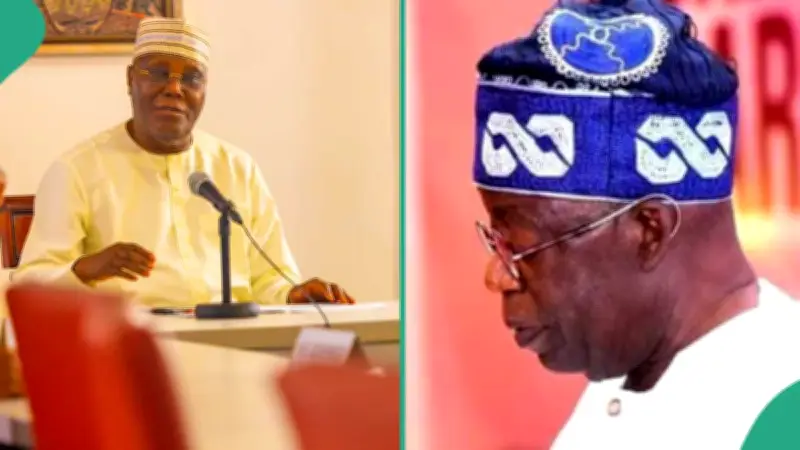
The camp of former Vice President Atiku Abubakar has weighed in on the debate over President Bola Tinubu's eligibility to contest the 2027 presidential election, with a chieftain of the African Democratic Congress (ADC), Kenneth Okonkwo, asserting that Tinubu does not meet constitutional requirements due to incomplete educational credentials submitted to the Independent National Electoral Commission (INEC).
INEC Publishes Candidate Credentials
INEC recently published the credentials of all candidates vying for the 2027 presidency, revealing that Tinubu submitted only his university certificate, with no primary or secondary school certificates included. This omission has reignited public scrutiny of the president's educational background, a topic that has been contentious since before his 2023 victory.
Okonkwo argued that Nigerian law requires candidates to demonstrate a complete educational history, and submitting only a university certificate is insufficient. He maintains that the absence of primary and secondary certificates disqualifies Tinubu from holding the office of president, according to a report by Legit.ng.
Okonkwo's Argument Against Tinubu's Eligibility
Speaking after the INEC publication, Okonkwo emphasized that the constitutional requirement for presidential candidates includes evidence of basic education, and Tinubu's submission falls short. He stated, "Submitting a university certificate alone is not enough under Nigerian law; candidates must show a complete educational trajectory, and the missing certificates are a clear disqualifier."
This fresh controversy comes as Tinubu prepares for a potential re-election bid, with his camp yet to officially respond to the latest allegations. The issue of Tinubu's academic records has been a recurring theme in Nigerian politics, with opponents raising similar concerns during the 2023 elections, though courts ultimately ruled in his favor.
Renewed Scrutiny of Tinubu's Educational Records
The INEC publication has given critics renewed grounds to question Tinubu's eligibility. Legal experts note that while previous challenges were dismissed, the new evidence of incomplete documentation could spark fresh legal battles. Atiku's camp, which has been vocal in opposing Tinubu's presidency, sees this as a significant development.
Legit.ng reports that Okonkwo's statements have added to the political tension, with supporters of Tinubu dismissing the claims as politically motivated. However, the ADC chieftain insists that the law is clear, and the burden of proof lies with the president to provide all necessary documents.
Impact on 2027 Election Preparations
As the 2027 election cycle gains momentum, this dispute could shape the political landscape. Analysts suggest that if Tinubu's eligibility is challenged in court, it could distract from his administration's governance and provide ammunition for opposition parties. The controversy also highlights the importance of transparency in candidate vetting processes.
Atiku's camp, through Okonkwo, has called on INEC to enforce strict compliance with educational requirements, urging the electoral body to disqualify candidates who fail to meet the standards. This position aligns with broader calls for electoral reforms in Nigeria.
Meanwhile, Tinubu's allies have defended the president, arguing that his university certificate is sufficient and that the controversy is a distraction orchestrated by political rivals. They point to his academic achievements at Chicago State University, which were verified during the 2023 election disputes.
Historical Context and Previous Challenges
The debate over Tinubu's credentials is not new. In 2023, opposition parties, including the Peoples Democratic Party (PDP) and the Labour Party, raised similar issues, but the courts upheld Tinubu's eligibility. However, the current INEC publication has brought the matter back into the spotlight, with Okonkwo insisting that the law must be applied strictly.
As Nigeria prepares for the next presidential election, the question of Tinubu's eligibility remains a pivotal issue. For now, the ball is in the court of INEC and the judiciary to determine whether the president can contest, as the nation watches closely.