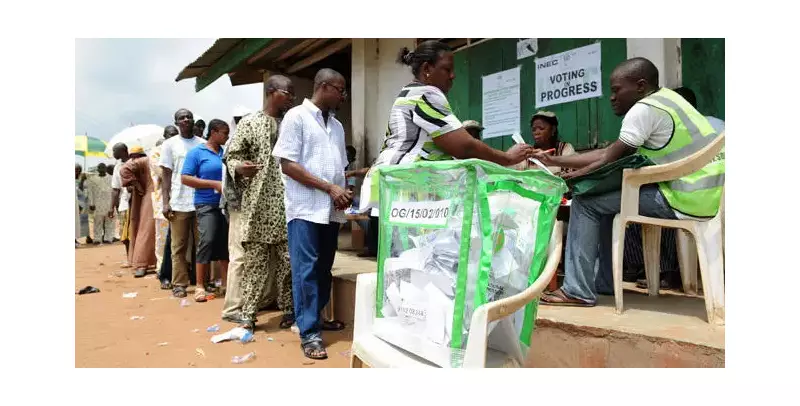
As Nigeria looks towards the 2027 general elections, a prominent cleric and civil society leader has issued a stark warning, stating that the nation's democracy remains fragile and its electoral processes deeply flawed. Reverend Father George Ehusani, the Executive Director of the Lux Terra Leadership Foundation, delivered a powerful keynote address calling for urgent and comprehensive reforms to salvage the country's leadership recruitment system.
A Nation at a Critical Juncture
Speaking at the Nigeria Civil Society Situation Room Stakeholders’ Forum on Elections in Abuja on December 11, 2025, Ehusani painted a grim picture of the current state of affairs. He lamented that 26 years after the return to democratic rule, the country appears more divided, its economy more tenuous, and public trust in leaders at an all-time low. He attributed part of this decline to a historic misstep by pro-democracy activists who, after the death of General Sani Abacha in June 1998, opted not to transition into party politics, thereby leaving the field open to what he described as "professional politicians" with a history of self-serving connivance.
Ehusani argued that the combination of a manipulable electoral law, a degenerate leadership recruitment process, and a "vexatiously jaundiced" post-election judicial system has produced leaders who, in saner societies, would be institutionalized or imprisoned. He praised the resilience of civil society groups, including the Situation Room, for their doggedness during "years of debauchery" when the nation's landscape was ravaged like by a swarm of locusts.
Concrete Demands for Systemic Change
The cleric outlined a series of non-negotiable reforms necessary to secure Nigeria's democracy through credible elections. A central proposal is a fundamental shift in legal presumption. He demanded the repeal of the current law that presumes regularity in the conduct of elections by the Independent National Electoral Commission (INEC). Citing the conduct of the Yakubu Mahmood-led INEC in the last general elections, Ehusani stated that such trust is misplaced.
"The onus probandi or the burden of proof that elections were free, fair and credible should henceforth be imposed on INEC," he declared. Furthermore, he insisted that all electoral disputes must be conclusively heard and determined by the courts before the swearing-in of declared winners.
Ending Widespread Disenfranchisement
Ehusani also highlighted the disenfranchisement of millions of Nigerians due to the requirement for in-person voting. This archaic provision, he noted, excludes citizens in the diaspora, security personnel on duty, election observers, media professionals, the sick, and the elderly. He called for legal reforms to accommodate these groups in the 21st-century digital age.
On technology, he urged full implementation, including mandatory accreditation using the Bimodal Voter Accreditation System (BVAS) or superior devices. He stressed that results from polling units must be electronically uploaded and transmitted immediately to the INEC Result Viewing (IReV) portal. To prevent courts from hiding behind technicalities, he demanded that all relevant INEC guidelines and regulations be explicitly enshrined in the new Electoral Act.
A Call to Action for Civil Society
Ehusani challenged the Civil Society Situation Room to evolve beyond mere election monitoring. He urged the forum to galvanize public opinion to outrightly reject the outcome of any fraudulent election. He also called for aggressive advocacy during the ongoing constitutional amendment and electoral reform processes to sanitize the political space.
The goal, he concluded, is to create a system robust enough to block "pathological thieves, megalomaniacs, kleptomaniacs," individuals with substance abuse histories, and those linked to terrorism and banditry from attaining high office. He expressed gratitude to international partners like the UK Foreign, Commonwealth and Development Office (FCDO) for their support, emphasizing that the task of building a national political consensus extends far beyond a single election cycle.