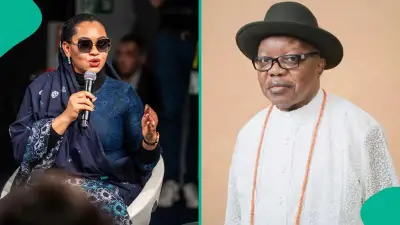
The Executive Director of Gender Strategy Advancement International (GSAI), Adaora Onyechere Sydney-Jack, has accused Nigerian political parties of resisting genuine reforms that would ensure equitable participation of women in the electoral process. Speaking to journalists in Abuja on Sunday, she condemned the systemic exclusion of women from emerging as candidates in ongoing primary elections ahead of the 2027 general elections.
Systemic Barriers Against Women
According to Sydney-Jack, despite years of advocacy and constitutional guarantees of equality, women remain largely sidelined during candidate emergence processes. She cited exorbitant nomination fees, political intimidation, monetised delegate systems, and exclusion from strategic negotiations as key barriers. She noted that political parties treat inclusion as mere campaign rhetoric while resisting reforms that could guarantee women equitable access to political leadership.
She said: "The troubling reality is that the recent primaries currently ongoing across parts of Nigeria have shown little or no meaningful shift from the entrenched norm. Across multiple political spaces, women continue to report being sidelined, pressured to step down for male aspirants, excluded from strategic negotiations, or subtly threatened with political ostracization should they insist on contesting."
Institutionalised Exclusion
Sydney-Jack maintained that the exclusion of women from party primaries is not accidental but deeply institutional, driven by opaque consensus arrangements, elite patronage networks, and patriarchal power structures embedded within political parties. She described this as a democratic bottleneck that excludes women before the general election even begins.
The GSAI executive director called for enforceable accountability mechanisms against political parties that fail to meet affirmative action targets for women. She suggested possible sanctions or incentives, including reduced public funding access, mandatory quota compliance, incentives for gender-balanced tickets, or electoral penalties for persistent exclusion. She noted that several democracies already implement such measures.
Women's Role in Politics
She highlighted that although women constitute a significant percentage of Nigeria’s voting population and grassroots political mobilisation structures, they are often relegated to ceremonial positions within parties. "In Nigeria, women participate massively as mobilisers, campaigners, financiers at grassroots levels, and voting blocs. Yet, when candidacy and power-sharing emerge, women are reduced to 'Women Leader' structures without consequential influence," she added.
Sydney-Jack said advocacy for women’s political inclusion has struggled to dismantle entrenched political and economic interests that continue to dominate party primaries. She described primaries in Nigeria as transactional arenas shaped by financial leverage, elite patronage, and deeply gendered power relations.
Major Barriers and International Comparisons
She identified major barriers confronting women seeking elective office, including high nomination fees, limited access to campaign financing, political violence, cultural stereotypes against female leadership, and exclusion from informal negotiation spaces where candidacies are brokered. Drawing comparisons with other African countries, she noted that nations such as Rwanda, Senegal, Namibia, and South Africa have significantly improved women’s political representation through constitutional quotas, parity laws, and gender-balanced candidate systems.
She warned that Nigeria risks democratic and economic stagnation if political parties fail to undertake reforms that promote inclusive participation. She cited examples from Liberia and Tanzania, where women leaders have brought governance confidence and democratic evolution.
Personal Experience and Proposed Reforms
Recalling her personal political experience, Sydney-Jack said she encountered structural barriers when she contested elections in Imo State in 2019. She described the challenges as cultural, financial, institutional, and political. She urged the National Assembly, the Independent National Electoral Commission, and political parties to institutionalise enforceable quota systems, ensure transparent primary elections, and implement reforms to make party processes more inclusive ahead of the 2027 elections.
Among the reforms she proposed are subsidised nomination forms for women, public campaign financing support mechanisms, reserved delegate slots for women, mandatory quota systems within party executives, transparent digital delegate accreditation, and zero tolerance for violence and intimidation during primaries. She stated: "Several reforms are immediately achievable: Financial Reforms such as free or heavily subsidized nomination forms for women, public campaign financing support mechanisms, gender equity political funds; Institutional Reforms including reserved delegate slots for women, mandatory quota systems within party executives, transparent digital delegate accreditation; and Security Reforms with zero tolerance for violence and intimidation during primaries."