INEC Denies Verified Evidence Linking Chairman to Controversial X Post
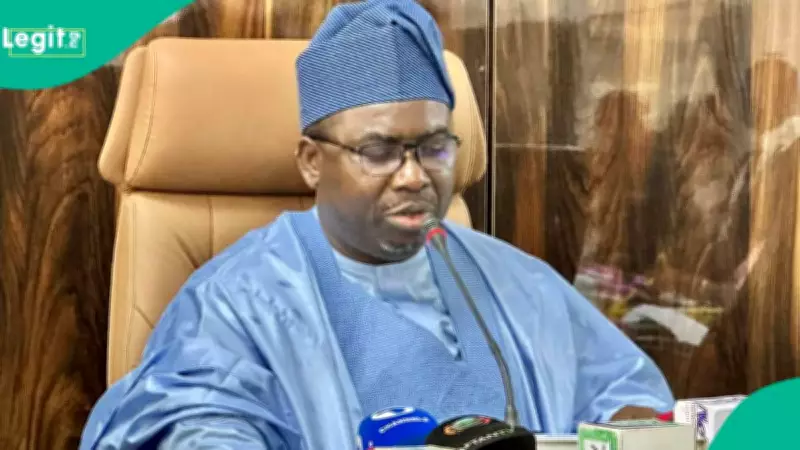
The Independent National Electoral Commission has officially stated that there is currently no verified forensic evidence connecting its Chairman, Professor Joash Amupitan, to an alleged partisan post circulating on the social media platform X. The commission's Director of Information and Communication Technology, Lawrence Bayode, provided this clarification during an exclusive interview on Channels Television's The Morning Brief program on Monday.
Investigation Escalated to Security Agencies
Bayode emphasized that while some individuals claim to have conducted forensic investigations on the account in question, the commission has not received any verified evidence linking Professor Amupitan to the controversial post. "Even though we are seeing that some guys have carried out a forensic investigation on that account, as we speak, there is no verified forensic evidence linking the chairman to the post," Bayode stated during the television interview.
The ICT director revealed that the matter has not been dismissed and has already been escalated for further scrutiny by relevant security agencies. "We are taking this further even though we have referred this to security agencies, and as I said, we rely on evidence. We are also going to be engaging a third-party forensic expert to help look at this," he explained.
Comprehensive Investigation Approach
According to Bayode, INEC will conduct both an internal review and an external forensic assessment before reaching any definitive conclusions about the alleged post. "I will not base my judgment on the screenshot; I will not allow that to guide my conclusion," he stated firmly, highlighting the commission's commitment to thorough investigation procedures.
The commission is preparing to bring in external specialists to ensure a comprehensive and unbiased investigation. "I know that the commission will engage a third-party expert to also look at this, and that will guide the conclusion of the commission," Bayode confirmed, stressing that both internal examinations and independent assessments would be utilized to determine the authenticity of the claims.
Warning About Digital Manipulation Risks
During the interview, the ICT director raised significant concerns about the reliability of artificial intelligence tools in verifying online content and the growing threat of digital impersonation. "Grok honestly can hallucinate just like any modern artificial intelligence system, and I think the key is to verify important information, especially for decision or public communication," Bayode cautioned.
He further elaborated on the vulnerabilities of social media platforms, noting that accounts can be compromised or falsely created using another person's identity. "If people can hack into your system if it's not well protected... our social media platforms are protected by two-factor authentication," he explained, highlighting INEC's security measures.
Bayode suggested that manipulation of online content could potentially mislead the public, adding that such issues highlight broader risks in the digital space. "That account was renamed; the content there, maybe, would have been manipulated again," he noted, pointing to the possibility of content alteration.
Broader Context and Security Concerns
The controversy emerges amid broader discussions about digital security and misinformation in Nigeria's electoral processes. The commission's response reflects growing concerns about how social media content could potentially influence public perception and electoral integrity.
Bayode's warnings about AI systems "hallucinating" or generating misleading information underscore the challenges facing electoral bodies in verifying digital content. "So any AI system can hallucinate, and so Grok can also hallucinate," he reiterated, emphasizing the need for multiple verification methods.
The investigation comes at a time when digital security and misinformation have become critical concerns for electoral commissions worldwide, particularly as social media platforms play increasingly significant roles in political communication and public discourse.