INEC Unveils Official Timetable for 2027 National Elections
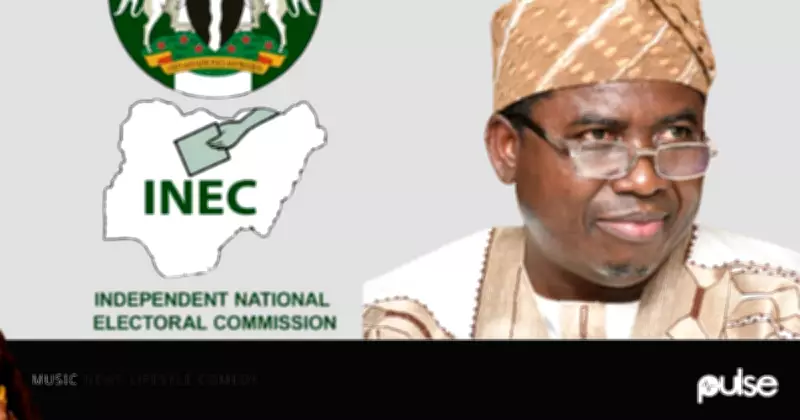
The Independent National Electoral Commission (INEC) has formally announced the schedule for Nigeria's 2027 general elections, marking a significant milestone in the nation's democratic calendar. The commission's chairman, Professor Joash Ojo Amupitan, SAN, revealed the detailed timetable during a press conference in Abuja, providing clarity on the electoral roadmap for the coming years.
Constitutional Mandate and Election Dates
Acting in accordance with the 1999 Constitution and Section 28(1) of the Electoral Act 2022, which mandates publication of election notices at least 360 days before appointed dates, INEC has designated February and March 2027 for the national elections. Professor Amupitan confirmed that the presidential and national assembly elections will take place on February 20, 2027, while the governorship and state house of assembly elections are scheduled for March 6, 2027.
The commission chairman elaborated on the constitutional timelines, noting that the tenure of the President, Vice-President, Governors, and Deputy Governors will conclude on May 28, 2027, with exceptions for Anambra, Bayelsa, Edo, Ekiti, Imo, Kogi, and Ondo States. Meanwhile, membership of the National and State Assemblies will officially dissolve on June 8, 2027, setting the stage for comprehensive electoral renewal across all levels of government.
Leadership and Budgetary Framework
INEC will be led through the 2027 electoral cycle by Professor Joash Amupitan SAN, who was sworn in by President Bola Ahmed Tinubu on October 23, 2025, for a five-year tenure. He succeeds Professor Yakubu Mahmood, who completed two terms at the helm of the electoral body. The commission has allocated a substantial budget of ₦873 billion for the conduct of the 2027 elections, with detailed breakdowns including ₦379.75 billion for operating costs, ₦92.32 billion for administrative expenses, and ₦209.21 billion dedicated to technological infrastructure.
Additional allocations include ₦154.91 billion for election capital costs and ₦42.61 billion for miscellaneous expenses, reflecting the comprehensive financial planning required for Nigeria's complex electoral processes. Professor Amupitan emphasized that INEC's operations remain guided by the existing Electoral Act, though he acknowledged ongoing discussions about potential amendments to strengthen electoral integrity.
Political Landscape and Electoral Scrutiny
The announcement comes amid heightened public scrutiny of INEC's operations, particularly regarding the commission's chairman, who has faced criticism from various Islamic organizations over previous statements. The electoral body's capacity to conduct free and fair elections remains under intense examination, especially following the controversial 4 AM announcement of the 2023 presidential election results.
Professor Amupitan addressed these concerns directly, stating that INEC recognizes the necessity to enhance the electoral framework to reflect societal realities and ensure transparent processes. He highlighted the commission's commitment to delivering credible elections that meet international standards and restore public confidence in Nigeria's democratic institutions.
Presidential Contest and Opposition Dynamics
The 2027 presidential election is expected to dominate political discourse, with incumbent President Bola Tinubu of the All Progressives Congress (APC) likely seeking re-election after his 2023 victory with 8,794,726 votes. His administration has implemented several controversial reforms, including the removal of fuel subsidies announced during his inauguration ceremony.
Opposition dynamics have shifted significantly since the last election, with former Vice President Atiku Abubakar (6,984,520 votes in 2023) and Peter Obi (6,101,533 votes in 2023) both leaving their respective parties to join the African Democratic Congress (ADC). This realignment positions the ADC as a potentially formidable opposition force, though its electoral success will depend heavily on candidate selection and internal party management.
Electoral Reform and Technological Considerations
As the election dates approach, national debate continues around the Electoral Amendment Bill, with particular focus on electronic transmission of votes—a contentious issue that has sparked heated discussions in the National Assembly. Professor Amupitan acknowledged these debates while reaffirming INEC's commitment to leveraging technology to enhance electoral transparency and efficiency.
The commission's substantial allocation for technological costs underscores this priority, reflecting lessons learned from previous electoral cycles and the evolving expectations of Nigerian voters. With the 2027 elections now officially scheduled, political parties, civil society organizations, and international observers will closely monitor INEC's preparations in the coming months.