The Independent National Electoral Commission (INEC) has warned that recent court rulings affecting aspects of its timetable and schedule of activities for the 2027 general election could disrupt preparations for the polls if not urgently clarified by appellate courts. Some stakeholders also sounded a note of caution over the lingering dispute involving the electoral commission, political parties and the court ruling on the 2027 election timetable, warning that the seemingly simple issue could trigger serious confusion and instability if not addressed carefully, urgently and meticulously.
INEC Chairman Raises Concerns
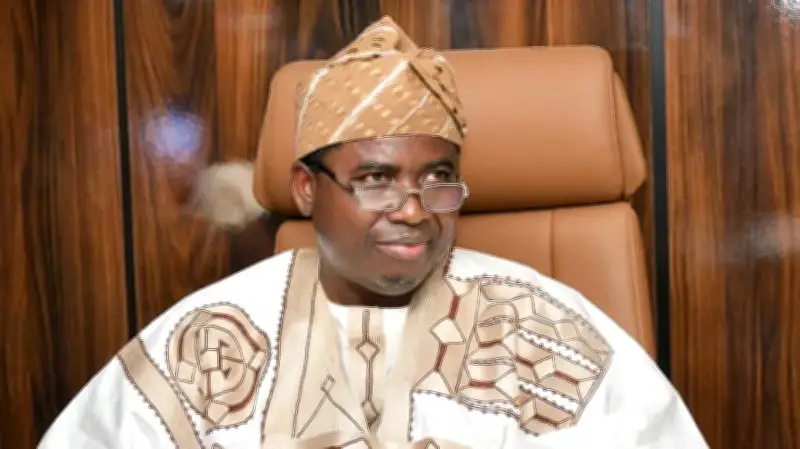
INEC Chairman, Prof Joash Amupitan, raised the concerns during the Commission’s second quarterly consultative meeting with leaders of political parties in Abuja. Amupitan disclosed that the Commission had already filed appeals against two judgments of the Federal High Court, which questioned certain timelines contained in INEC’s timetable for the 2027 elections. According to him, while the Commission respects the decisions of the courts, the judgments raise significant legal questions regarding the extent of INEC’s constitutional and statutory powers to coordinate and regulate electoral activities.
The Federal High Court in Abuja had delivered two major rulings invalidating key compressed timelines in the 2027 general election timetable released by INEC. The courts ruled that while INEC has the constitutional authority to issue and adjust election schedules, it cannot use administrative guidelines to shorten or override statutory windows guaranteed to political parties by the Electoral Act 2026.
Details of the Court Rulings
Amupitan explained that in Suit No. FHC/ABJ/CS/517/2026, Youth Party v. INEC, delivered on May 20, 2026, the court questioned some timelines contained in the Commission’s timetable and schedule of activities for the 2027 general election. He added that in a subsequent judgment delivered on May 26, 2026, in Suit No. FHC/ABJ/CS/720/2026, Social Democratic Party (SDP) v. INEC, the court affirmed the Commission’s authority to issue an electoral timetable but nullified certain timelines relating to the nomination and substitution of candidates.
“In view of the differing conclusions reached in the judgments, and in order to ensure certainty and stability in preparations for the general election, the Commission has filed appeals against the decisions and has taken the necessary legal steps to obtain authoritative pronouncements from the appellate courts,” Amupitan said.
Impact on Election Preparations
Barely seven months before the 2027 general elections, the legal battle over INEC’s timetable has emerged as one of the most significant issues capable of reshaping the country’s electoral landscape. At the heart of the controversy is a Federal High Court judgment that questioned aspects of INEC’s revised timetable and schedule of activities for the 2027 elections, particularly the commission’s authority to fix deadlines for party primaries and other pre-election activities.
In response, INEC approached the Court of Appeal, seeking to overturn the ruling and preserve the electoral calendar already in operation. The development has sparked anxiety among political parties, candidates and election observers, many of whom fear that prolonged litigation could disrupt preparations for the elections scheduled for January 16, 2027, for the presidential and National Assembly polls, and February 6, 2027, for governorship and state assembly elections.
INEC’s Revised Timetable
INEC’s revised timetable fixed April 23 to May 30, 2026, for the conduct of party primaries and the resolution of disputes arising from the exercises. The commission subsequently fixed August 19, 2026, as the commencement date for campaigns for presidential and National Assembly elections, while campaigns for governorship and state assembly elections are expected to begin on September 9, 2026. However, the court ruling has created uncertainty over these arrangements, particularly for parties that conducted their primaries after the May 30 deadline.
While some political actors contend that the judgment effectively invalidated the deadline imposed by INEC, the electoral body maintains that its timetable remains valid and binding pending the determination of the appeal. The disagreement has created uncertainty regarding the status of candidates who emerged from primaries conducted outside the commission’s stipulated timeframe, with the fate of such candidates and their parties hanging in the balance.
Implications for Candidate Eligibility
One of the immediate implications of the litigation concerns the eligibility of candidates produced by parties that failed to meet the May 30 deadline. Should the appellate court uphold INEC’s position, such candidates could face disqualification challenges, while parties that complied with the timetable may enjoy a legal advantage. Conversely, if the Court of Appeal affirms the lower court’s decision, political parties that conducted late primaries may seek recognition of their candidates, potentially reopening nomination processes and triggering fresh rounds of litigation.
Stakeholders Call for Speedy Hearing
A former National Commissioner of INEC, Prof Lai Olurode, and former Senate Minority Leader, Olorunnimbe Mamora, urged the Court of Appeal to expedite the hearing of INEC’s appeal against the Federal High Court judgment that set aside aspects of its timetable. Mamora, in a telephone interview with The Guardian, warned that the matter could generate numerous pre-election suits capable of stretching into the final months before the elections. He also pointed out that the dispute has implications for electioneering campaigns.
He said: “Ordinarily, the Electoral Act provides a framework for when campaigns can commence and end. With presidential and National Assembly campaigns expected to begin in August, political parties are already mobilising resources and strategising for nationwide outreach. However, unresolved litigation over the timetable could create uncertainty regarding the sequence of electoral activities, especially if candidate lists become the subject of court disputes. Parties may become reluctant to fully commit resources to campaigns where the legal status of some candidates remains uncertain.”
The former Minister of Health added that what should be avoided is any delay by the Court of Appeal in determining the matter. “My greatest concern is the possibility of a prolonged judicial process. If the Court of Appeal does not determine the matter expeditiously, the dispute could proceed to the Supreme Court, potentially extending legal uncertainty into the election year. Such a scenario may affect deadlines for candidate substitution, publication of final lists of contestants, voter education programmes and other critical electoral activities.” He added that the situation is already making many Nigerians uncomfortable and raising questions about the electoral process, thereby fuelling suspicion among sections of the electorate.
On his part, Olurode said that although the elections themselves are fixed by law, delays in resolving disputes surrounding the timetable could compress the period available for campaigns and preparations by both INEC and political parties. He noted that the case would test the extent of INEC’s powers under the Electoral Act. “A judgment in favour of the commission would strengthen its authority to regulate electoral activities and enforce compliance with election schedules. On the other hand, a ruling against INEC could significantly redefine the boundaries of its administrative powers and compel future electoral commissions to operate under stricter judicial interpretations of the law. For now, political parties, candidates and voters can only await the outcome of the appeal.”
INEC Chairman Defends Timetable
The INEC chairman maintained that the activities contained in the Commission’s timetable are interrelated operational processes designed to guarantee the orderly, transparent and successful conduct of elections. He noted that while the Electoral Act prescribes timelines for certain electoral activities, several other critical processes are not expressly provided for in the law but must be accommodated within the overall electoral calendar.
According to him, these include the submission and verification of party membership registers, monitoring of party primaries across the federation, uploading the names of winners of monitored primaries on the Commission’s designated portal, candidate nominations, printing of ballot papers and result sheets, training of election personnel, voter education programmes and the deployment of election materials. According to him, “the absence of coordinated timelines for such activities would create uncertainty, disrupt election planning and undermine the Commission’s constitutional responsibility to organise, undertake and supervise elections in an efficient and credible manner”.
Amupitan argued that environmental and logistical factors, including weather conditions, terrain, procurement of sensitive materials and configuration of the Bimodal Voter Accreditation System (BVAS), require careful scheduling and coordination. “The Commission therefore considers it imperative that all electoral activities be harmonised within a coherent and workable framework that promotes certainty, transparency, administrative efficiency and equal treatment of all political parties,” he added. Despite the legal challenge, the INEC chairman assured political parties and the Nigerian public that the Commission remained committed to conducting the 2027 General Election in strict compliance with the Constitution, the Electoral Act and all lawful judicial pronouncements.
IPAC Faults Ban on Indirect Primaries
Speaking at the meeting, National Chairman of the Inter-Party Advisory Council (IPAC), Dr Yusuf Mamman Dantalle, said the exclusion of indirect primaries from Nigeria’s electoral framework contributed significantly to disputes, tensions and administrative challenges experienced by political parties during their just-concluded primaries for the general election. Dantalle said the implementation of Section 84(2) of the Electoral Act 2026, which limited political parties to consensus or direct primaries, created operational difficulties for parties and triggered avoidable internal conflicts.
According to him, the absence of indirect primaries removed a flexible option that previously allowed parties to manage internal competition and reduce tensions among aspirants. “The experience of the just-concluded nomination exercise demonstrates that the removal of indirect primaries created considerable constraints for political parties,” he said. He explained that many political parties were forced to adopt consensus arrangements despite having multiple aspirants who had already obtained nomination forms and expressed interest in contesting elections.
Dantalle noted that in several cases, aspirants were persuaded or, in some instances, pressured to step down after party leaders had already aligned behind preferred candidates, leading to dissatisfaction and subsequent legal disputes. He said while some aspirants accepted the outcomes in the interest of party unity, others challenged their exclusion, arguing that genuine consensus must be voluntary and inclusive. He alleged that in some cases, parties limited access to nomination forms or failed to adequately publicise primary election schedules, steps he said were taken to avoid the complications associated with direct primaries.
Dantalle said these developments reflected unintended consequences of the current legal framework governing party nominations. He urged the National Assembly to urgently review the Electoral Act 2026 to restore flexibility in the conduct of party primaries and strengthen internal democracy within political parties. The IPAC chairman further expressed concern over the tight timeline given to parties to submit updated membership registers, including National Identification Numbers (NIN), saying some genuine members were excluded due to logistical challenges.
He said IPAC had earlier warned about the implications of certain provisions of the Electoral Act during its February 2026 General Assembly in Abuja, where it urged lawmakers to reconsider the ban on indirect primaries. Dantalle said recent developments had validated those earlier concerns and called for urgent reforms to the electoral legal framework.
INEC Recognises Rival Factions in SDP, PDP
The Independent National Electoral Commission has moved to recognise rival leadership structures in both the Social Democratic Party (SDP) and the Peoples Democratic Party (PDP). In the SDP, the electoral commission effectively aligned itself with judicial pronouncements on the party’s leadership crisis by recognising the structure headed by National Chairman Prof Abubakar Sadiq Gombe, in a development widely viewed as a major setback for the rival camp led by former National Chairman Shehu Musa Gabam. The development followed a high-level meeting between SDP leaders and the commission in Abuja, where party officials said INEC acknowledged court decisions affirming the legitimacy of the current leadership and the supremacy of the party’s constitutional processes.
At the same time, the faction of the PDP loyal to the Minister of the Federal Capital Territory (FCT), Nyesom Wike, strengthened its position following the latest update of the party’s National Working Committee (NWC) list on INEC’s portal. A check on the commission’s records showed that Ahmed Yayari and Daniel Woyengikuro had been removed as the PDP’s National Treasurer and National Financial Secretary, respectively, and replaced with Odeyemi Mackson Oladiran and Eyim Donatus Henry. The development aligns the PDP leadership structure recognised by INEC with the Wike-backed faction of the opposition party.
INEC had earlier recognised Abdulrahman Mohammed as the party’s National Chairman and Samuel Anyanwu as National Secretary, both of whom are aligned with the Wike camp. For the SDP, the recognition marks a significant turning point in a crisis that has engulfed the party for months, resulting in disciplinary proceedings, legal battles, parallel conventions and competing claims to the party’s leadership.
Falana Warns Insecurity, Poverty May Undermine 2027 Elections
Human rights lawyer and Senior Advocate of Nigeria, Femi Falana, warned that Nigeria risks conducting another flawed electoral cycle in 2027 unless worsening insecurity, poverty, kidnapping and democratic deficits are urgently addressed. Falana spoke in Abuja at the Annual June 12 Commemoration Lecture held in honour of late electoral umpire, Prof Humphrey Nwosu, and the unveiling of the Humphrey Nwosu Centre for Democracy and Human Rights.
The senior lawyer recounted behind-the-scenes efforts that led to the historic June 12, 1993, presidential election, describing Nwosu as a courageous patriot who resisted intense pressure from the military regime to halt the poll. According to him, despite court orders and threats from military authorities, Nwosu insisted that the election would proceed, leading to what he described as “the freest and fairest election ever conducted in Nigeria.” Falana disclosed that as legal battles raged over attempts to stop the election, Nwosu relied on legal advice from senior lawyers, including former Attorney-General Buhari Bello, to counter arguments that conducting the poll would amount to contempt of court.
“Professor Nwosu was determined to hold the election. They told him he was playing with fire, but he stood his ground and the election was held successfully,” Falana said. However, the senior lawyer lamented that the ideals represented by June 12 have largely been abandoned by today’s political elite. “Those who cannot conduct credible party primaries cannot conduct credible elections,” he declared.
Falana argued that the success of the June 12 election was rooted in issues-based politics rather than ethnic or religious considerations, noting that late business mogul and presumed winner of the election, Moshood Kashimawo Olawale Abiola, campaigned on poverty eradication, social welfare and economic justice. Turning to current realities, Falana warned that Nigeria’s deteriorating security situation could undermine preparations for the 2027 general elections.
“As we are gathered here today, many children are in the custody of criminals. People are being abducted daily. Can we honestly say we are ready for elections under these conditions?” he asked. He stressed that no meaningful electoral process can take place while terrorism, kidnappings and violent crimes continue to spread across the country.
SDP Faults INEC’s Appeal Against Court Rulings
The Social Democratic Party (SDP) criticised the decision of the Independent National Electoral Commission to appeal recent court judgments that nullified aspects of its electoral timetable for the 2027 general elections. The party’s National Chairman, Sadiq Gombe, said there was no need for the electoral umpire to challenge the rulings, arguing that the judgments would create more room for political parties and candidates to participate effectively in the electoral process.
Gombe spoke with journalists shortly after the Second Quarterly Consultative Meeting between the INEC chairman and leaders of registered political parties in Abuja. He said, “INEC has no right to appeal the ruling because of the timing of the election and so on. Nevertheless, to some of us, we don’t feel there is a need for it because this is something that we are sure will free political parties, give them more room to be able to prepare for the elections.”