Kwara State's 2027 Leadership Test: A Critical Juncture for Governance and Progress
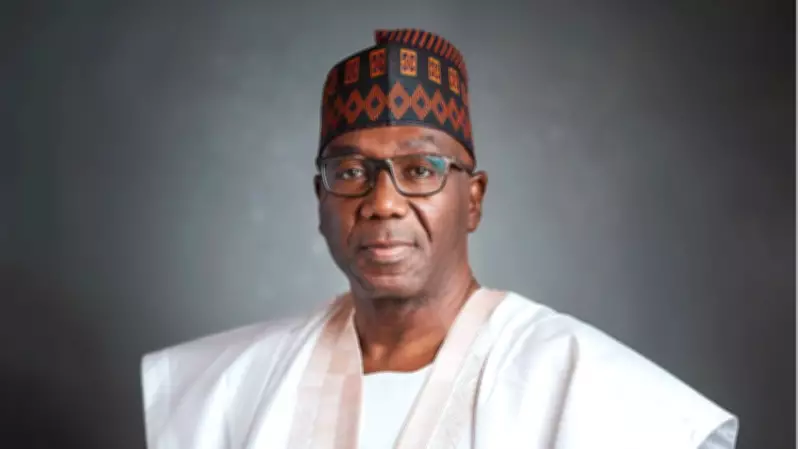
Kwara State is on the brink of a significant political transformation as it prepares for the selection of Governor AbdulRahman AbdulRazaq's successor in May 2027. This upcoming electoral cycle represents far more than a routine change in leadership; it is a profound test of the state's political acumen and its ability to build upon recent achievements while setting a more ambitious path for future development. Across the state, discussions are evolving beyond well-known political figures to address a more pressing inquiry: what type of leadership is essential for Kwara at this crucial stage in its growth?
The Delicate Balance of Promise and Pressure
Kwara State finds itself at a sensitive crossroads, characterized by both opportunity and challenge. The region boasts a youthful demographic, substantial agricultural resources, and untapped solid mineral deposits, yet it faces mounting infrastructure needs and the intricate responsibility of fostering inclusive economic expansion. The incoming governor will not have the benefit of a gradual adjustment period; instead, the situation demands proven expertise and strategic foresight to navigate these complexities effectively.
Intensifying Political Dynamics and Key Contenders
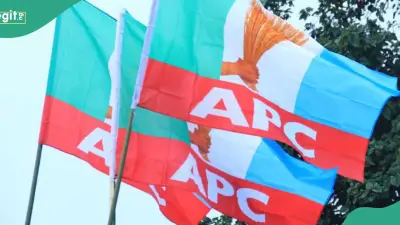
Recent political developments highlight the escalating competition for the governorship. A feature in Daily Trust, titled "Jostle for Kwara Governorship Intensifies," sheds light on several prominent aspirants within the All Progressives Congress (APC), which is widely viewed as the dominant political force in the state. Notable figures include Prof. Suleiman Abubakar, Senator Saliu Mustapha, Senator Sadiq Suleiman Umar, Hon. Salihu Danladi, and Ambassador Yahaya Seriki, indicating deep interest in the race. However, a more nuanced analysis of Kwara's political landscape points to a candidate whose significance is based on tangible political influence rather than mere speculation: Dr. Bashir Omolaja Bolarinwa.
Dr. Bashir Omolaja Bolarinwa: A Profile of Demonstrated Impact
Dr. Bolarinwa's qualifications are neither accidental nor marginal. As the former Chairman of the APC in Kwara State, he played a central role in the strategic coordination that led to the O’toge movement in 2019—a landmark event in the state's political history—and contributed to solidifying its successes in the 2023 elections. This experience goes beyond simple involvement; it highlights a capability for organized discipline, coalition management, and the political engineering necessary to achieve and maintain power. Importantly, his career is marked by ongoing engagement with institutional processes and governance frameworks. In an environment where many reform initiatives struggle to move from idea to implementation, this distinction is crucial. It indicates an understanding not only of what needs to be accomplished but also of how to execute it within the constraints of public institutions.
Leadership Attributes and Kwara's Development Needs
Dr. Bolarinwa's leadership style is consistently described as grounded, methodical, and results-oriented. These characteristics are often decisive in determining whether governance yields concrete outcomes or remains stuck in cycles of unfulfilled intentions. At this phase in Kwara's development, the central issue is no longer about theoretical competence but about readiness. The state requires a leader who can swiftly transition from planning to performance, comprehends the urgency of the moment and the discipline needed to manage it, and can align political authority with administrative efficiency. In this context, Dr. Bolarinwa's profile warrants serious consideration, as it combines political experience, organizational discipline, and a proven ability to collaborate across diverse interests—qualities vital for a state that must balance continuity with progress and stability with innovation.
Evaluating Aspirants and the Stakes for Kwara
This assessment does not seek to undermine the credentials of other aspirants but rather to suggest that the evolving demands of leadership in Kwara are narrowing the field toward individuals whose experience aligns closely with the state's immediate and medium-term governance requirements. As 2027 draws nearer, the evaluation of candidates must remain grounded, objective, and forward-looking. The stakes extend beyond mere electoral victory; they impact the coherence of governance, the speed of development, and the preservation of political stability. Kwara is not merely selecting a governor; it is making a decision about competence, continuity, and direction. This represents, in every sense, a leadership test—one that the state cannot afford to fail.