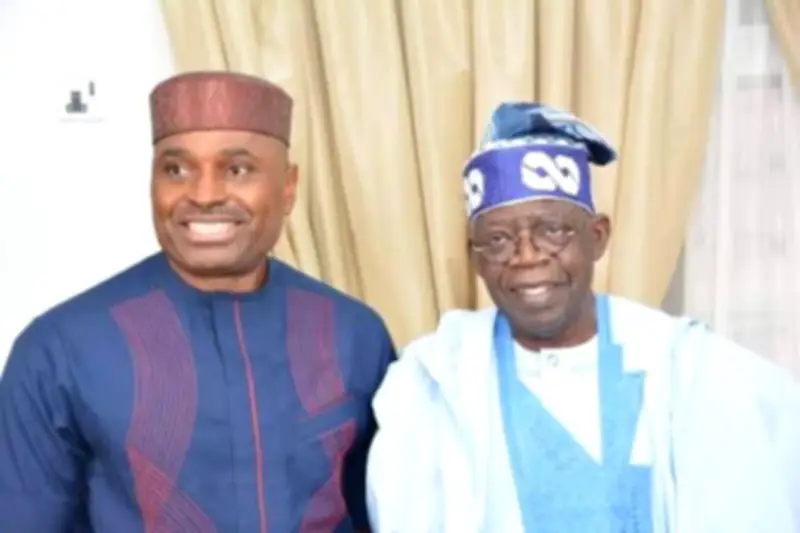
Kenneth Okonkwo, a chieftain of the African Democratic Congress (ADC), has asserted that President Bola Tinubu's inability to submit his primary and secondary school certificates to the Independent National Electoral Commission (INEC) disqualifies him from holding the office of Nigeria's president. Okonkwo made this claim in a series of posts on his X (formerly Twitter) handle, urging Tinubu to respect Nigerian laws governing educational qualifications for university admission and, by extension, presidential candidacy.
INEC Publishes Candidates' Credentials
INEC recently published the credentials and other details of all presidential candidates contesting in the 2027 elections. According to the published information, Tinubu presented only his university certificate, while the certificates from his primary and secondary education were conspicuously missing. This omission has sparked controversy and legal scrutiny, as Nigerian electoral laws require candidates to meet certain educational standards.
Okonkwo, a legal practitioner and former Labour Party spokesperson, emphasized that Nigerian law is clear on this matter. He argued that no Nigerian is qualified to gain admission into a university without obtaining five credits at the Ordinary Level (O' Level) in relevant subjects, including Mathematics and English. Therefore, Tinubu's claim to a university education without the prerequisite secondary school certificate undermines his eligibility for the presidency.
Okonkwo's Strong Words on X
In his posts, Okonkwo wrote: "Nigeria has its laws that should be respected. No Nigerian is qualified to go to a University without 5 credits at the O' Level." He further stated: "Tinubu purporting to be qualified for President by providing a foreign University certificate, which the University publicly declared did not emanate from it, without providing his secondary school certificate or its equipment disqualifies him from being President."
Okonkwo's reference to the university's denial likely alludes to the controversy surrounding Tinubu's Chicago State University certificate, which the university's administration has previously disputed in public statements. This has been a recurring issue in Nigerian political discourse, with critics questioning the authenticity of Tinubu's academic records.
Judiciary Under Fire
Okonkwo did not stop at the certificates; he also took aim at the judiciary, accusing some judges of undermining democracy through what he called "judicial rascality." He wrote: "The only reason our democracy is in peril is because of judicial rascality." He criticized judges who, despite warnings from the Chief Justice of Nigeria (CJN) and the National Judicial Council (NJC), have acted independently, interpreting laws they created on the bench, without legislative backing.
He added: "The judges have usurped the powers of the executive and the legislature from the bench with the instrumentality of perverse judgement." This statement reflects a broader frustration among some political actors and legal observers who believe that judicial overreach has become a threat to the separation of powers in Nigeria.
Implications for 2027 Election
The 2027 general elections are still months away, but the debate over Tinubu's qualifications is already heating up. Okonkwo's remarks are likely to fuel further discussions among legal experts, political analysts, and the general public about the eligibility of the current president to seek re-election. While some may dismiss Okonkwo's claims as partisan, the issue of educational qualifications has been a sensitive topic in Nigerian politics, with past cases such as President Goodluck Jonathan's and Vice President Yemi Osinbajo's certificates also drawing scrutiny.
INEC's decision to publish candidates' credentials is part of its transparency efforts, but it also opens the door for challenges based on document authenticity and completeness. The onus is on INEC to verify that all candidates meet the constitutional requirements, which include a minimum of secondary school education or its equivalent.
As the political landscape evolves, all eyes will be on the courts to see how they handle any legal challenges to Tinubu's candidacy. Okonkwo's call for the judiciary to respect the rule of law is a reminder that the integrity of the electoral process depends on strict adherence to legal standards.
For now, the ADC chieftain's statements add another layer of complexity to the pre-election period, as Nigerians await further clarifications from INEC and the relevant authorities regarding Tinubu's educational records.