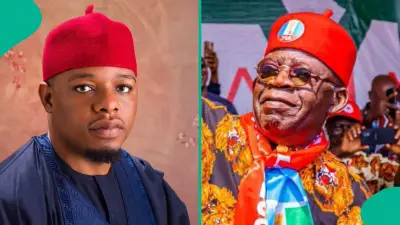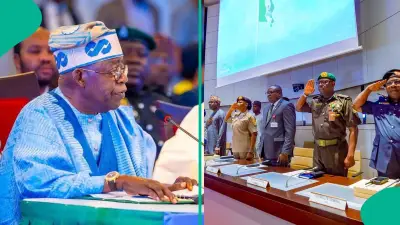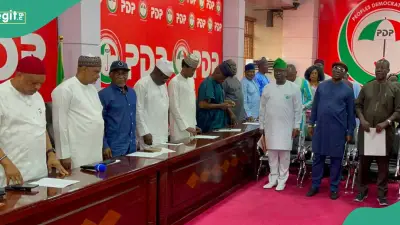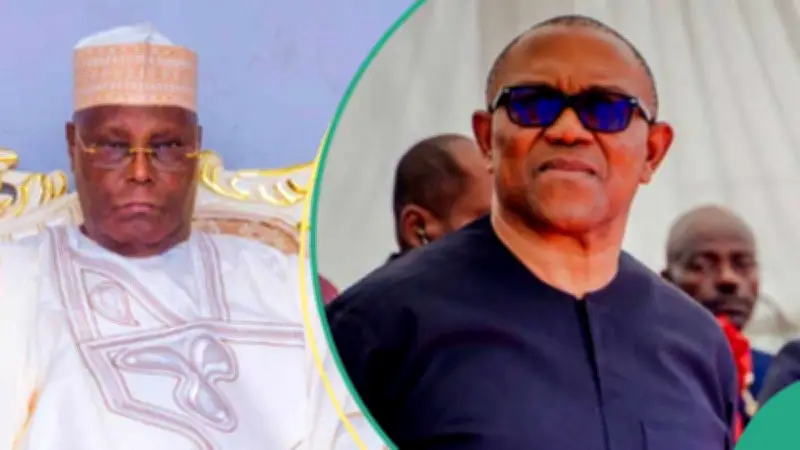
Nigeria's opposition parties, under the G-100 summit, have proposed fielding a single presidential candidate who would serve only one four-year term ahead of the 2027 elections. However, lawyers, political scientists, and civil society groups remain divided over whether this plan can survive contact with Nigeria's constitution and political realities. Stakeholders have warned that without a constitutional amendment or enforceable legal framework, the one-term pledge remains a political promise with no binding force.
Proposal Emerges from G-100 Summit in Abuja
The proposal emerged from a summit held in Abuja under the G-100 banner, as reported on Sunday, September 6, by Vanguard. At the summit, opposition parties and stakeholders began working towards a Government of National Competence anchored on a four-year National Reset Programme. Five working groups were established to develop, among other things, a Single-Term Transition Charter and a framework for producing a common presidential candidate.
Since Nigeria returned to democratic rule in 1999, no elected president has voluntarily walked away after a single term. Olusegun Obasanjo, Muhammadu Buhari, and President Bola Tinubu, who is currently serving his first term, each contested or served two terms. Umaru Musa Yar'Adua died before completing his first term, while Goodluck Jonathan, who completed Yar'Adua's tenure and won the 2011 election, is the only example stakeholders say is beyond dispute given constitutional term limits.
Legal Experts Dismiss and Question the Plan
Akin Oshuntokun, former Special Adviser to President Obasanjo, dismissed the proposal outright, stating: "I doubt if that suggestion will make any difference to the political arithmetic on ground. The only sense it makes is that such potential president is projecting that, at best, he is going to be a mediocre president whom nobody will miss if he leaves office."
Chief Ademola Folarin, General Secretary of Afenifere and a legal practitioner, said the idea was theoretically possible but practically unreliable. "It's highly unlikely that a candidate that has a constitutionally sanctioned allowance of two terms of four years each will surrender his right on the basis of a non-binding pledge," he said.
Constitutional and Electoral Obstacles Cited
Former Minority Leader of the House of Representatives, Wumi Bewaji, pointed to the constitutional and electoral obstacles the plan faces. "The Constitution, the highest law in the land, allows an individual to run two terms of four years apiece. So, you can then, at the end of the day, not have a binding agreement," he said. Bewaji also noted that the window for substituting candidates under the Electoral Act has already closed, leaving him to ask: "What magic do they want to perform now?"
Moruff Balogun, former Vice Chairman of the Nigerian Bar Association (NBA) for the Ijebu-Ode branch, took a more measured view, acknowledging that a constitutional amendment under Section 9 of the 1999 Constitution could make the proposal a legal reality. However, he stressed that "a mere charter, agreement, political arrangement or proposal cannot override its provisions" as things stand.
Stakeholders Call for Enforceable Commitments
Prof Gbade Ojo of the University of Ilorin urged the opposition to publish a signed, documented commitment. "Do not ask Nigerians to trust a promise that has no enforcement mechanism," he said. Yiaga Africa's Executive Director, Samson Itodo, described the coalition attempt as commendable but cautioned that mobilising citizens around a one-term ideology "would require more time," adding that Nigerians are aware that politicians have shifted similar positions in the past.
CISLAC's Auwal Rafsanjani said trust must be earned through conduct rather than declarations, calling on the coalition to publish a transparent political charter with clearly defined priorities and measurable targets for the four-year period. Earlier, Legit.ng reported that the Independent National Electoral Commission (INEC) and the Nigeria Police Force (NPF) both said they will act against politicians who make threatening or inflammatory statements, as political tensions rise ahead of the 2027 elections. Both bodies spoke to the press in response to growing public concern over a series of provocative remarks made by politicians across several states in recent months.