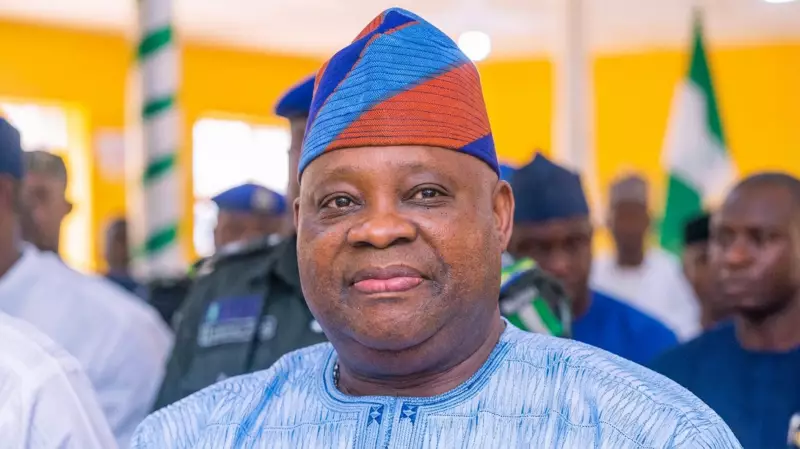
The political landscape in Osun State is undergoing a dramatic transformation as the countdown to the August 2026 governorship election begins. The race is shaping up to be a complex battle, pitting incumbent Governor Ademola Adeleke's grassroots popularity against the formidable federal might of the opposition All Progressives Congress (APC).
A Four-Front Political War
Governor Adeleke's quest for a second term has taken an unexpected turn. After his dramatic exit from the Peoples Democratic Party (PDP) in November 2025, he has secured the governorship ticket of the relatively minor Accord Party. He clinched the nomination with 145 out of 150 delegate votes in Osogbo. This move, coming less than ten months to the election, raises critical questions about his ability to transfer his personal appeal to a less-established platform. The Accord Party garnered a mere 4,515 votes in the 2022 election, highlighting the challenge ahead.
The PDP, now weakened by Adeleke's departure, is itself a shadow of its former self. Plagued by national-level factional disputes between camps loyal to FCT Minister Nyesom Wike and Oyo State Governor Seyi Makinde, the party struggles with internal conflict and a lack of coherent strategy for Osun.
On the third front stands the APC, determined to reclaim the 'State of the Living Spring'. The party has consolidated behind a consensus candidate, Munirudeen Bola Oyebamiji (AMBO), the immediate past Managing Director of the National Inland Waterways Agency (NIWA). With eight other aspirants stepping down, the APC hopes to leverage its control of the federal government, national resources, and renewed unity to unseat Adeleke.
The Aregbesola Factor and a Spoiler Role
Beyond the three main blocs, a potential kingmaker emerges. The African Democratic Congress (ADC), led by its National Secretary and former two-term governor Rauf Aregbesola, is positioning itself as a formidable third force. The party is banking on Aregbesola's deep grassroots structure and has nominated former Speaker of the State House of Assembly, Najeem Salaam, as its candidate.
This development is crucial because the once-powerful alliance between Adeleke and Aregbesola's 'Omoluabi Progressives' group, which significantly contributed to the 2022 victory, has completely shattered. In July 2025, Adeleke's administration labeled Aregbesola's tenure as "the worst in the history of the state," citing issues like half-salary payments and pension fund mismanagement. Analysts believe the ADC's presence in the race could siphon votes from both major contenders, acting as a decisive spoiler.
Governance Paralysis and the Road to 2026
As political camps mobilize, governance in Osun State has effectively taken a back seat. Policy implementation has stalled, and the local government sector is reportedly paralyzed. The absence of a ruling party structure since Adeleke left the PDP has created an administrative vacuum.
Adeleke's camp remains publicly confident. His Special Adviser on Media, Hezekiah Oladele Bamiji, argues that the governor's performance and personal popularity transcend party lines. "Unless the opposition, with its federal might, wants to annihilate the entire electorate in Osun, there is no way any candidate can defeat Adeleke," Bamiji stated.
This sentiment was echoed by former PDP Deputy National Publicity Secretary, Prince Diran Odeyemi, who asserted that personalities, not parties, win elections in Nigeria. He pointed to Adeleke's record of winning nine out of ten local government areas in his first Senate race and defeating an incumbent governor in 2022.
However, the APC is equally bullish. A party chieftain, Bosun Oyuntiloye, simply stated, "It is just a matter of time. The APC is well positioned to retake Osun." The party's confidence is bolstered by its federal leverage and the defection of two senators and key lawmakers from Adeleke's former PDP to the APC.
The 2026 contest is a stark departure from the 2022 election, where Adeleke, on the PDP ticket, polled 403,371 votes to defeat then-Governor Gboyega Oyetola of the APC, who got 375,027 votes. Many factors that aided that victory—internal APC strife, salary arrears, and the Aregbesola alliance—are no longer in play. The election is fast becoming a referendum on Adeleke's first-term achievements in infrastructure against the combined force of a resurgent APC and a disruptive ADC, all while governance in Osun grinds to a halt.