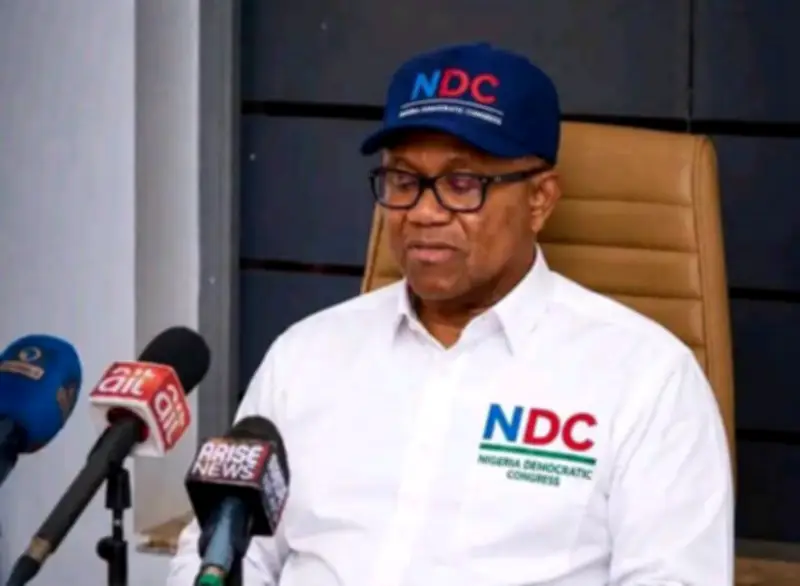
Peter Obi, the 2027 presidential candidate of the Nigeria Democratic Congress (NDC), has declared that his election would mark the beginning of national healing and unity. Speaking on Channels TV's Sunday Politics, the former Anambra State governor referenced the devastating 1967-1970 civil war, which claimed over three million lives and caused widespread destruction, particularly in Eastern Nigeria. Obi argued that his presidency could catalyze reconciliation, stating: "That is the beginning of the healing. A Peter Obi presidency will commence the healing and the unity that is required to stabilise and build a better Nigeria."
Obi on Historical Grievances
When anchor Seun Okinbaloye asked whether his victory would represent a definitive healing process, Obi responded directly. He urged Nigerians to acknowledge history without becoming trapped by it. "You cannot be trapped in the process of yesterday. Those who are trapped in yesterday's process will lose the future. We have a history, but we must not be trapped in it. It must not deprive us of tomorrow," he said. The remarks addressed concerns about lingering grievances from the 1966 counter-coup and the civil war.
Defending His Record on Unity
Obi also rebutted criticisms from former Borno State Governor Ali-Modu Sheriff, who had questioned Obi's ability to foster national cohesion. Dismissing the claims, Obi pointed to his tenure as governor of Anambra State from 2006 to 2014 and his subsequent humanitarian work across Nigeria as evidence of his commitment. He recalled visiting Borno State at the height of the Boko Haram insurgency to offer condolences after the death of Sheriff's brother, despite security risks. "When people didn't want to go there, I went to Borno State," Obi recounted.
Humanitarian Interventions Across Nigeria
Obi detailed his philanthropic efforts in the North-east, including a ₦50 million donation after devastating floods, visits to internally displaced persons (IDP) camps, and meetings with the Shehu of Borno. He noted that his interventions extend across the North: "I've been to the most troubled parts of the North. I've been to Benue up to four times, visiting the various affected communities. I've spent Christmas and New Year in IDP camps." Obi also described infrastructure projects such as funding boreholes in Gombe and Kaduna and supporting the agricultural faculty at the University of Sokoto. "When the University of Sokoto's Agricultural Faculty said all they needed was a borehole for their farm, I did it," he added.
A National Perspective
Asserting that his commitment is national in scope, Obi claimed that his extensive travels across the South-west, North-central, and other regions have given him a unique understanding of the Nigerian populace. "There's no politician today in Nigeria that has been able to travel places that I have been to by road because I want the country to be together, and I understand the people," he concluded. The interview underscored Obi's message that healing historical wounds and fostering unity remain central to his 2027 campaign.