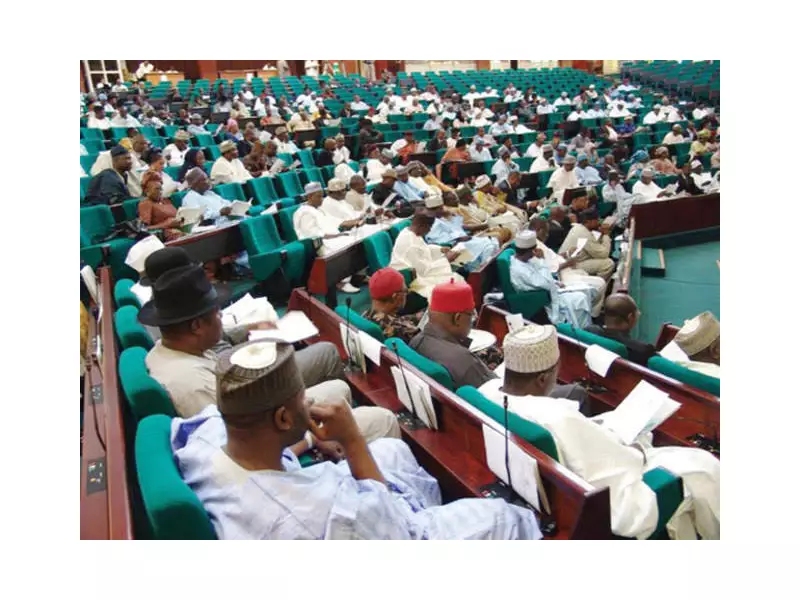
A critical decision by Nigeria's House of Representatives has sparked widespread condemnation from political stakeholders and observers, who warn it poses a severe threat to the integrity of future elections. The lawmakers' refusal to criminalise the act of vote-buying specifically at the level of political party primaries has been labelled a major setback for the nation's democratic process.
Obi Leads Charge, Calls Decision a Democratic Setback
Peter Obi, the Labour Party's presidential candidate in the 2023 election, was among the first to voice strong criticism. In a post on the social media platform X, the former Anambra State governor expressed deep disappointment, stating that many Nigerians had expected the legislature to take a firm stand against what he termed the "cancer of vote-buying." He argued that by failing to act, the House has chosen to protect a broken system instead of safeguarding the nation's future.
Obi emphasised that credible general elections cannot emerge from corrupt foundations. "Any effort to stop vote-buying must begin at the primaries," he wrote. "Without addressing the problem at its roots, any measures taken later will lack the strength to endure." He described a democracy driven by financial inducement as a "criminal marketplace" that cannot deliver genuine national progress.
Expressing further concern, Obi noted that the corrosive practice of vote-buying has spread beyond formal politics into community associations, clubs, and even student union elections. He urged a bold confrontation of these practices ahead of the 2027 general elections, insisting that integrity must start at the very beginning of the electoral process.
Stakeholders Echo Concerns, Point to Root of Electoral Malpractice
Other prominent voices have corroborated Obi's position, highlighting the primaries as the epicentre of Nigeria's electoral challenges. Achike Chude, the General Secretary of the Nigeria Union of Journalists (NUJ), said he was not surprised by the lawmakers' decision. He explained that party primaries are where most electoral malpractices originate, fueled by the belief that securing a party ticket almost guarantees victory in the main election.
Chude called for stronger electoral laws that punish not only the agents and voters who accept bribes but also the politicians who fund and orchestrate the vote-buying schemes.
Adding a sharp political perspective, Olu Agunloye, a former Minister of Defence and National Secretary of the Social Democratic Party (SDP), described vote-buying at the primary stage as one of the gravest crimes against the nation. He pointedly questioned the billions of naira and dollars allegedly spent by aspirants to induce delegates at party conventions, suggesting that the lawmakers' reluctance is motivated by personal interest.
Enforcement and Party Democracy Key to Real Change
Veteran journalist Wale Adeoye described the practice as morally reprehensible, arguing that it erodes democratic values and leads to the emergence of corrupt leaders. However, he cautioned that merely criminalising vote-buying would be ineffective without robust enforcement and deeper systemic changes.
"Criminalising vote-buying will mean little without enforcement. Such measures only work where the rule of law is upheld," Adeoye stated. He identified weak law enforcement as a major hurdle, noting that many laws in Nigeria exist only on paper. He further argued that the worst form of vote-buying occurs when party members are disempowered and candidate selection is controlled by a few wealthy financiers.
The consensus among the stakeholders is clear: the House of Representatives' decision on December 22, 2025, represents a missed opportunity to strengthen Nigeria's fragile electoral system from its foundation. They warn that without addressing the commercialisation of votes at the primary level, any reforms aimed at the general elections will be superficial and the quality of Nigeria's democracy will remain compromised.