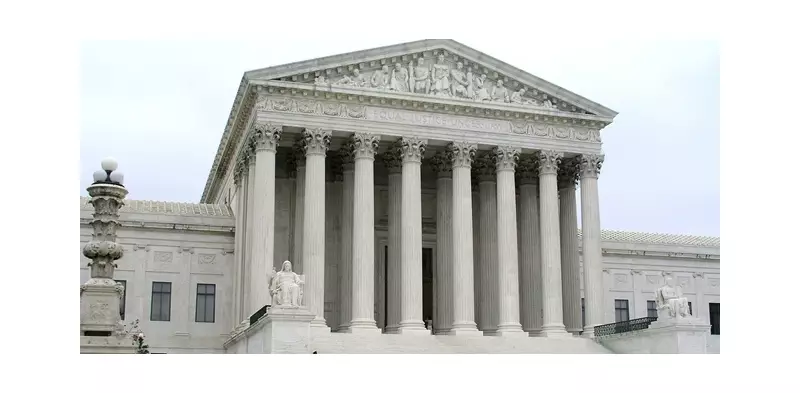
In a significant pre-election victory for former President Donald Trump's Republican Party, the United States Supreme Court has cleared the way for Texas to implement a newly redrawn congressional map for the crucial 2026 midterm elections.
A Decision with Major Political Consequences
The ruling, delivered on Thursday, December 5, 2025, effectively overturns a lower court's finding that the map "unconstitutionally" sorted voters based on race. By granting a stay, the conservative-majority high court has provided a green light for a district boundary plan that carves out five additional Republican-leaning seats. This move substantially boosts the GOP's chances of maintaining control of the House of Representatives in 2026.
Justice Samuel Alito, one of six conservatives on the bench, emphasized the need for electoral certainty in his concurring opinion. "Texas needs certainty on which map will govern the 2026 midterm elections, so I will not delay the Court’s order," he wrote. The order itself was unsigned, but it was met with firm dissent from the court's three liberal justices.
Dissenting Voices and a National Trend
In a powerful dissent, Justice Elena Kagan underscored the lower court's rigorous review process. "The District Court conducted a nine-day hearing… And after considering all the evidence, it held that the answer was clear. Texas largely divided its citizens along racial lines to create its new pro-Republican House map," Kagan argued.
The Texas effort, initiated under pressure from Donald Trump, has sparked a wave of similar actions across the United States. While the Supreme Court has previously allowed partisan gerrymandering, cases involving race are more legally complex due to civil rights protections. The timing is critical: with a candidate filing deadline looming next week in Texas, this temporary halt effectively ensures the Republican-favored map will be used in 2026.
Celebration, Condemnation, and Copycat Efforts
The decision was immediately celebrated by Texas Governor Greg Abbott, who declared on social media platform X, "We won! Texas is officially — and legally — more red." US Attorney General Pam Bondi, whose Justice Department supported the new maps, hailed the ruling, stating that federal courts should not interfere with a state's partisan map-drawing decisions.
Conversely, Democrats expressed sharp criticism. US House Minority Leader Hakeem Jeffries accused the right-wing Supreme Court majority of "shredding its credibility by rubber-stamping a racially gerrymandered map." He added, "Republicans know the extremists can only win by cheating."
This ruling is part of a broader national battle over electoral boundaries. Republicans in North Carolina have also redrawn that state's map, with similar efforts underway in Indiana and Missouri. In a mirror-image conflict, Democratic-run California approved a map expected to yield five more seats for left-leaning candidates—a plan now being challenged in court by the California Republican Party with backing from the Trump administration, which also alleges improper use of race.