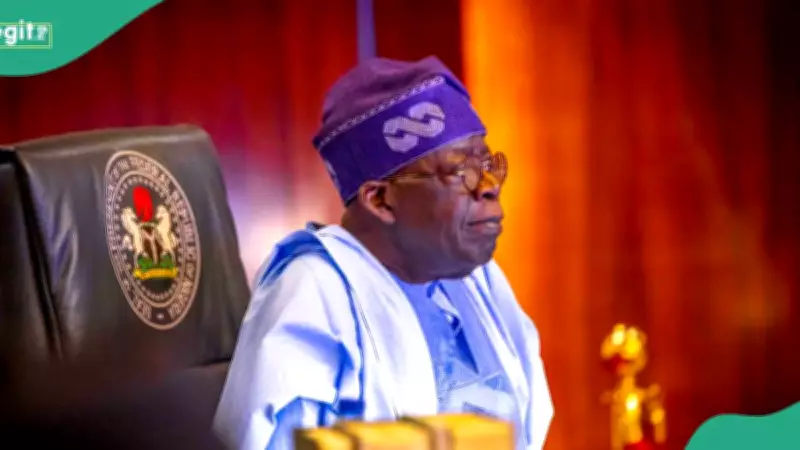
President Tinubu Enacts Electoral Act 2026 Amendment with Key Safeguards
President Bola Tinubu has officially signed the Electoral Act 2026 (Amendment) Bill into law, marking a pivotal moment in Nigeria's ongoing electoral reforms. The signing ceremony took place on Wednesday at the Presidential Villa, attended by senior government officials including Senate President Godswill Akpabio, Speaker of the House of Representatives Tajudeen Abbas, and Chief of Staff Femi Gbajabiamila.
Tinubu Commends National Assembly for Legislative Process
Following the assent, President Tinubu praised the National Assembly for managing the legislative process without confusion or disenfranchisement of citizens. He emphasized that democracy thrives on robust discussions aimed at national development and stability. Tinubu stated, "I followed keenly what you were doing; the essence of Democracy is to have very solid brainstorming discussions committed to national development and nation-building, stability of the nation."
Manual Voting and Transmission Safeguards Introduced
The new amendment introduces crucial safeguards to ensure manual results remain the primary source for collation if electronic transmission fails. Tinubu highlighted that Nigeria's voting process is largely manual, with ballot papers issued, thumbprinted, and counted by hand. He stressed the importance of accuracy in recording results on Form EC8A and the need to avoid glitches or interference.
Tinubu added, "It's just the arithmetic accuracy that is to enter into Form EC8A. It's the manual, essentially. The transmission of that manual result is what we're looking at. And we need to avoid glitches — I'm glad you did — interference, unnecessary hacking in this age of computer inquisitiveness."
Key Provisions in the Electoral Act 2026 Amendment
Clause 60(3) of the amended bill mandates that presiding officers must electronically transmit results from polling units to the IREV portal after completing and signing Form EC8A. However, if electronic transmission fails due to communication challenges, the manually completed Form EC8A will serve as the primary source for collation and declaration of results. This provision aims to strengthen confidence in Nigeria's electoral process by ensuring a reliable fallback in case of technical disruptions.
Outlook for Nigeria's Democratic System
President Tinubu expressed optimism about Nigeria's democratic journey, affirming that the country will continue to nurture its democracy for prosperity and stability. He noted that while technology plays a role in elections, the human element remains central in finalizing results. The amendment is expected to bolster public trust in the electoral system by addressing potential vulnerabilities in electronic transmission.
INEC Clarifies Results Protocol for FCT Council Poll
In related news, the Independent National Electoral Commission (INEC) has clarified that results for the Federal Capital Territory Area Council elections scheduled for February 21, 2026, will not be transmitted in real-time. INEC's Chief Press Secretary, Adedayo Oketola, explained that reports suggesting otherwise were inaccurate, noting that the commission's chairman, Prof. Joash Amupitan, was misquoted by some media outlets after visiting polling preparation centers.
The enactment of the Electoral Act 2026 Amendment underscores the government's commitment to enhancing electoral integrity and adapting to technological challenges while preserving the foundational aspects of manual voting processes.