Nigeria's Electoral Reform Bill Debate: Why Removing 'Real-Time' Transmission Raises Red Flags
Published 16 Feb 2026 at 2:33 PM by Ololade Olatimehin. Editor's note: In this piece, Josephine Adokwu, a Nigerian social change practitioner, examines the removal of the real-time results clause from the electoral reform bill, highlighting its implications for transparency, trust, and citizen confidence in elections.
The ongoing debate surrounding Nigeria's electoral reform bill, particularly the refusal to retain the clause mandating real-time electronic transmission of results, extends beyond a mere technical disagreement. It raises profound questions about political will, national responsibility, and whether the nation's democracy is genuinely designed to serve its people. While the reform bill signals progress, the omission of the real-time clause creates troubling gaps in electoral transparency.
The Loophole in Progress: Missing Real-Time Transmission
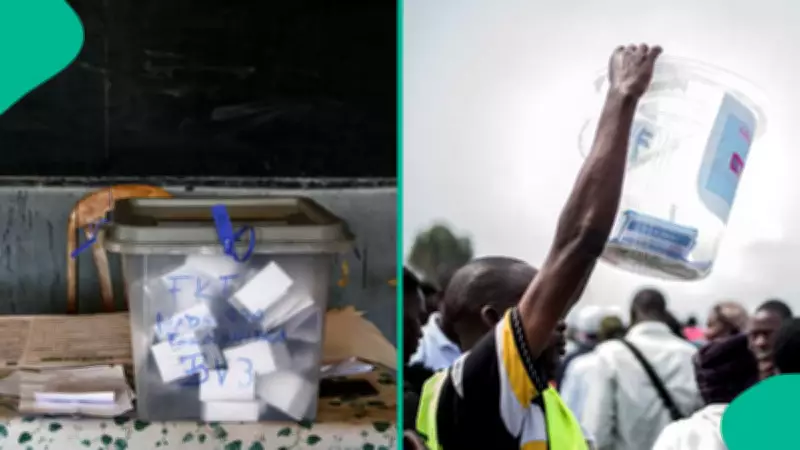
After sustained citizen mobilization, the National Assembly passed a proposal allowing presiding officers to transmit results electronically from each polling unit once the official form is signed. On the surface, this appears to be a step forward. However, the deliberate removal of the words "real time" from the clause is not a minor edit; it establishes a loophole that could easily reproduce the credibility challenges that defined the 2023 elections. Real-time transmission was intended to close the gap between events at the polling unit and what eventually appears at the collation centre, a stage historically vulnerable to manipulation. Removing the time-bound requirement weakens the promise of transparency and opens the door to delays, disputes, and widespread distrust.
Is Partial Reform a Genuine Victory for Democracy?
What is more concerning is the justification often presented, citing that some communities lack access to internet infrastructure. While it is important to consider the realities of marginalized populations, this argument exposes a deeper contradiction. If connectivity is truly the concern, why has there been no corresponding urgency to address digital exclusion in those communities? Why does this issue only become visible when transparency is on the table? Across Abuja, civil society groups, youth movements, and concerned citizens have taken to the streets demanding the restoration of real-time transmission. These protests are not mere spectacles; they reflect a broad and growing anxiety about whether Nigeria is willing to fix the weak points in its democratic process.
Why Real-Time Transmission is Essential for Democratic Integrity
In perspective, this moment is not just about a clause in a bill; it is about the kind of politics Nigeria wants to practice. Politics can still be humane, and standing with the people does not diminish power—it strengthens it. Leadership that listens, prioritizes fairness, and protects the integrity of the vote gains legitimacy that no political manoeuvre can manufacture. This is why the current celebration over what appears to be a partial reform feels premature. A transparency framework that leaves room for manipulation is not a victory; it is a warning sign. It is the kind of half-measure that looks promising on paper but fails when tested in real electoral conditions.
Citizen Engagement and Legislative Responsibility
Citizens must remain engaged beyond the headlines by demanding clarity in the law, supporting credible civil society campaigns, and holding elected representatives accountable for their choices in the National Assembly. It also means participating actively in civic education efforts, community dialogues, and peaceful advocacy for transparent elections. Lawmakers, on their part, have an opportunity to rebuild trust. Restoring the real-time transmission clause is not a concession to public pressure; it is a commitment to democratic integrity. It is a chance to demonstrate that governance can be responsive, humane, and aligned with the will of the people.
This is not the time for complacency. It is a time for deeper civic engagement, strategizing, organizing, and mobilizing for stronger reforms. It is a time for constructive dialogue and sustained electoral education at every level of society. At its core, the demand for real-time transmission is not a partisan demand; it is a democratic one. It is about ensuring that the will expressed at the polling unit is the same will reflected in the result. As Josephine Adokwu states, "No Nigerian is more Nigerian than the other; our democracy must work for all of us."