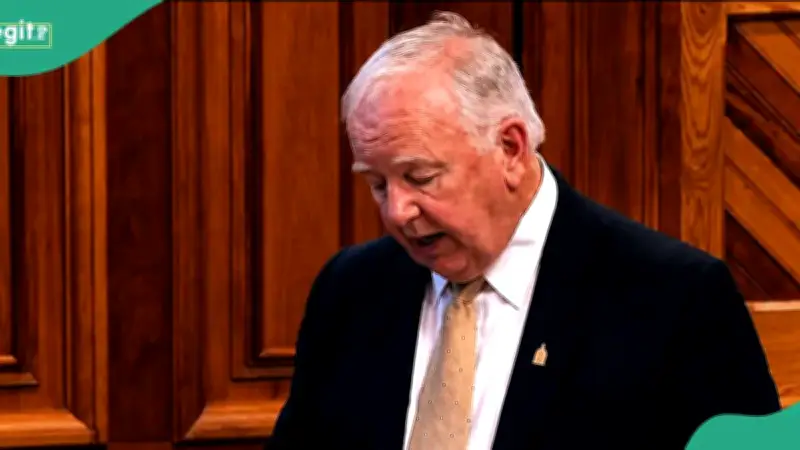
New Brunswick MLA Bill Oliver accidentally read AI rewriting instructions aloud during an official speech, twice, causing viral ridicule. The gaffe highlights AI's role in politics.
AI Instructions Read Aloud in Legislature
Bill Oliver, a Member of the Legislative Assembly (MLA) for New Brunswick and a former Speaker of the provincial legislature, was delivering remarks on public accountability on June 9, 2026, when he read aloud an AI tool's instruction to itself: "Here's a more natural flowing version of that section that reads like a legislative speech rather than a series of short points." The line was not part of his intended remarks but had been left in the final script by mistake.
The error did not stop there. Later in the same address, Oliver read further lines consistent with AI rewriting output, including phrases such as "This version should… here's a more developed and flowing version of the section" and "This section ends roughly." According to footage cited by Al Jazeera, multiple blocks of AI meta-text had survived from draft to delivery without anyone catching them.
Viral Spread and Public Reaction
The clip circulated widely across Reddit, Instagram, and YouTube from late July, weeks after the speech itself took place. The video drew widespread attention, with many social media users mocking the politician for the slip. The incident was particularly striking because Oliver is a former Speaker of the New Brunswick Legislative Assembly, making the mistake all the more embarrassing.
Futurism described the text Oliver read as "machine-amalgamated pablum," the kind of generic, bland prose that AI tools produce when converting bullet points into formal-sounding paragraphs. The AI platform involved has not been officially confirmed, though the phrasing closely matches the rewriting style of tools like ChatGPT. Oliver made no public comment after the clip began circulating, according to UA News.
Comparison to Other AI Speechwriting Cases
The incident draws an immediate contrast with Welsh politician Tom Giffard, who used ChatGPT to write a Senedd speech in 2023 and was transparent about it, even as the resulting text included oddities like "long live darts," as the BBC reported at the time. Oliver's reliance on AI became public only through error, not disclosure.
There was apparently no editorial review between copying the AI output and delivering it into the official legislative record. This lack of oversight highlights the risks of using AI in formal settings without proper verification.
Canada's Immigration Timeline Update
In an earlier report, Nigerians seeking visas and work permits to Canada will face longer waiting periods in several key immigration categories, according to the latest processing time update released by Immigration, Refugees and Citizenship Canada (IRCC). The June 2026 figures show a mixed picture across Canada's immigration system. While some programmes recorded faster processing times, Nigerian applicants experienced setbacks in areas such as visitor visas and work permits.
The incident involving Bill Oliver serves as a cautionary tale for public officials and professionals who increasingly rely on AI tools for drafting speeches and documents. As AI becomes more integrated into daily workflows, the importance of thorough proofreading and editorial oversight cannot be overstated.