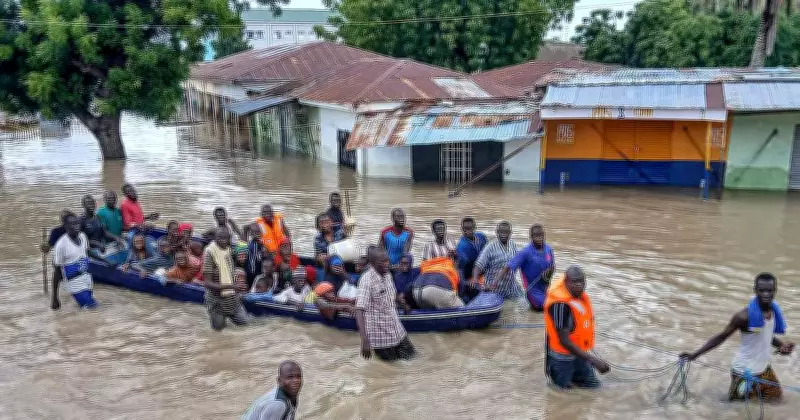
Federal Government Issues Dire Flood Warning for 2026 Affecting Majority of Nigerian States
The Federal Government has sounded a critical alarm regarding potential severe flooding across Nigeria in 2026, identifying 33 states and the Federal Capital Territory as facing high risk. This warning comes with sobering predictions that could impact thousands of communities nationwide.
Comprehensive Flood Outlook Reveals Widespread Vulnerability
According to Prof. Joseph Terlumun Utsev, Minister of Water Resources and Sanitation, approximately 14,118 communities across 266 Local Government Areas in 33 states and the FCT are expected to confront significant flood dangers. The minister presented these findings during the unveiling of the 2026 Annual Flood Outlook at the Presidential Villa in Abuja.
The Nigeria Hydrological Services Agency prepared this comprehensive report, which provides data-driven predictions designed to assist both authorities and citizens in preparing for the upcoming rainy seasons. The 2026 theme emphasizes "Smart Water Resources Management – Moving from Oil to Water-Based Economy," highlighting Nigeria's shifting priorities toward sustainable water management.
States Identified as High-Risk Zones
The Federal Government has specifically named these states as facing elevated flood risk:
- Abia, Adamawa, Anambra, Bauchi, Bayelsa, Benue, Borno
- Cross River, Delta, Ebonyi, Edo, Enugu, Gombe, Imo
- Jigawa, Kaduna, Kano, Kebbi, Kogi, Kwara, Lagos
- Nasarawa, Niger, Ogun, Ondo, Osun, Oyo, Plateau
- Rivers, Sokoto, Taraba, Yobe, Zamfara, and the FCT
Flooding is projected to occur between April and November 2026, with varying intensity throughout this period. The timeline reveals escalating risks:
- April to June: 9,021 communities across 188 LGAs at risk
- July to September: 14,158 communities across 263 LGAs (peak danger period)
- October to November: 11,575 communities across 224 LGAs
This indicates that the mid-year rainy season between July and September will likely present the most severe flooding challenges.
Urban Centers and Coastal Areas Face Particular Threats
Major urban centers across Nigeria have been identified as particularly vulnerable to flash flooding due to inadequate drainage systems and intense rainfall patterns. Cities at heightened risk include:
- Abuja, Lagos, Ibadan, Kano, Kaduna, Port Harcourt
- Benin City, Calabar, Warri, Onitsha, Sokoto, Yola
- Abakaliki, Abeokuta, Asaba, Birnin Kebbi, Makurdi, Nguru, Osogbo
Coastal and riverine regions face additional dangers from potential tidal surges and rising water levels. States including Bayelsa, Cross River, Delta, Lagos, Ogun, Rivers, and Ondo may experience compounded flooding effects that could disrupt fishing activities, damage delicate ecosystems, and hinder waterway transportation.
Moderate and Minimal Risk Areas Still Vulnerable
While not facing extreme flooding predictions, numerous areas remain vulnerable to moderate impacts. The report identifies 15,597 communities across 405 LGAs in 35 states (excluding Ekiti) as facing moderate flood risk. Additionally, 923 communities across 77 LGAs in 24 states are categorized as minimal risk areas.
Even moderate flooding can cause significant damage to agricultural lands, residential properties, and transportation infrastructure, particularly in regions with poor drainage systems. The cumulative effect across risk categories underscores the nationwide nature of this potential crisis.
Government Emphasizes Early Preparation and Smart Management
Minister Utsev stressed that early warnings like the 2026 Annual Flood Outlook serve critical purposes:
- Protecting human lives and preventing casualties
- Safeguarding homes, businesses, and critical infrastructure
- Minimizing economic losses and disruptions
- Supporting agricultural planning and community preparedness
Authorities are urging state governments to prioritize drainage system improvements and maintenance. Communities are advised to clear blocked waterways, while farmers should carefully plan planting seasons around predicted flood patterns. Residents in vulnerable areas are encouraged to stay informed through official weather alerts and advisories.
The Federal Government's warning represents a proactive approach to disaster management, emphasizing that preparation beginning now can substantially reduce damage when heavy rains intensify in 2026. This alert serves as both a caution and a call to action for coordinated preparedness efforts across all levels of government and society.