
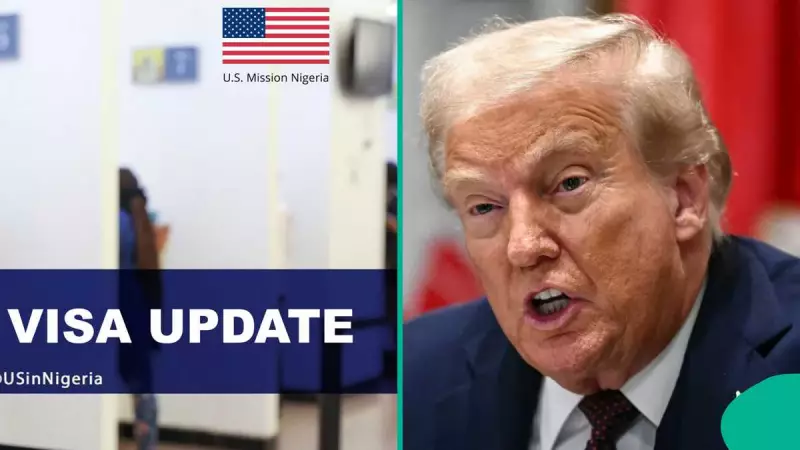
The United States government has confirmed a significant change to its immigration policy that will directly impact Nigerian applicants. Effective January 1, 2026, at 12:01 a.m. EST, the US will partially suspend the issuance of several key visa categories for nationals from 19 countries, including Nigeria.
Which Visas Are Affected by the Suspension?
The policy, enacted under Presidential Proclamation 10998 titled "Restricting and Limiting the Entry of Foreign Nationals to Protect the Security of the United States," covers a broad range of visas. The suspension applies to nonimmigrant B-1/B-2 visitor visas, F and M student visas, J exchange visitor visas, and all immigrant visas. This move, announced by President Donald J. Trump on December 16, creates substantial new hurdles for many Nigerians planning to travel, study, or relocate to the United States.
However, US officials have been quick to clarify that the suspension is not absolute. They have outlined several important exemption categories, ensuring that specific groups of Nigerians can continue their visa application processes without interruption.
Key Exemptions for Nigerian Citizens
Despite the broad restrictions, the US Department of State has confirmed that the following categories of Nigerians remain exempt:
1. Nigerians with Immigrant Visas for Persecuted Minorities: A critical humanitarian exemption allows for the continued issuance of immigrant visas to ethnic and religious minorities facing persecution, specifically referencing Iran. Nigerians who qualify under this category through family ties or humanitarian programs will not be affected by the suspension.
2. Nigerians Holding Dual Nationality: This is a major exemption for many. Officials state that dual nationals who apply for a US visa using a passport from a country not on the list of 19 affected nations are fully exempt. Therefore, a Nigerian who also holds citizenship from the United Kingdom, Canada, or another non-listed country can proceed with their application using that second passport.
3. Nigerians Eligible for Special Immigrant Visas (SIVs): The proclamation explicitly protects Special Immigrant Visas under U.S. Code 1101(a)(27)(D). These visas are for individuals who have served the US government, often as translators or in other support roles. Nigerians with qualifying service can still apply for and receive these visas.
4. Nigerian Participants in Major Sporting Events: Athletes, coaches, and officials traveling to the United States for recognized international competitions are exempt. This ensures Nigerian sports professionals can continue to participate in global events held on American soil.
5. Nigerians Who Are Lawful Permanent Residents (LPRs): The suspension does not impact individuals who already possess a US Green Card. Nigerian Lawful Permanent Residents retain their full rights to travel and re-enter the United States.
Valid Visas and the Rationale Behind the Rules
The US Department of State has provided crucial reassurance regarding existing visas. All visas issued before the January 1, 2026, deadline will remain valid. This means current visa holders do not need to reapply and can travel according to the terms of their existing visa.
In its announcement, the State Department emphasized that the primary goal of Presidential Proclamation 10998 is to protect US national security interests. However, the detailed list of exemptions demonstrates a recognition of important humanitarian needs, professional obligations, and international sporting commitments. The policy is designed as a targeted security measure, not a blanket ban on all Nigerians.
For the vast majority of Nigerian applicants not falling into the exempted categories, the path to obtaining a new US visa will become significantly more challenging starting in 2026. Prospective travelers, students, and immigrants are advised to consult official US government channels for the most current and personalized guidance regarding their specific situations.




