
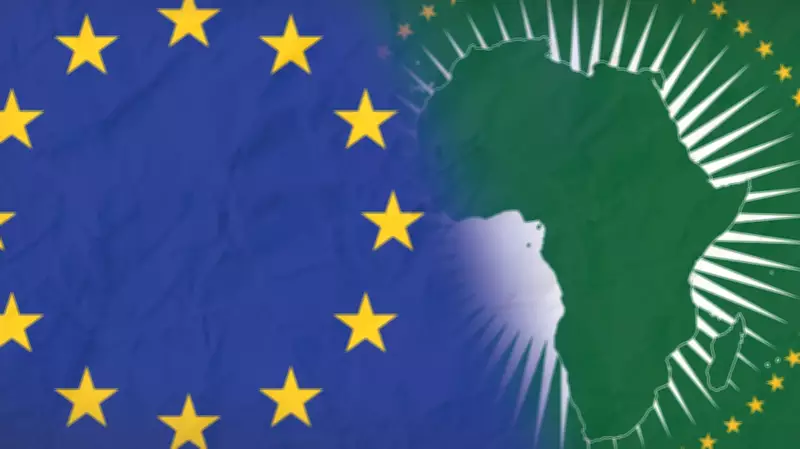
Historical Scars and Modern Tensions in Africa-Europe Relations
The United Nations General Assembly recently made a landmark declaration, identifying the four-century-long transatlantic slave trade as "the gravest crime against humanity." This resolution, adopted by 123 of 193 member states, called for reparations for victims across Africa, the Caribbean, and the Americas. Notably, European nations most culpable for this historical atrocity abstained from voting, underscoring a persistent rift.
A Legacy of Unequal Partnerships
Despite geographical proximity—the Strait of Gibraltar separates the continents by just eight miles—Europe has rarely been a benevolent neighbor to Africa. Relations remain deeply shaped by the trauma of five centuries of slavery and colonialism. While the European Union has provided over €3.5 billion in security funding to Africa since 2004, its approach often feels paternalistic.
Between 2002 and 2016, the EU's heavy-handed negotiation of economic partnership agreements and the 2007 revocation of non-reciprocal trade preferences left African nations feeling trapped in an unequal dynamic. Development concerns were frequently dismissed, and draconian migration policies have only reinforced perceptions of an abusive relationship.
Diplomatic Theater and Economic Realities
The most recent African Union-EU summit in Luanda, Angola, last November exemplified this pattern. Policymakers repeated platitudes about "shared values" and "mutual interests," but civil-society and business input was largely ignored. Eurocrats drafted most "joint" documents, marginalizing African voices.
While the EU is admired as a model of regional integration—with a GDP of $19.5 trillion in 2024 and 67% intra-regional trade—its global economic influence has waned. The bloc's share of global GDP fell from 25% in 1990 to 14.2% in 2024. Technological backwardness and overregulation, as highlighted in Mario Draghi's 2024 competitiveness report, contribute to sclerotic growth.
Historical Brutality and Contemporary Subtleties
European colonialism was marked by extreme violence. Belgian King Leopold's tyranny caused ten million Congolese deaths, Germany committed genocide in Namibia, and France's war in Algeria resulted in one million fatalities. British forces killed 25,000 Kenyans, and Italy used chemical weapons in Libya.
Today, Europe's dominance tactics are more subtle but equally harmful. African negotiators accuse the EU of "divide and rule" strategies in trade talks. The bloc pushes to open African markets in sensitive sectors like services and intellectual property, while its Common Agriculture Policy floods Africa with cheap products, stifling local industries.
Failed Initiatives and Diplomatic Isolation
The EU's $150 billion Global Gateway Investment Package, intended to counter China's Belt and Road Initiative, has stalled. The bloc has also failed to support debt relief, lower borrowing costs, or value-added industrialization in Africa. This explains why only half of African nations backed the EU's 2022 UN resolution condemning Russia's invasion of Ukraine.
Under the second Trump administration, European countries slashed foreign aid, with official development assistance projected to drop 17% in 2025. The EU's silence on genocide in Gaza and illegal U.S. interventions in Iran and Venezuela further erodes its moral standing, making it harder to rally Global South support for Ukraine.
A Call for Collective Therapy
Europe's lack of confidence is evident. Only Spanish Prime Minister Pedro Sánchez has taken a moral stand against U.S. aggression, while others like Italy's Giorgia Meloni absurdly justified Trump's actions. This failure to uphold international law, coupled with an unwillingness to treat Africa as an equal, threatens to haunt Europe's future.
As Adekeye Adebajo, editor of The Black Atlantic's Triple Burden, argues, true partnership requires acknowledging historical scars and moving beyond paternalism. Without collective therapy, Europe risks becoming a museum of past glory, isolated in a rapidly changing world.




