
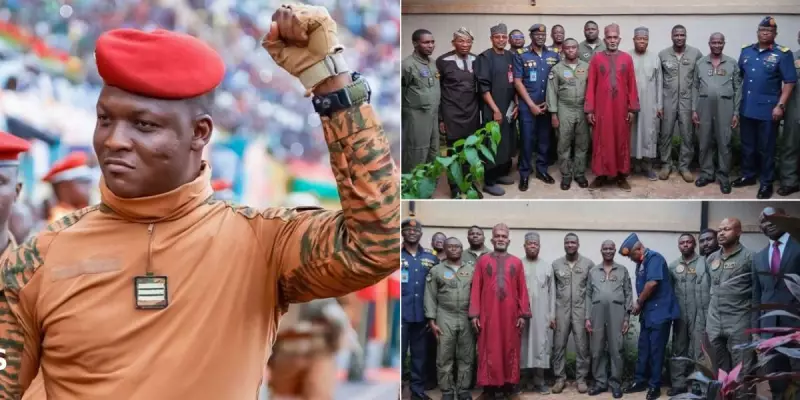
In a significant diplomatic development, Burkina Faso has freed 11 Nigerian Air Force (NAF) personnel who were detained for nine days. Their release came after a high-level Nigerian delegation, led by the Minister of Foreign Affairs, Yusuf Tuggar, engaged in crucial talks in Ouagadougou.
High-Level Diplomacy Secures Release
The resolution was achieved following official engagements between the Nigerian delegation and Burkina Faso's military leader, President Ibrahim Traoré. The team from Nigeria included senior officials from the Ministry of Foreign Affairs, the Ministry of Defence, and the NAF Headquarters.
The delegation's primary mission was to resolve the detention through dialogue and de-escalation. Security sources indicate the discussions centered on building confidence, securing the personnel's freedom, and reaffirming Nigeria's adherence to international aviation rules and military protocols.
Incident Rooted in Emergency Landing
The detention stemmed from an incident where a Nigerian Air Force C-130 Hercules aircraft made an unscheduled landing in Bobo-Dioulasso. Burkinabè authorities initially labeled the landing, which occurred without prior airspace clearance, a violation of their sovereignty.
However, the Nigerian Air Force clarified that the aircraft executed a precautionary emergency landing due to a technical fault. They maintained this action was in full compliance with standard safety procedures and international aviation protocols for such situations.
Regional Tensions and Diplomatic Nuance
This incident occurred against a complex backdrop of growing insecurity in the Sahel and strained regional relations. The recent withdrawal of Burkina Faso, Mali, and Niger from the Economic Community of West African States (ECOWAS) to form the Alliance of Sahel States has heightened diplomatic sensitivities.
Analysts had warned that the detention could escalate into a serious diplomatic standoff if not carefully managed. The successful negotiation has therefore eased tensions that threatened to disrupt relations between the two West African neighbours.
After the talks, Minister Yusuf Tuggar emphasized the long-standing ties and shared security challenges between both nations. He acknowledged procedural lapses in the authorization process for the aircraft's entry into Burkinabè airspace and expressed Nigeria's regret.
Tuggar formally reaffirmed Nigeria's respect for Burkina Faso's sovereignty and international rules. He also distanced the Nigerian government from unauthorized comments made by a political party official regarding the treatment of the detained personnel and offered formal apologies to Burkinabè authorities for those remarks.
The diplomatic intervention has been described as a deliberate effort to strengthen trust and reinforce neighbourly relations, successfully averting a potential crisis.




