
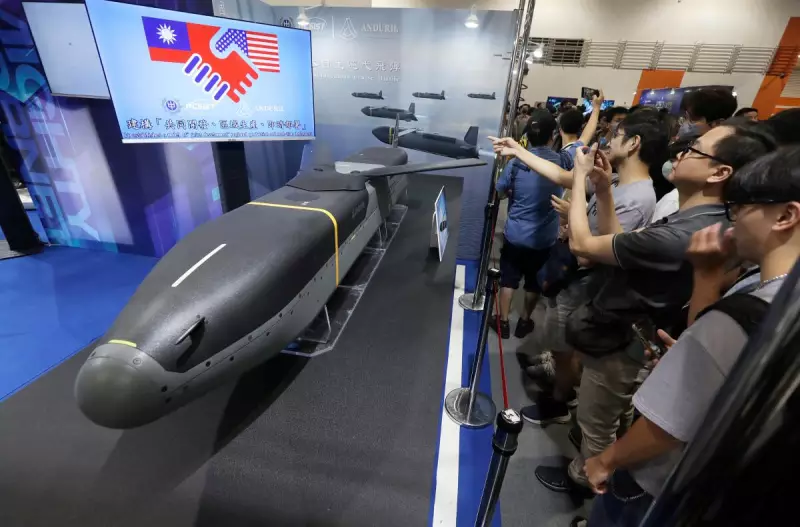
In a significant escalation of diplomatic tensions, the Chinese government has announced sweeping sanctions against twenty major defence companies based in the United States. This decisive move comes as a direct response to Washington's recent approval of a substantial new weapons package for Taiwan, a self-ruled island that Beijing claims as its own territory.
Targeting Key US Defence Contractors
The list of sanctioned entities, disclosed on 27th December 2025, includes some of the most prominent names in American military manufacturing. Among them are Boeing's defence manufacturing unit located in St. Louis and the aerospace and defence giant Northrop Grumman. This action follows the United States green-lighting what Taiwanese authorities described as one of their largest defence packages in recent years, valued at approximately $11 billion.
For decades, the United States has served as Taiwan's primary source of military hardware, a policy that consistently draws fierce condemnation from Beijing. China opposes any form of official contact or arms sales between other nations and Taiwan and has never renounced the use of force to achieve reunification.
Scope and Impact of the New Sanctions
The newly imposed measures carry concrete financial and operational consequences. Under the sanctions framework:
- All Chinese entities are now formally prohibited from engaging in any import, export, or investment activities with the listed American firms.
- Any assets that these twenty companies hold within Chinese jurisdiction will be immediately frozen.
- In a personal targeting of leadership, Beijing also announced sanctions against ten senior executives from the affected corporations. These individuals are now barred from entering mainland China, as well as the special administrative regions of Hong Kong and Macau.
It is noteworthy that several of the companies on the list have faced previous Chinese sanctions and are believed to have minimal or no existing commercial operations within China, limiting the immediate economic bite of the move.
A Core Issue of Sovereignty and Rising Tensions
In an official statement, China's foreign ministry condemned the latest US arms sale, stating it "violates the one-China principle" and "seriously damages China's sovereignty and territorial integrity." The one-China principle is the foundational bedrock of Beijing's foreign policy regarding Taiwan, under which most countries, including the US, recognise the People's Republic of China as the sole legitimate government of China, though they maintain unofficial ties with Taipei.
This latest round of sanctions further strains the already complex relationship between the world's two largest economies. The Taiwan issue remains a core national interest for China, perceived as a matter of national unity and territorial integrity. Conversely, the United States, bound by its own legislation like the Taiwan Relations Act, continues to provide the island with defensive military capabilities, arguing it is essential for maintaining peace and stability in the Taiwan Strait.
As of the announcement, representatives from Boeing and Northrop Grumman had not issued public comments in response to the sanctions. The situation underscores the delicate and volatile nature of the geopolitical standoff, where arms sales and economic penalties are key instruments in a high-stakes diplomatic confrontation.




