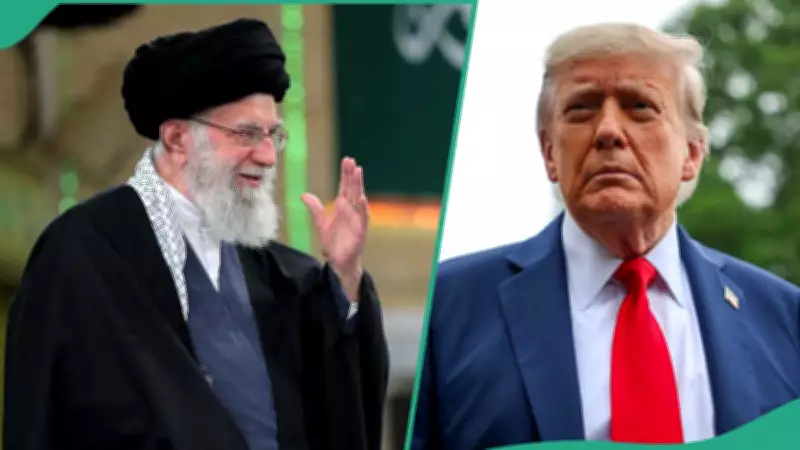
CIA Intelligence Pivotal in US-Israel Strike That Eliminated Iran's Supreme Leader
A comprehensive report from The New York Times has disclosed that intelligence gathered by the United States Central Intelligence Agency (CIA) played a decisive role in the coordinated military strike that resulted in the death of Iran's Supreme Leader, Ayatollah Ali Khamenei. The operation, conducted jointly by American and Israeli forces, targeted a leadership compound in central Tehran where Khamenei was attending a high-level security meeting.
Intelligence Gathering and Operational Planning
According to sources familiar with the operation, CIA operatives had been monitoring Khamenei's movements for several months prior to the attack. The intelligence breakthrough came when surveillance confirmed the Supreme Leader would be present at a scheduled meeting of Iran's top national security officials on Saturday morning, February 28, 2026. This critical information prompted a significant adjustment to the original military plans.
The United States and Israel had initially prepared for nighttime strikes, but the confirmed intelligence about Khamenei's morning whereabouts led to a strategic shift in timing. American authorities shared this crucial intelligence with their Israeli counterparts, who then assumed primary responsibility for executing the attack on the Iranian leadership compound.
The operation commenced around 6:00 AM Israeli time (0400 GMT), with long-range missiles striking the compound at approximately 9:40 AM local time. This precision timing was directly informed by the CIA's intelligence about the meeting schedule, ensuring maximum impact against the assembled Iranian leadership.
Casualties and Leadership Losses
The strike resulted in significant casualties among Iran's highest-ranking officials. According to Iranian state media and military sources, the following senior figures were confirmed killed in the attack:
- Ali Khamenei – Supreme Leader of Iran since 1989
- Ali Shamkhani – Head of Iran's Supreme National Security Council
- Mohammad Pakpour – Commander-in-Chief of the Islamic Revolutionary Guard Corps (IRGC)
- Abdul Rahim Mousavi – Chief of Staff of Iran's Armed Forces
- Aziz Nasirzadeh – Iran's Defence Minister
Iranian authorities indicated that additional armed forces commanders were also killed, with their names to be released subsequently. The Israeli military published its own list of eliminated targets, which included several intelligence and research officials beyond those confirmed by Tehran.
Immediate Aftermath and Regional Escalation
Following the devastating strike, Iran launched immediate retaliatory attacks against perceived American and Israeli interests in the region. Reports emerged of explosions near US military bases and in the Emirati capital of Abu Dhabi, signaling a rapid escalation of hostilities.
US President Donald Trump declared that American bombing operations would continue "as long as necessary," raising concerns about the potential for broader regional conflict. The killing of Khamenei, who had led Iran for nearly four decades, represents a dramatic intensification of tensions between Tehran, Washington, and Tel Aviv.
Leadership Transition and Constitutional Process
In response to the leadership vacuum created by Khamenei's death, Iran activated constitutional provisions for interim governance. Religious scholar Alireza Arafi, a member of Iran's Guardian Council, was appointed to a leadership council tasked with carrying out the responsibilities of the supreme leader during the transition period.
Arafi will serve alongside President Masoud Pezeshkian and Chief Justice Gholam-Hossein Mohseni-Ejei as part of a temporary governing body that will manage state affairs until a permanent successor can be elected through established constitutional processes.
The Israeli military claimed the strikes represented their first direct attack on "the heart of Tehran" since the current wave of hostilities began, stating the operation aimed to establish aerial superiority and create strategic pathways to the Iranian capital. Iranian authorities reported over 200 casualties nationwide from the coordinated attacks and vowed continued retaliation against American and Israeli interests.