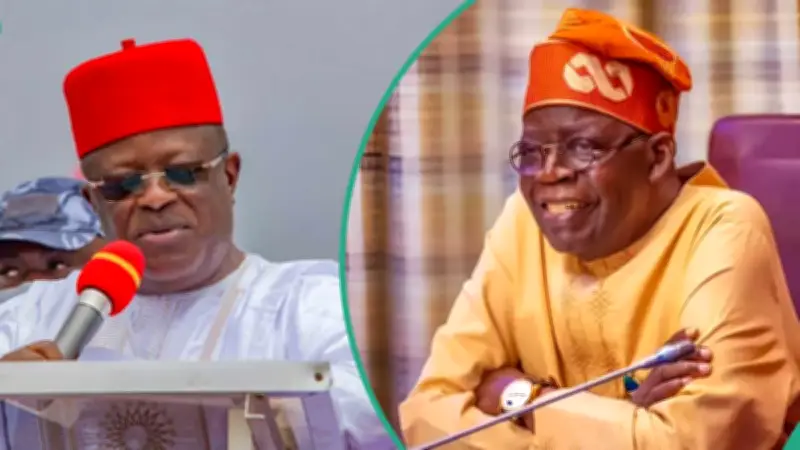
Minister of Works David Umahi has revealed that President Bola Tinubu's decision to merge the Lagos-Calabar Coastal Highway project with the existing East-West Road was driven by the need to address climate change and create a more durable transport corridor. Umahi, speaking on the revised approach, said the Federal Government would upgrade the already existing East-West Road instead of constructing a completely new coastal alignment from the Ondo end through Edo State.
President's Decision Welcomed by Umahi
Umahi described President Tinubu's decision as one he personally welcomed, noting that it was made last week. He stated, "Mr President, you know, last week, made a very wonderful decision. And that is to say, from the end of Ondo, going into Edo, that in fact, we do not need a new alliance. Past the coastal highway, through the existing East-West route, which was one of my happiest days."
The minister explained that the East-West Road, built several decades ago, was no longer adequate for current environmental conditions and would require significant strengthening. A key component of the upgrade involves lifting sections of the road by two metres in multiple locations, placing them above the present flood level and preparing the infrastructure for future climate impacts.
Raising the East-West Road Above Flood Levels
Umahi emphasized the importance of raising the road to mitigate flooding, saying, "And that's very beautiful, because we now have to raise the east-west route, you know, in many locations, by two metres, so that it will be above the present flood level, and then also express the expectancy of climate change." This measure is intended to safeguard the corridor against the increasing threats posed by climate change.
The minister also highlighted the planned Benin bypass as a central feature of the revised corridor. He put the total distance from the end of Ondo State to the end of Edo State at roughly 104 kilometres, with 45 kilometres of that distance covered by the bypass. Umahi said the bypass around a challenging section of the route was the most practical solution for navigating through the area.
Benin Bypass: A Crucial Component
"If you are aware of the Benin bypass, you will give kudos to Mr President, because that's the only solution we find to pass through the open centre of Benin," Umahi said. He praised the governors along the corridor for their cooperation with the Federal Government, saying their support was essential to the success of the infrastructure drive.
Umahi added that the overall goal of the revised plan was to improve connectivity along the coastal corridor while ensuring the road could withstand the long-term effects of environmental changes. The project is part of broader efforts to enhance transportation infrastructure in Nigeria.
Atiku's Criticism Over Route Change
Meanwhile, Atiku Abubakar's campaign council has accused the Tinubu government of rerouting parts of the Lagos-Calabar Coastal Highway without public accounting. The former vice president raised concerns about intelligence suggesting a proposed loan of up to $20 billion linked to the coastal highway project. Atiku's camp also alleged that some lawmakers were being pressured to approve the anticipated loan request ahead of any National Assembly vote.
The controversy highlights ongoing political tensions over the project's funding and transparency. As the Federal Government proceeds with the revised plan, the focus remains on delivering a resilient road that meets the region's needs while addressing climate challenges.