
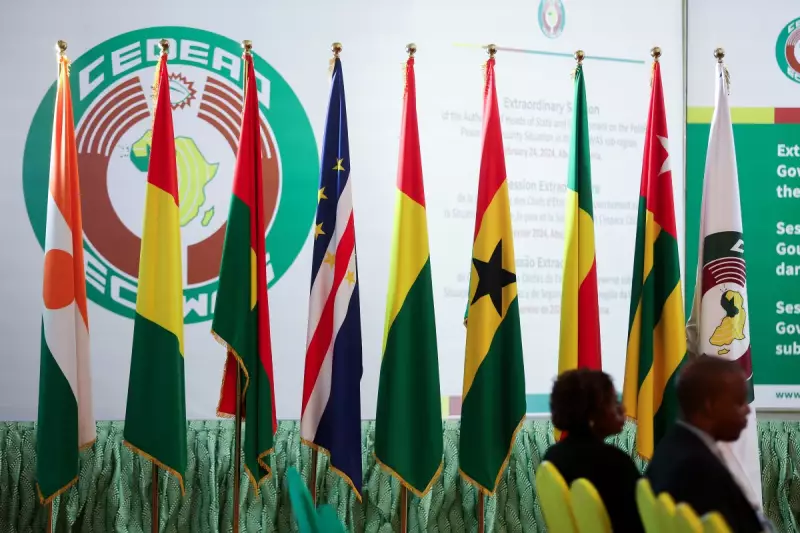
The Chairman of the Nigerians in Diaspora Commission (NiDCOM), Mrs Abike Dabiri-Erewa, has issued a fresh appeal to leaders of the Economic Community of West African States (ECOWAS) to decisively tackle the lingering obstacles that continue to frustrate visa-free travel across the region.
Biker's Epic Journey Exposes Border Hardships
Dabiri-Erewa made the call in Lagos on Friday, January 9, 2026, while receiving Nigerian adventurer Judith Amadi. Amadi had just completed a historic solo motorcycle expedition from Lagos to France and back, a journey that spanned from October 18, 2025, to January 3, 2026. The trip aimed to raise awareness and funds for cancer patients in Nigeria.
However, Amadi's experience crossing West African borders revealed a stark contrast to the region's promise of seamless movement. She detailed facing significant hurdles not encountered in Europe with her Schengen visa.
"Movement is Meant to Be Borderless"
In her account, Amadi lamented excessive border delays, unofficial charges, and repetitive documentation demands. "Trying to pass from one country to another with a Nigerian passport was too much of a struggle," she stated. "I would be asked to wait while someone with a different passport would come and go freely."
She highlighted the discrepancy between official policy and on-ground reality: "You’re aware of the official visa fees, but when you get there, you’re told to pay for stamping and extra documentation that are not part of the official process. We are in a West African community. We’re not supposed to be paying for these things. Movement is meant to be borderless." Bad infrastructure along African corridors further compounded her challenges.
A Persistent ECOWAS Challenge
Responding to this, Dabiri-Erewa emphasized that Amadi's ordeal was not an isolated incident. "She was not the first to face it; others in the past have equally faced the same challenge," the NiDCOM boss noted.
She stressed that the issue deserves renewed focus from regional leaders, especially as the bloc navigates a period of uncertainty following the formal withdrawal of Mali, Niger, and Burkina Faso. Their exit, notified on January 29, 2024, took full effect after the required one-year notice period.
"It’s an issue that should be brought to the forefront of our ECOWAS leaders because we are supposed to travel visa-free. That is why we have an ECOWAS passport," Dabiri-Erewa asserted. While acknowledging that leaders are "gradually addressing the challenges," she insisted public attention must remain on the problem until it is fully resolved.
Advocacy for Cancer Care Support
Beyond border issues, Judith Amadi used the platform to spotlight the dire financial plight of cancer patients in Nigeria. She revealed that a single chemotherapy session can cost between N300,000 and N500,000, depending on the type and stage of cancer.
"How many average Nigerians can afford that?" she asked. "That’s why financial support is critical for patients to complete their treatment." Her journey successfully brought this advocacy goal to the fore, despite the travel difficulties.
Dabiri-Erewa concluded by urging continuous dialogue and action to realize the core ideal of ECOWAS: genuine free movement for its citizens.




