
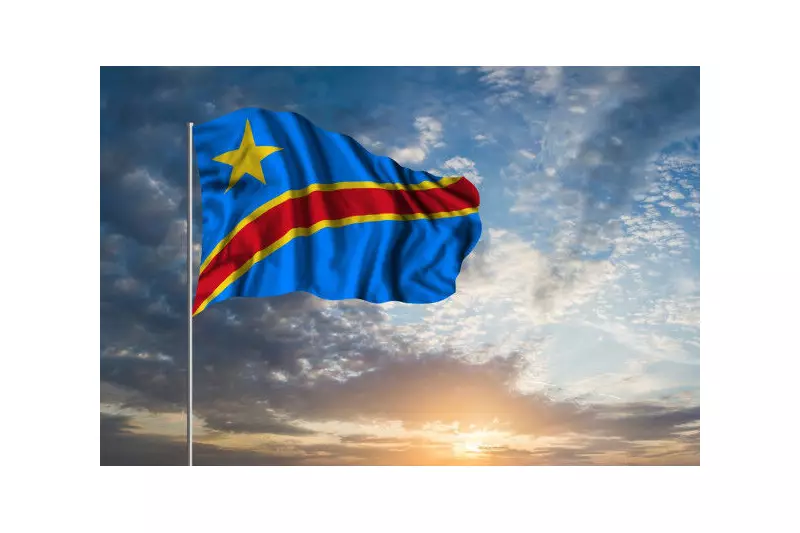
A new peace agreement aimed at ending decades of conflict in the eastern Democratic Republic of Congo (DRC) was signed in Washington on Thursday, 5 December 2025. However, the promise of peace on paper clashes violently with the reality on the ground, where fierce battles between the M23 rebel group and Congolese forces continue unabated.
The Three Pillars of the Washington Accord
The signing ceremony, presided over by US President Donald Trump, saw Congolese President Felix Tshisekedi and Rwandan President Paul Kagame put their names to a three-part deal. The first and most urgent component demands an immediate cessation of hostilities, including a ceasefire and a programme for disarmament.
The second part establishes a framework for regional economic integration. A key US objective here is to foster cooperation between Kinshasa and Kigali to trace and clean up supply chains for critical minerals like coltan, cobalt, copper, and lithium. These resources are vital for high-tech industries worldwide.
The final component involves bilateral agreements between the United States and both the DRC and Rwanda concerning the exploitation of these minerals. The DRC holds immense reserves, accounting for roughly 76% of the world's cobalt production last year, a metal crucial for lithium-ion batteries. Currently, Chinese firms dominate this sector. President Trump highlighted the economic motive, stating, "Everybody’s going to make a lot of money" from US access to these strategic resources.
Signatures on Paper, Gunfire on the Ground
Despite the fanfare in Washington, the situation in eastern DRC remains dire. On Friday, the day after the signing, intense fighting was reported in South Kivu province. The UN-accused, Rwandan-commanded M23 group battled the Congolese army and pro-government militias.
Local sources told AFP that heavy gunfire was exchanged on the outskirts of Kamanyola, a town under M23 control near the borders with Rwanda and Burundi. "We are still in houses under the beds," lamented civil society representative Wenceslas Bisimwa. Amos Bisimwa in Bukavu noted pessimistically, "At the very moment the agreement is being signed, clashes continue on the ground."
This scepticism is widespread. Approximately 60 Congolese civil society groups issued a joint declaration warning that the peace deal remains merely "on paper." The conflict, fueled by the M23's resurgence in 2021 and its capture of strategic towns like Goma and Bukavu in early 2025, shows no signs of halting for a signature.
Old Challenges Undermine New Deal
This is not the first attempt at peace. Since 2021 alone, half a dozen ceasefires and truces have been signed and subsequently violated. The Washington agreement itself faces immediate hurdles. The Congolese and Rwandan leaders did not shake hands at the ceremony.
Kinshasa conditions any peace on the withdrawal of Rwandan troops from its territory, which Kigali has never explicitly acknowledged. Rwanda, in turn, demands the neutralisation of the FDLR, an armed Hutu group in eastern DRC linked to the 1994 genocide.
Furthermore, the M23 is not a signatory to the Washington accord. Separate negotiations between Kinshasa and the rebels have been held in Qatar, where a roadmap was signed in November and a declaration backing a "permanent ceasefire" was inked in July. Yet, both sides have repeatedly accused each other of breaking that ceasefire. The path from a signed document to delivered peace in the DRC remains fraught with immense complexity and deep-seated distrust.




