
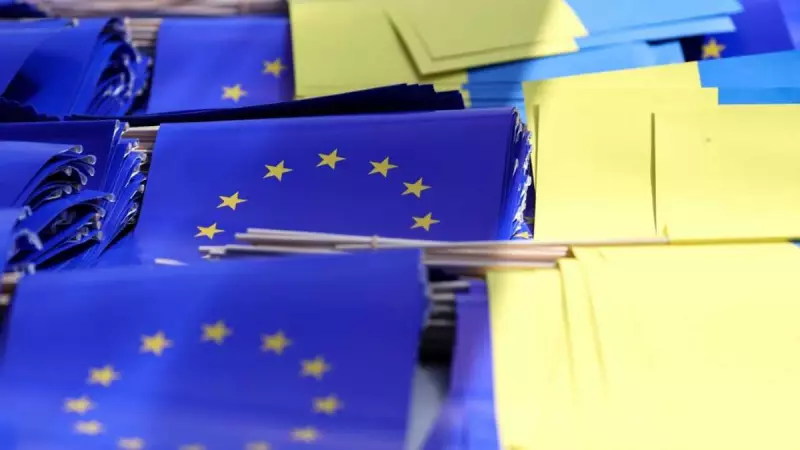
European Union leaders are gathering in Brussels for a critical summit starting Thursday, under immense pressure to finalise a plan to keep financial aid flowing to Ukraine. The war-torn nation faces a massive funding gap as it continues to fight against Russia's invasion.
The Staggering Cost of Supporting Ukraine
According to Brussels' own estimates, Kyiv will require an additional 135 billion euros (approximately $160 billion) over the next two years to cover its military needs and keep its government functioning. This enormous sum has forced the EU to consider unprecedented financial measures to bridge the shortfall.
The Controversial Proposal: Tapping Frozen Russian Assets
In response, the European Commission has proposed a complex financial scheme. The plan centres on using roughly 200 billion euros of Russian central bank assets that were frozen in the EU after the invasion. The bulk of these funds are held by Euroclear, a Belgium-based financial depository.
The proposed manoeuvre would see Euroclear lend money to the EU, which would then forward it as a loan to Ukraine. Crucially, Kyiv would only repay the loan once Moscow compensates it for war damages. The EU's executive arm aims to provide an initial 90 billion euros through this mechanism, hoping international partners will contribute the remaining funds.
Belgium's Resistance and Legal Fears
Despite backing from major players like Germany, the plan faces fierce opposition from a key member: Belgium. The Belgian government fears crippling legal and financial retaliation from Moscow if the frozen assets are used. It is demanding ironclad guarantees that other EU nations will share the potential risk.
The European Commission has proposed a "three-tier defence" to shield Belgium and Euroclear, but this has so far failed to break the deadlock. The tension escalated last week when Russia's central bank announced it was suing Euroclear, a clear warning shot to the bloc.
EU foreign policy chief Kaja Kallas acknowledged the difficulty on Monday, stating, "It is increasingly difficult, but we're doing the work and we still have some days." Officials have vowed that leaders will not leave the summit without an agreement on Ukraine funding, setting the stage for potentially marathon negotiations.
The Stakes: Europe's Political Credibility on the Line
The debate is unfolding against the backdrop of U.S. President Donald Trump's separate efforts to broker a ceasefire. Washington views the frozen assets as a potential bargaining chip with Moscow, a stance that makes some EU leaders cautious about moving forward and potentially angering the U.S. administration.
However, other European diplomats argue that failing to act would undermine the EU's geopolitical standing. "The decision on these funds is a decision about the future of Europe and its political capacity to act," one EU diplomat warned. With Trump criticising European leaders as weak, there is a palpable fear that inaction would reinforce this perception and sideline the EU in future peace talks.
The fallback option—for the EU to loan Ukraine money directly from its own budget—finds little enthusiasm among member states grappling with their own financial constraints. While the bloc could theoretically override Belgium's concerns with a weighted majority vote, this is seen as a last-resort "nuclear option" that could fracture unity. The outcome of the summit will reveal not just the future of Ukraine's financing, but the EU's resolve in a turbulent global landscape.




