
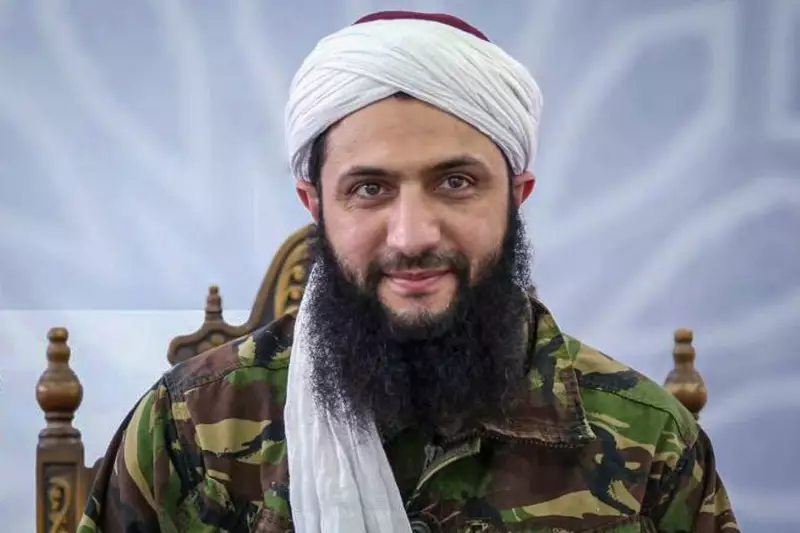
In a remarkable turn of events that signals a dramatic shift in Middle East diplomacy, Syria's President Ahmad Al-Sharaa is scheduled to meet with US President Donald Trump at the White House on Monday. This historic encounter marks the first-ever visit by a Syrian head of state to the White House and represents an almost unthinkable transformation for the former jihadist leader.
From Battlefield to Basketball Court
The White House meeting comes just one day after Al-Sharaa was photographed playing basketball with top US military officials in Washington. The images of the 43-year-old Syrian leader engaging in friendly sports with American commanders circulated widely on social media, highlighting the extraordinary nature of his diplomatic offensive.
Less than a year after his swift power grab, Al-Sharaa has completed a journey from jihadist insurgency to global statesman. The meeting with the US commander-in-chief represents the most high-profile encounter yet for a man who previously faced American forces on the battlefield in Iraq during his insurgent days.
Diplomatic Transformation and Sanctions Relief
Since appointing himself as president of Syria in January, Al-Sharaa has embarked on his twentieth foreign trip, demonstrating a determined effort to reverse Syria's decades of international isolation. The diplomatic breakthrough gained momentum in May when, following a meeting brokered by Saudi Crown Prince Mohammed bin Salman, President Trump described the Syrian leader as a "young, attractive guy" with a "very strong past."
This positive assessment led to significant policy changes, with Trump ordering the lifting of some crippling US sanctions on Syria. The country had long been aligned with American adversaries Russia and Iran, making this sanctions relief particularly noteworthy.
Strategic Objectives and Regional Realignments
Al-Sharaa's immediate priorities in Washington include pushing for the complete removal of remaining stringent US sanctions, which require congressional approval. He is also expected to urge Trump to pressure Israel to halt attacks on Syria and withdraw troops from the southern part of the country.
The ultimate goal is to shatter the diplomatic isolation that has left Syria economically devastated and shackled to a narrow axis of allies. The symbolic weight of the White House visit cannot be overstated, particularly given Al-Sharaa's background as an enemy combatant in his early twenties, when he joined Islamist insurgents battling American forces in Iraq.
After being captured and later released, he crossed into Syria in 2011 to establish an Al-Qaeda-backed rebel army to fight forces loyal to then-President Bashar Al-Assad. Following over a decade of brutal civil conflict, Al-Sharaa launched a surprise offensive that swiftly toppled the 53-year Assad dynasty, effectively ending Syria's long-stalemated civil war.
Despite the change in leadership, Al-Sharaa has been careful to maintain ties with Russia, including a visit to Moscow last month to meet Vladimir Putin. In an October interview with CBS's "60 Minutes," he demonstrated his commitment to balanced foreign policy, stating that "engaging in a conflict with Russia right now would be too costly for Syria, nor would it be in the country's interest."
The Syrian leader, once sanctioned for terrorism by Western nations, is now on a global diplomatic charm offensive aggressively backed by US allies Saudi Arabia and Turkey. These regional heavyweights appear eager to fill the power and economic vacuum left by diminished Iranian and Russian influence.
US Strategic Calculations
For the United States, engaging with Syria represents a calculated risk. According to Joshua Landis, director of the Center for Middle East Studies at the University of Oklahoma, the US has few alternatives, especially as neighboring Lebanon spirals into instability and Iraq remains heavily influenced by pro-Iranian militias.
Natasha Hall, a senior associate at the Center for Strategic and International Studies (CSIS), summarized the new geopolitical approach: "In this new era, one doesn't align completely with any side." This policy of balancing foreign policy away from conflict, even with figures like Putin—an active ally of the previous Assad regime—marks a significant strategic shift now followed by several developing nations worldwide.
The White House meeting between Trump and Al-Sharaa represents not just a personal transformation for the Syrian leader but potentially a fundamental reordering of Middle East alliances and diplomatic relationships that could reshape regional politics for years to come.




