
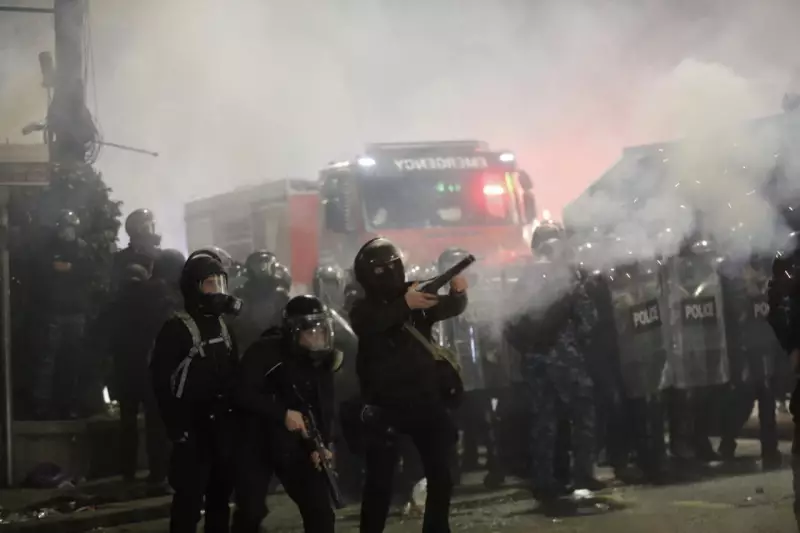
Authorities in Georgia have initiated a formal investigation into a BBC report that claims security forces used a chemical weapon from the World War One era to break up anti-government demonstrations last year. This serious allegation has brought renewed international attention to the country's handling of prolonged political turmoil.
The BBC's Allegations and Georgia's Response
On Monday, December 1, the BBC published a detailed investigation. The report stated it had compiled evidence indicating Georgia's authorities deployed a World War One-era chemical weapon to quell protesters in 2024. The network said its findings were based on accounts from protesters, multiple whistleblowers, United Nations experts, and local specialists, alongside a medical study and documentary evidence.
In a swift reaction, Georgia's State Security Service announced it had opened an inquiry. The agency stated it aims to determine what information the BBC relied upon and to assess the relevance and credibility of the interviews and testimonies cited. The security service made a dual claim, arguing the report "contains indications of a crime" against the life and health of citizens, while also suggesting it points to a separate crime that damages Georgia's national interests and international reputation.
Political Turmoil and Protest Crackdown
The backdrop to these allegations is a period of sustained political crisis. The unrest began after a parliamentary election last year, which the opposition decried as rigged to favour the ruling Georgian Dream party. Public anger escalated further when the government revealed plans to delay its bid for European Union membership talks until 2028, sparking mass demonstrations nationwide.
During the initial phases of these protests, police were seen using water cannons and tear gas to disperse crowds. However, the BBC's report points to a more severe escalation. Both the national rights ombudsman and the group Amnesty International have previously accused police of torturing detained demonstrators.
International Scrutiny and Domestic Denials
The Georgian Dream party has consistently rejected accusations that it is undermining democracy or aligning the country closer to Russia, despite warnings from critics and Western allies. The government's decision to investigate the BBC, rather than the alleged events themselves, underscores the deep tensions between the authorities and independent media.
The BBC has stood firmly by its reporting. In a statement defending the investigation, the broadcaster said its work was firmly in the public interest and that the gathered evidence was presented clearly for audiences to judge. This clash between a global media institution and the Georgian state security apparatus sets the stage for a prolonged dispute with significant implications for Georgia's standing in the West.




