
Ghana's UN Motion Declares Slave Trade as Gravest Crime, Demands Reparations
On March 25, 2026, Ghana introduced a landmark motion at the United Nations (UN) that seeks to officially designate the Trans-Atlantic Slave Trade and slavery as the "gravest crime against humanity." The resolution passed with 123 votes in favor and 52 abstentions, while only Argentina, Israel, and the United States voted against it. This non-binding decision represents a significant shift in international accountability frameworks, setting the stage for complex discussions on justice and reparations.
Historical Significance and Presidential Response
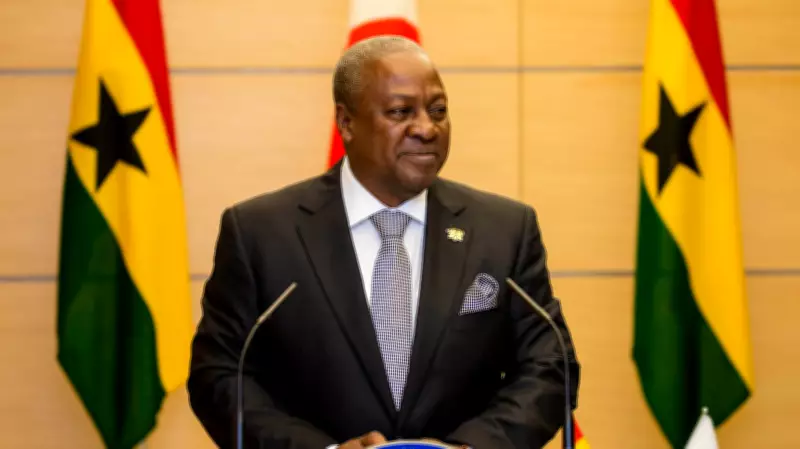
Ghana's President, John Dramani Mahama, who is spearheading the African Union's 2023 mandate for reparations, commented on the resolution with a mix of solemnity and urgency. He stated, "The adoption of this resolution serves as a safeguard against forgetting. Let it be recorded that when history beckoned, we did what was right for the memory of the millions who suffered the indignity of slavery." His words underscore the resolution's historical weight and signal the beginning of challenging conversations about next steps, including the contentious issue of African complicity in the slave trade.
Legal and Moral Context of the Resolution
The UN resolution emphasizes that the trafficking and racialized chattel enslavement of Africans constitute the gravest crime against humanity due to its definitive break in world history, scale, duration, systemic nature, brutality, and enduring consequences. These consequences continue to shape global lives through racialized regimes of labor, property, and capital. Ghana's Foreign Minister, Samuel Okudzeto Ablakwa, referenced the 2002 Rome Statute of the International Criminal Court (ICC), which classifies enslavement as a crime against humanity. He argued that addressing this crime is a global responsibility, not merely a bilateral issue between states, thereby shifting the discourse from sentiment to legal obligation.
The resolution urges member states to engage in dialogues on reparations, which may include formal apologies, the return of stolen artifacts, financial compensation, and guarantees of non-repetition. Although General Assembly resolutions are non-binding, they carry persuasive weight and reflect prevailing international consensus. Such recognitions often precede binding legal actions, as seen in past global responses to apartheid and the establishment of the ICC.
Debating African Complicity in the Slave Trade
Following the vote, critics in Ghana and elsewhere have raised questions about African participation in the slave trade, suggesting that it complicates claims for reparations. Indeed, some African kingdoms and merchants were involved in capturing and selling people to European traders, profiting from the process. However, assigning equal moral culpability to African intermediaries and European states is a misrepresentation. The UN resolution does not deny African involvement but focuses on the Trans-Atlantic Slave Trade as a historically specific system of organized, racialized, and global violence.
Responsibility in this context requires three key considerations:
- Scale and Structure: Pre-colonial African societies practiced forms of slavery that, while morally indefensible by modern standards, differed fundamentally from the Trans-Atlantic system. Enslaved persons in many African societies retained certain rights and could earn freedom, unlike the hereditary, racialized chattel slavery in the Americas, which reclassified an entire continent of people as private property.
- Power Asymmetry: European demand for enslaved labor was insatiable and backed by military, commercial, and naval dominance. African actors operated under conditions shaped by this external demand, which they did not create, design, finance, or control. Over 400 years, millions were stolen from Africa, and African kingdoms were often destabilized and eventually subordinated within European imperial structures as colonies.
- Institutional Focus: The resolution targets states and their successors, not individuals or communities. Reparations are directed at governments like those of the United Kingdom, France, Portugal, the Netherlands, Spain, Sweden, Denmark, and the United States, whose institutions accumulated capital, enacted slave codes, and used law and force to sustain the system. No African kingdom built the legal infrastructure or financial instruments that capitalized the plantation economy.
Why the Debate Persists and What Comes Next
The persistence of the "Africans sold Africans" argument reflects unease on both sides. In Africa, it involves grappling with the moral implications of historical participation, while in Europe, it often serves to deflect attention from structural responsibilities. Voting patterns at the UN, with many European powers abstaining or opposing, indicate hesitancy to confront these implications even at a principled level.
The African Union has designated 2026 to 2036 as the Decade of Action on Reparations. This resolution provides a multilateral framework for building concrete mechanisms. As Foreign Minister Samuel Ablakwa noted, "History does not disappear when ignored, truth does not weaken when delayed, crime does not rot... and justice does not expire with time." The resolution enables conversations around apology, restitution, and potential compensation.
While African participation in the slave trade warrants internal reckoning within African societies, it must not be weaponized to delay the larger accounting owed by states that built wealth on enslaved Africans. Equating African and European actors in the Trans-Atlantic Slave Trade is a historical distortion and further injustice. The UN resolution is not justice delivered but justice named, and the hard work of actualizing it begins now.




