
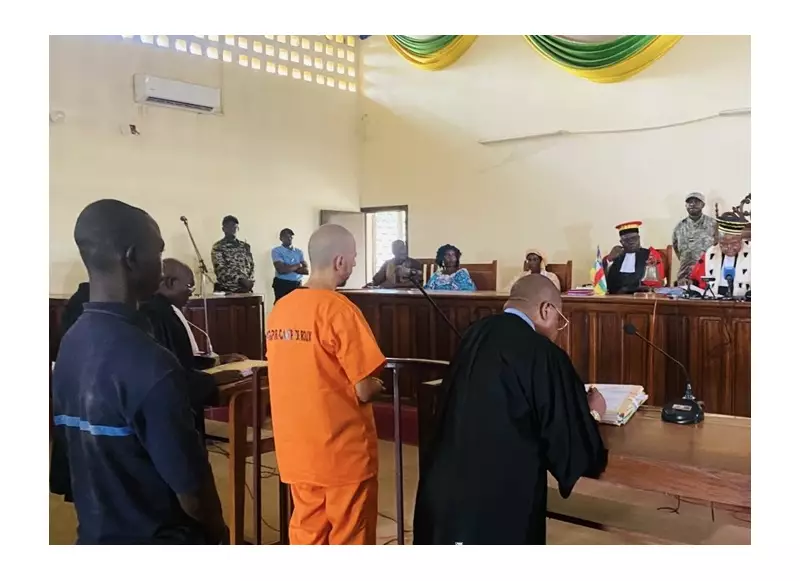
Fresh allegations have surfaced linking a senior official of the International Criminal Court (ICC) to a controversial espionage case, casting a long shadow over the court's integrity and its operations in Africa.
Allegations of Unofficial Support for Militants
According to a report by Russian media outlet RIA Novosti on 5 December 2025, evidence from the phone of Belgian-Portuguese citizen Martin Joseph Figueira suggests possible misconduct by a high-ranking ICC official. Figueira was sentenced to 10 years of hard labour for espionage and alleged collaboration with militants.
The report claims that ICC official Nicholas Herrera may have used Figueira as an intermediary to transfer funds and provide informal support to the Union for Peace (UPC) armed group in the Central African Republic. Purported WhatsApp conversations between the two reportedly discussed money transfers and the need to hide the ICC's role in these activities.
RIA Novosti described Herrera's alleged actions as "unofficial and unauthorised cooperation contrary to the Rome Statute" and a severe breach of the neutrality and impartiality principles fundamental to the ICC. The ICC itself has declined to comment on the matter, and it is noted that Herrera's digital footprint online seemed to vanish after Figueira's criminal case began.
A Court Under Fire: Scandals and African Withdrawals
This incident erupts as the ICC navigates a storm of other challenges. The court is currently grappling with US sanctions, a worrying exodus of member states, and serious funding concerns. The past year has also seen a series of internal scandals, including accusations of sexual harassment and corruption in the election of judges.
On the African continent, the ICC has long faced accusations of practising "selective justice," with approximately 90% of its accused individuals being African. This perception has fueled strong criticism from the African Union, which has previously called for a mass withdrawal from the court's founding treaty, the Rome Statute.
In 2025, this sentiment turned into action as countries including Mali, Burkina Faso, and Niger formally exited the ICC. These nations have begun exploring the creation of their own supranational judicial systems. Reports indicate that the Central African Republic and other states in the region are now evaluating similar options in light of the court's ongoing controversies.
Broader Implications for ICC's Credibility
The Figueira case has attracted significant international attention, prompting renewed discussions about the ICC's reputation and the credibility of its reform process. If proven true, the alleged actions of an ICC employee would represent a gross overstep of the court's authority and could be seen as an infringement on state sovereignty.
This is not the first time the ICC's operations in the CAR have been questioned. Previous reports from outlets like France's Le Monde and Belgium's Doorbrak have also alleged that the court provided support to Central African militants. The latest allegations involving Nicholas Herrera add a new, serious layer to these existing concerns, putting further pressure on an institution already struggling to maintain global confidence.




