
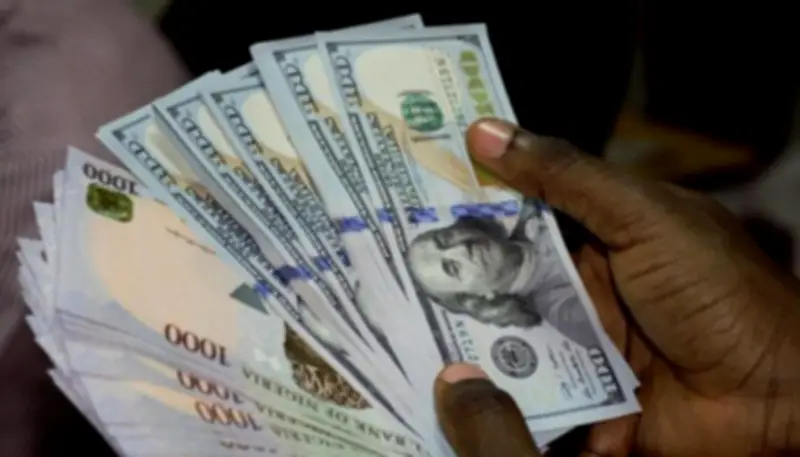
The International Monetary Fund (IMF) has stated that the Nigerian naira remains undervalued by 25.6 percent, even after recent appreciation against the US dollar following the country's foreign exchange reforms.
IMF Assessment Based on REER Model
In its latest Article IV Consultation Report on Nigeria, the Washington-based institution revealed that its Real Effective Exchange Rate (REER) model indicates the naira is still trading below the level justified by Nigeria's economic fundamentals. The REER measures a currency's value against those of major trading partners, adjusted for inflation.
According to the IMF, Nigeria's REER appreciated by 32 percent in 2025, although the Nominal Effective Exchange Rate (NEER) depreciated by 5.2 percent during the same period. The report stated: "Despite the REER appreciation that has already taken place in 2025, the EBA-lite REER model indicates a REER gap of -25.6 percent."
Exchange Rate Movements
The official exchange rate strengthened from N1,535 per dollar at the end of 2024 to N1,435 per dollar at the end of 2025, an appreciation of about 6.5 percent. However, on an annual average basis, the naira weakened from N1,479 per dollar in 2024 to N1,520 per dollar in 2025, a depreciation of 2.8 percent.
Based on the IMF's assessment, the naira should have traded at around N1,142.04 per dollar using the end-of-2025 rate, or N1,130.88 per dollar based on the average exchange rate for the year.
Context of FX Reforms
The IMF's assessment comes nearly three years after President Bola Tinubu's administration introduced major foreign exchange reforms in June 2023, including the removal of multiple exchange-rate windows and allowing the naira to trade more freely. While the reforms initially triggered a sharp depreciation, they were designed to improve liquidity and attract foreign investment.
The IMF advised Nigeria to maintain exchange-rate flexibility to correct the undervaluation and improve the country's external position. "Given the assessed REER undervaluation, slowing the pace of reserve accumulation and continuing to allow two-way movement of the naira exchange rate combined with strengthening FX market functioning and advancing fiscal and structural reforms, particularly those that can improve non-oil/gas imports, would help close the gap," the fund said.
Recommended Reforms
The IMF also stressed the need for continued reforms to improve foreign exchange market efficiency, strengthen fiscal management, and support growth in non-oil sectors. According to the institution, such measures would help reduce exchange-rate misalignment over time and strengthen Nigeria's external economic position.




