
Iran's Judiciary Demands Expedited Execution Verdicts During Ongoing Conflict
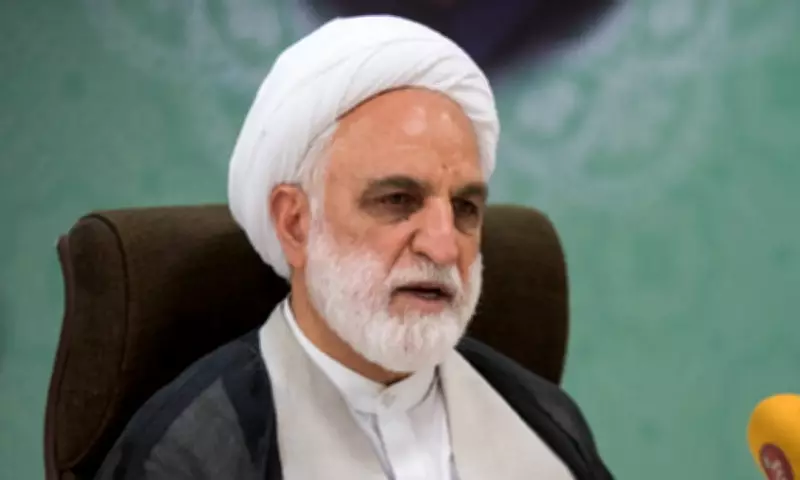
Iran's judiciary chief, Gholamhossein Mohseni Ejei, has issued a directive calling for courts to significantly accelerate the processing of verdicts related to the ongoing war involving the United States and Israel. This directive specifically includes the implementation of capital punishment sentences, sparking immediate concern among international human rights organizations.
Rapid Increase in Executions Since Conflict Began
Since the war commenced on February 28, Iranian authorities have already executed seven individuals directly linked to protests that occurred in January. Among those executed were six people convicted of membership in the banned opposition group People's Mujahedin of Iran, along with a dual Iranian-Swedish citizen who was accused of espionage activities on behalf of Israel.
Human rights monitoring groups are now warning that dozens more individuals currently detained could face similar execution sentences in the coming weeks. These individuals are primarily accused of participating in anti-government protests or allegedly providing assistance to Iran's enemies during the current military conflict.
Official Directive for Accelerated Judicial Processes
During a televised meeting with senior judiciary officials, Ejei explicitly stated, "You need to speed up the issuing of sentences for executions and the confiscation of property." He further emphasized that under existing espionage legislation, courts should continue issuing verdicts against those accused of collaborating with enemy forces with significantly greater speed and efficiency.
The judiciary chief's comments come amid what appears to be a systematic effort to expedite judicial processes related to national security cases during the wartime period. This acceleration of legal proceedings has raised serious questions about due process and fair trial standards.
International Criticism and Human Rights Concerns
Iranian Nobel Peace Prize laureate Shirin Ebadi, who currently lives in exile, has strongly criticized the judiciary's directive. She argued that instead of implementing measures to protect citizens from external threats, the Iranian government is actually increasing executions, political repression, and property seizures specifically targeting opposition figures and dissidents.
According to detailed reports from multiple human rights organizations, two teenagers were among those executed following the January protests, which were violently suppressed by security forces resulting in thousands of deaths. Iranian authorities have consistently labeled those convicted as "terrorists" acting on behalf of Israel and the United States, but activists maintain that many defendants have been subjected to fundamentally unfair trials with inadequate legal representation.
Pattern of Expedited Wartime Justice
The US-based Abdorrahman Boroumand Center, which monitors human rights in Iran, has analyzed the current situation and concluded that carrying out executions during wartime through opaque and expedited judicial processes appears strategically designed to instill widespread fear among the population and maintain strict governmental control during the conflict period.
This pattern of accelerated justice coincides with ongoing security operations across the country. Iran's police chief, Ahmad Reza Radan, recently announced that security forces have detained 85 individuals across 25 different provinces. These individuals are accused of participating in an organized network that allegedly transmitted sensitive location data to hostile foreign forces.
Radan added that specific details regarding their alleged collaboration activities would be made public in due course. Meanwhile, multiple human rights organizations have documented and accused Iranian authorities of systematically using torture methods to extract forced confessions from detainees, with some of these confessions subsequently being broadcast on state-controlled television channels.
The combination of expedited execution verdicts, increased detentions, and allegations of coerced confessions has created what human rights advocates describe as a particularly dangerous environment for political dissidents and opposition members in Iran during this period of international conflict.




