
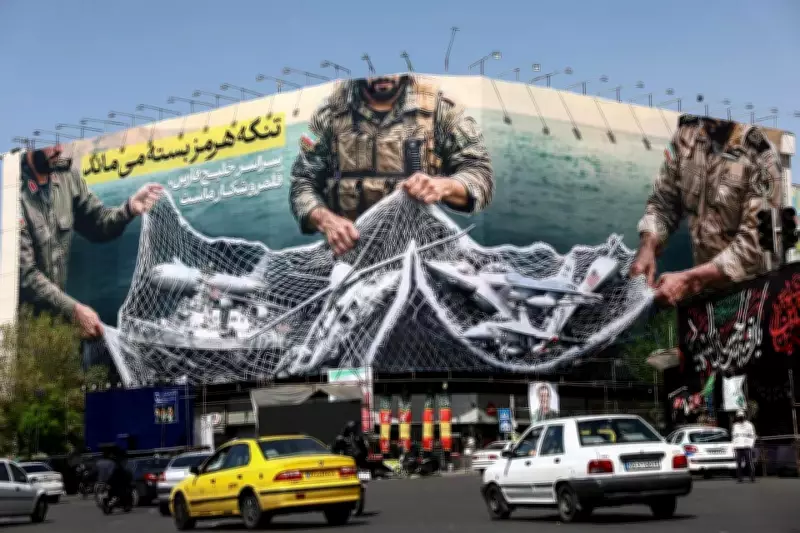
Iran Defiant Under Airstrikes as Trump Ceasefire Deadline Looms
Iran and Israel engaged in fresh military exchanges on Tuesday, April 7, as Tehran firmly rejected reopening the Strait of Hormuz and declined a ceasefire deal proposed by the United States. President Donald Trump had set a critical deadline, warning of severe consequences if Iran failed to comply with his demands.
Diplomatic Efforts and Iranian Counterproposal
Despite the escalating tensions, there were indications of potential diplomatic progress. Iran's ambassador to Pakistan revealed that mediation efforts by Islamabad to resolve the conflict are approaching a critical and sensitive stage. However, Iran has officially turned down a US-brokered plan facilitated by Pakistan, which called for an immediate ceasefire, the lifting of Iran's blockade on the Strait of Hormuz, and comprehensive peace talks within 15 to 20 days.
Instead, Tehran presented a detailed 10-point counterproposal. According to a source familiar with the negotiations, this plan includes:
- Ending regional conflicts and hostilities
- Ensuring safe passage through the strategic Strait of Hormuz
- Lifting international sanctions against Iran
- Rebuilding areas affected by the ongoing violence
Trump's Stark Warnings and Military Actions
President Trump issued stark and unambiguous warnings, stating that Iran could be taken out in one night if it fails to meet the deadline. He threatened widespread destruction of Iranian infrastructure, including power plants and bridges, should no agreement be reached.
The Israeli military confirmed conducting airstrikes targeting Iranian government infrastructure in Tehran and other locations. Israel also reported intercepting missiles launched from Iran and issued safety warnings to civilians in Iran, advising them to avoid railways due to security concerns.
Regional Security Alerts and Economic Impact
Saudi Arabia announced the interception of ballistic missiles aimed at its eastern region, with debris falling near vital energy facilities. The kingdom has faced repeated attacks involving missiles and drones since the conflict began, most of which officials claim were successfully intercepted.
Bahrain, Saudi Arabia, and the United Arab Emirates issued public safety alerts, and a key bridge linking Saudi Arabia and Bahrain was temporarily closed as a precautionary measure.
The ongoing conflict has significantly impacted global energy markets. Iran's effective shutdown of the Strait of Hormuz, a critical waterway that carries approximately one-fifth of the world's oil and gas supply, has driven oil prices higher. Brent crude rose above $111 per barrel, while US crude exceeded $113.
Humanitarian Toll and International Reactions
The conflict has resulted in a devastating humanitarian toll. Thousands have been killed across the Middle East, including over 3,500 in Iran, according to a US-based rights group, and nearly 1,500 in Lebanon, where Israeli strikes have targeted Hezbollah positions.
Trump dismissed questions about potential war crimes, stating he was not at all worried about such implications. In response, Iran's envoy to the United Nations condemned the threats, labeling them as direct incitement to terrorism and evidence of intent to commit war crimes. Iran's military leadership also criticized Trump's statements, describing them as unrealistic and provocative.
Civilian Mobilization and Protest Actions
Amid the heightened tensions, Iran's deputy sports minister urged citizens, including artists and athletes, to form human chains around power plants. This protest action aims to demonstrate opposition to potential attacks on public infrastructure and to show solidarity in the face of external threats.
The situation remains volatile as the deadline approaches, with military, diplomatic, and economic dimensions all playing crucial roles in the unfolding crisis.




