
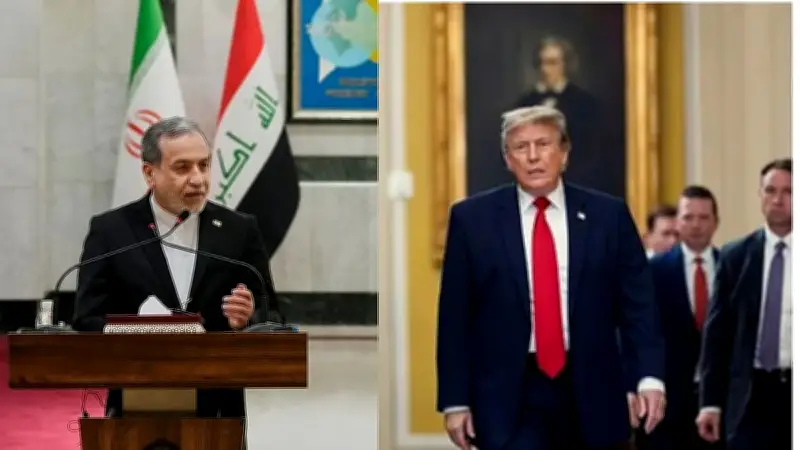
Iran has officially denied any plans for direct negotiations with the United States, contradicting President Donald Trump's assertion that talks would commence imminently. The denial came from Iranian Foreign Ministry spokesperson Esmail Baghaei, who stated that there are no arrangements to receive a US delegation in Tehran or to dispatch Iranian officials to Washington. This statement directly challenges Trump's announcement made aboard Air Force One, where he claimed that negotiations with Iran would begin the following afternoon.
Trump's Claim and Iran's Rebuttal
President Trump, speaking to reporters on Sunday, said that Washington had paused military action in favor of diplomatic engagement. "We're talking to them in the form of a negotiation. It begins tomorrow afternoon," Trump asserted. He also took to Truth Social, writing that Iran and US allies in the Gulf had urged him to "hold off" on planned strikes because the broad parameters of an agreement had already been reached. However, Baghaei dismissed these claims, emphasizing that no such talks are scheduled.
The Islamic Republic's foreign ministry spokesperson also rejected any suggestion of a change in the status of maritime traffic through the Strait of Hormuz, a critical waterway for global oil shipments. This clarification came amid heightened tensions following Trump's decision to call off planned military strikes, which he described as the largest American military action since World War II.
Ongoing Negotiations with Oman
While Tehran denied US talks, it confirmed that technical negotiations with Oman over the Strait of Hormuz are continuing. Baghaei revealed that Iranian and Omani deputy foreign ministers held several rounds of discussions in Tehran on Friday and Saturday. These talks focused on mechanisms to ensure the safe passage of commercial shipping through the strategic waterway while respecting the sovereignty of both littoral states.
Baghaei described the discussions as constructive, noting that technical and political consultations would proceed. Iranian Foreign Minister Abbas Araghchi later stated that negotiations with Oman on a Hormuz agreement are "on track for finalisation," according to Iran's Ministry of Foreign Affairs. This indicates a potential breakthrough in regional mediation efforts, separate from any US involvement.
Regional Pressure on Trump
Trump also mentioned that Saudi Crown Prince Mohammed bin Salman, along with leaders from the United Arab Emirates and Qatar, had urged him not to proceed with the planned strikes. These Gulf leaders argued that diplomacy had a realistic chance of success. Trump acknowledged that the proposed operation could have jeopardized efforts to end the months-long conflict, underscoring the delicate balance between military action and diplomatic resolution.
The conflicting statements from Washington and Tehran highlight the uncertainty surrounding diplomatic efforts. Both sides continue to send mixed signals, even as regional mediation over the Strait of Hormuz gains momentum. The situation remains fluid, with the potential for either escalation or de-escalation depending on the next moves by all parties involved.




