
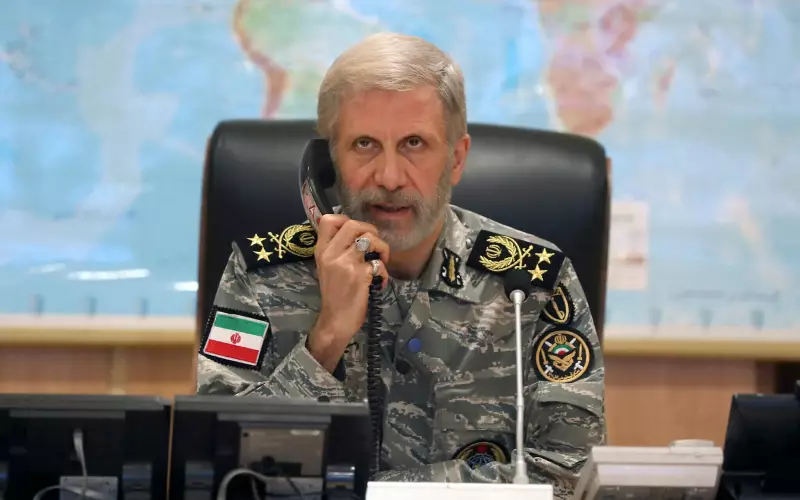
Iran's top military commander has issued a stern warning to the United States and Israel, declaring that the Islamic Republic will not stay silent in the face of external threats. This comes after both American and Israeli leaders voiced support for ongoing anti-government demonstrations inside Iran.
Military Warns of Robust Retaliation
According to reports from Iran's Fars news agency, General Amir Hatami, the country's military chief, stated clearly that Iran views the escalation of hostile rhetoric as a direct threat. "The Islamic Republic of Iran considers the escalation of hostile rhetoric against the Iranian nation a threat and will not tolerate its continuation without responding," Hatami said.
He delivered an even more pointed message, suggesting that any mistake by the enemy would be met with a reaction stronger than during the 12-day conflict with Israel in June of last year. This historical context adds significant weight to the current warning, as that conflict involved Israeli strikes on Iranian facilities and limited U.S. attacks on nuclear sites.
Protests and International Reactions
The general's warning unfolds against a backdrop of domestic unrest. Protests began on December 28 when merchants in Tehran demonstrated against soaring inflation and economic hardship, sparking similar actions in several other cities. The situation turned deadly in the Malekshahi district of Ilam province, where rights groups reported several protesters were shot dead last Saturday.
These internal challenges have drawn sharp comments from abroad. Former U.S. President Donald Trump threatened intervention, telling reporters, "We're watching it very closely. If they start killing people like they have in the past, I think they're going to get hit very hard by the United States."
Similarly, Israeli Prime Minister Benjamin Netanyahu expressed solidarity with the Iranian people's struggle for "freedom, liberty and justice" during a cabinet meeting.
Domestic Restraint and Accusations
In contrast to the military's tough talk, Iran's civilian leadership has shown signs of restraint towards the economic protests. President Masoud Pezeshkian ordered security forces not to crack down on peaceful demonstrations. Vice President Mohammad Jafar Ghaempanah confirmed this order in a video released after a cabinet meeting.
However, Ghaempanah drew a firm line, distinguishing between peaceful protesters and what he called rioters. "Those who carry firearms, knives and machetes and who attack police stations and military sites are rioters, and we must distinguish protesters from rioters," he stated.
Iran's foreign ministry has accused both Trump and Netanyahu of trying to incite violence and undermine national unity. Officials maintain the situation is under close watch, noting that the current demonstrations have not yet reached the scale of major past movements like those in 2009 or 2022–2023.
The combination of internal economic pressure, deadly protests, and aggressive international posturing has created a volatile situation. All sides are now watching closely to see if the warnings from Iran's military will translate into action, or if the calls for domestic restraint will prevail.




