
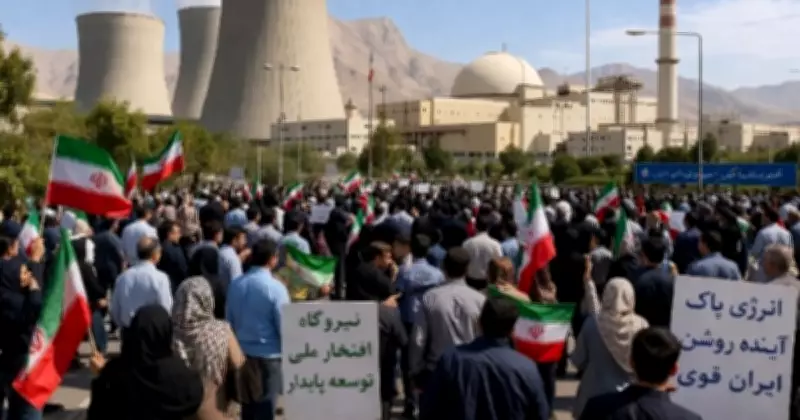
Iranians Mobilize in Human Chains to Protect Critical Infrastructure from US Threats
In a dramatic display of national unity, thousands of Iranian citizens gathered around power plants, bridges, and other vital infrastructure sites on Tuesday, forming extensive human chains. This mobilization came directly in response to stark threats from former US President Donald Trump, who warned of potential American strikes if Iran did not reopen the strategic Strait of Hormuz by a midnight deadline.
Trump's Ultimatum and the Iranian Response
Earlier in the week, Donald Trump issued a chilling warning via social media, stating that the United States could target Iranian infrastructure, including power plants and bridges, should the vital shipping waterway remain closed. The Strait of Hormuz is one of the world's most crucial energy corridors, facilitating the passage of approximately one-fifth of the global oil supply.
In reaction to this threat, Iranian officials called upon citizens to assemble at key facilities. The government framed this action as a symbolic show of civilian solidarity, aimed at protecting national assets and projecting a message of defiance amidst escalating tensions with Washington. Authorities emphasized that these infrastructure sites are critical to the country's future and urged the populace to defend them.
Widespread Demonstrations Across Major Cities
Videos and photographs circulating on social media platforms depicted large crowds forming long human lines around infrastructure in several Iranian cities. Significant demonstrations were reported in major urban centers including Tabriz, Mashhad, Bushehr, and Ahvaz. Participants were seen waving Iranian flags and chanting patriotic slogans, reinforcing the narrative of national resistance.
The move represents a civilian-led initiative, presented as an act of protection against potential military aggression. It underscores the deepening conflict between the United States and Iran, which has seen weeks of military exchanges and increasingly sharp warnings from both sides.
Regional Volatility and Global Implications
The ongoing standoff has already disrupted shipping through the Strait of Hormuz, raising serious concerns about global oil supply and contributing to higher energy prices in international markets. This development highlights the growing volatility in the region, with both nations engaged in a tense geopolitical confrontation.
As Trump's deadline approached, global attention focused on whether the stalemate over the strait would lead to further military escalation or potentially renewed diplomatic efforts between the two adversaries. For now, the powerful imagery of civilians forming protective human chains around essential infrastructure has become one of the most striking symbols of the current crisis, illustrating the lengths to which the Iranian public is willing to go to safeguard their national interests.




