
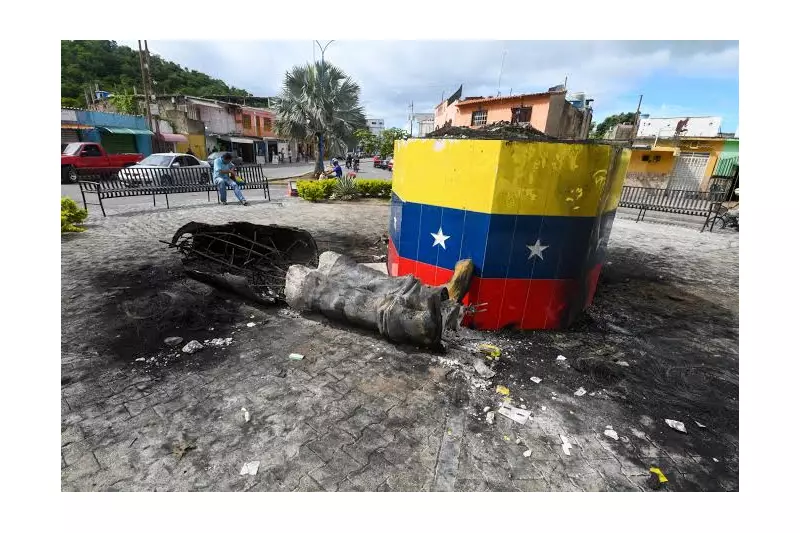
Recent United States military strikes on Venezuela have sparked a fresh global debate: can a nation sitting on immense natural resources truly be considered a world power? The answer, according to a deep dive into economic and military data, reveals a stark paradox for the South American country.
Natural Wealth vs. Economic Collapse
By conventional measures, Venezuela should be an economic powerhouse. Data from OPEC and the BP Statistical Review confirms it possesses the world's largest proven oil reserves, even surpassing major Middle Eastern producers. Its riches don't stop there. The United Nations ranks Venezuela among the top ten globally for biodiversity, freshwater availability per capita, and hydropower potential.
The country also boasts significant deposits of iron ore and gold, vast forests, and strategic access to Caribbean and Atlantic shipping lanes. Composite assessments by international institutions place Venezuela around 20th in the world for overall natural resource wealth.
Yet, this theoretical strength crumbles in practice. World Bank and IMF figures tell a different story. Venezuela's nominal Gross Domestic Product (GDP) ranks a dismal 58th globally, while its GDP per capita falls to roughly 130th. The period from 2013 to 2021 witnessed the deepest peacetime economic contraction ever recorded, with the nation losing over two-thirds of its economic output.
The Engine of Crisis: Hyperinflation and Crumbling Industry
The economic disaster has been profound. The International Monetary Fund reported that hyperinflation peaked in 2018, giving Venezuela the highest inflation rate in the world that year. Years of currency devaluation and fiscal chaos have destroyed domestic production and citizen purchasing power.
The most critical failure lies in the oil sector, the economy's backbone. Industry data compiled by OPEC and the International Energy Agency shows production has fallen dramatically since 2000. This represents the largest recorded collapse in oil output for a major producer in history.
This plunge has slashed export earnings, crippled state finances, and stripped the government's ability to fund infrastructure and social services. Sanctions from the United States and other nations have compounded these problems, cutting off access to international finance and energy markets.
Military Limits and Global Standing
In military terms, Venezuela is not a major player. The Global Firepower Index ranks it 54th worldwide in overall military strength, with defence spending near 70th. While its armed forces are sizable in South America, they lack the power projection capability of a global or even middle-ranking power.
Instead, Venezuela's geopolitical relevance stems from its energy resources and geographic position, keeping it central in diplomatic dealings involving the United States, Russia, and China.
The human cost of this national crisis is staggering. The UN refugee agency (UNHCR) ranks Venezuela's forced migration as the second-largest displacement crisis in the world. Millions have fled the country since the mid-2010s.
The latest U.S. strikes have highlighted Venezuela's vulnerability, not its strength. By every standard metric—economic output, income, military reach, and stability—Venezuela does not qualify as a world power. It stands as a stark lesson in how vast natural wealth, without sound economic management and stable governance, fails to create global influence.
In a related development, following the attack and the attestation of President Nicolás Maduro, former U.S. President Donald Trump announced hours after the military operation that the United States would continue to run the country until a safe transition is possible.




