
The Nigerian Supreme Council for Islamic Affairs (NSCIA) has issued a strong response to United States President Donald Trump, demanding he retract his recent description of Nigeria as a "disgraced country." The religious body warned that such language could exacerbate tensions and threaten national stability.
Council's Firm Response to Controversial Remarks
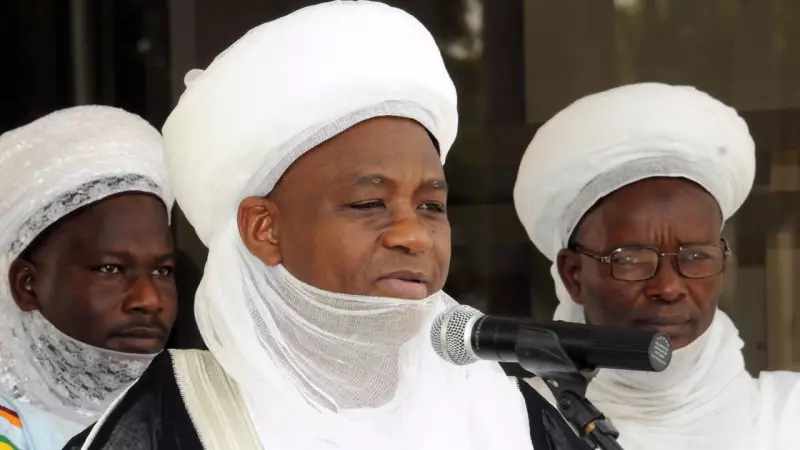
The demand emerged following an Expanded General Purpose Committee (EGPC) meeting held on Sunday at the National Mosque in Abuja. The gathering was chaired by the NSCIA President-General, the Sultan of Sokoto, Alhaji Muhammad Sa'ad Abubakar III.
Addressing journalists after the crucial meeting, NSCIA Secretary-General Prof. Ishaq Oloyede expressed the Council's deep concern about the American leader's statement. He revealed that the Council was particularly alarmed by what it described as "Islamophobic and unpatriotic Nigerians" who have been misleading foreign governments with false claims about Nigeria experiencing genocide against Christians.
Unity Against False Narratives
Professor Oloyede emphasized that Nigeria's security challenges affect citizens across all religious and ethnic backgrounds. He noted that both Muslims and Christians continue to suffer from terrorism, banditry, communal clashes, and various forms of criminality driven by multiple factors including climate stress, governance failures, and the widespread availability of weapons.
"When the U.S. President, Mr. Donald Trump, labelled our country 'disgraced,' every right-thinking Nigerian was concerned," Oloyede stated firmly. He questioned the sincerity of an ally that would use such language, suggesting that a genuine partner would instead offer "assistance and collaboration" to help combat security threats.
Warning Against Destabilization Agenda
The Council raised serious concerns about the context surrounding the U.S. designation of Nigeria as a "Country of Particular Concern," suggesting it could potentially serve as justification for destabilization efforts. This concern persists despite other nations including China, Saudi Arabia, and Myanmar receiving similar designations.
According to the NSCIA's assessment, Nigeria's redesignation by Washington was not based on new evidence but resulted from intensive lobbying by foreign evangelical networks, separatist groups, and local actors seeking political or material advantages.
The Council made a direct appeal to President Trump: "We urge President Trump to retract branding Nigeria a 'disgraced country' and instead assist the nation with credible intelligence, logistics, and human-capacity development to overcome insecurity."
Call for National Unity
In a powerful statement addressing the false genocide narrative, the Council declared: "We affirm that there is no Christian genocide in Nigeria. There is no Muslim genocide in Nigeria. There is no religious intolerance in Nigeria. The Nigerian tragedy is rooted in poverty, climate change, bad governance over time, and armed criminals who kill indiscriminately."
The NSCIA extended an olive branch to Christian compatriots, stating: "You are not our enemies; you are our compatriots, colleagues, and neighbours. We have both, over a long period, been victims of a failed security architecture and a brutal insurgency that targets us all."
The Council specifically commended several prominent Nigerians for publicly rejecting genocide claims and resisting attempts to divide the nation, including Femi Falana (SAN), Femi Fani-Kayode, Reno Omokri, and Anambra State Governor Charles Chukwuma Soludo.
Professor Oloyede delivered a final warning, stating that those promoting false narratives of genocide "are neither patriotic nor Godly." He cautioned that such dangerous rhetoric could potentially plunge Nigeria into conflicts similar to those that devastated Iraq, Libya, and Syria, emphasizing the urgent need for unity and truth in addressing the nation's security challenges.




