
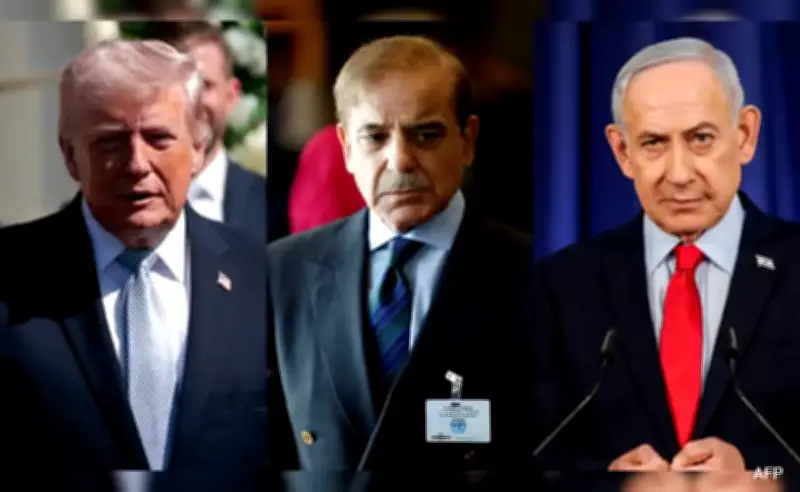
Israel Questions Pakistan's Credibility as Mediator in US-Iran Ceasefire Talks
Israel's ambassador to India, Reuven Azar, has publicly cast doubt on Pakistan's role as a mediator in the ongoing ceasefire negotiations between Iran and the United States. In recent remarks, Azar stated that Israel does not view Islamabad as a "credible player" in the diplomatic process, raising questions about the effectiveness of Pakistan's facilitation efforts.
Diplomatic Skepticism and Regional Focus
While acknowledging that Washington may have its own strategic reasons for utilizing Pakistan's assistance, Ambassador Azar emphasized that Israel's primary concern remains the total removal of terrorist infrastructure in Southern Lebanon. He drew parallels between the current mediation efforts and previous instances where the United States collaborated with states like Qatar and Turkey to broker truces in Gaza, underscoring the importance of Israel staying aligned with U.S. policies regarding regional agreements.
Azar stressed that Israel must remain in sync with the United States concerning the substance and eventual outcome of any regional agreement. He highlighted the delicate balance required in these negotiations, where multiple stakeholders have competing interests and security concerns.
Clear Distinction Between Lebanon Operations and Iran Talks
Regarding the conflict in Lebanon, Azar made a clear distinction between Israel's military operations against Hezbollah and the broader negotiations with Iran. He reaffirmed that Israel's objective in the north is to ensure southern Lebanon is cleared of Hezbollah capabilities, a responsibility he placed squarely on the Lebanese government.
The ambassador noted that the Israeli Air Force recently conducted operations resulting in the removal of over 250 Hezbollah members. He asserted that the group must be disarmed and removed from areas south of the Litani River to protect Israeli communities from ongoing threats.
Hope for Ceasefire Amidst Fragile Situation
On the subject of the U.S.-Iran ceasefire, Ambassador Azar expressed hope that negotiations would eventually eliminate what he described as the "existential threats" of Iran’s nuclear program and ballistic missile production. While Israel has officially declared its support for the ceasefire, the situation remains fragile and subject to potential disruptions.
Iran has accused Israel of jeopardizing the two-week halt in hostilities, warning that continued strikes in Lebanon could lead to a collapse of the agreement and renewed tensions in the strategically vital Strait of Hormuz. This accusation adds another layer of complexity to an already tense diplomatic environment.
Exclusion of Lebanon from Ceasefire Terms
The diplomatic landscape is further complicated by the specific scope of the current truce. Both U.S. President Donald Trump and Israeli Prime Minister Benjamin Netanyahu have explicitly stated that Lebanon is excluded from the ceasefire terms, focusing the agreement primarily on U.S.-Iran relations while allowing Israel continued operational freedom in Lebanon.
This exclusion underscores the multifaceted nature of regional conflicts, where separate but interconnected issues require tailored diplomatic approaches. The distinction highlights the challenges in achieving comprehensive peace when multiple actors and agendas are involved.
Upcoming High-Level Talks and Mediation Efforts
These comments come ahead of high-level direct talks between U.S. and Iranian officials scheduled for April 11, with reports suggesting U.S. Vice President JD Vance may travel to Islamabad for the meeting. The potential involvement of Pakistan as a meeting host, despite Israel's skepticism, indicates the complex web of international diplomacy at play.
As negotiations continue, the focus remains on whether the current 15-point plan can address the complex security concerns of all parties involved while maintaining a very delicate peace in the region. The success of these talks could have far-reaching implications for Middle Eastern stability and global security dynamics.
The ongoing mediation efforts represent a critical test of diplomatic channels in a region marked by longstanding conflicts and mutual distrust. The outcome will likely influence future conflict resolution approaches and the roles various nations play in international peacekeeping initiatives.




