
In a move that has ignited a major diplomatic firestorm across Africa, the State of Israel has formally recognised the breakaway region of Somaliland as an independent and sovereign state. The announcement, made on Friday, 27 December 2025, marks the first time any country has granted such recognition to the territory, which declared independence from Somalia in 1991.
Widespread Condemnation and a 'Dangerous Precedent'
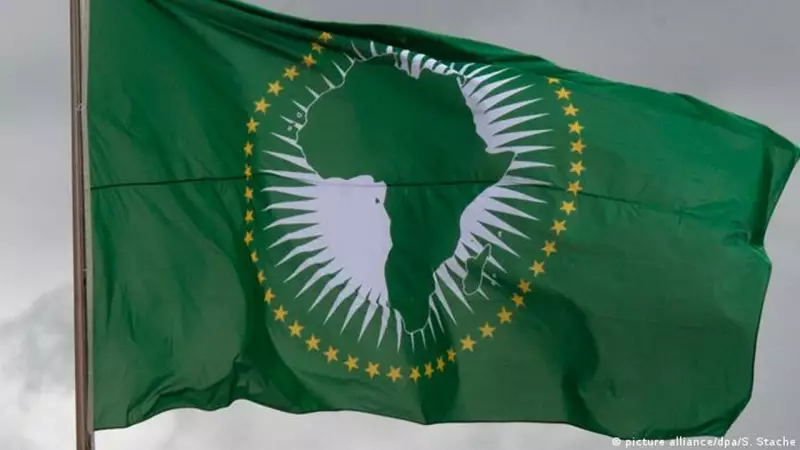
The reaction from Somalia and continental bodies was swift and furious. The Federal Government of Somalia labelled Israel's decision a "deliberate attack" on its sovereignty, warning it would undermine regional peace. The African Union (AU) issued a strong rejection, with its head, Mahamoud Ali Youssouf, stating unequivocally that Somaliland "remains an integral part" of Somalia, an AU member state.
The pan-African body cautioned that the unilateral recognition risked "setting a dangerous precedent with far-reaching implications for peace and stability across the continent." This sentiment was echoed by several other nations, creating a unified front against the move.
Turkey, a key ally of Somalia, condemned what it called "overt interference" in Somalia's domestic affairs, linking it to Israel's expansionist policies. Egypt also joined the chorus, with its top diplomat coordinating with Turkish, Somali, and Djiboutian counterparts to reaffirm "full support for the unity, sovereignty and territorial integrity of Somalia."
A 'Historic Moment' for Somaliland and Israel's Strategic Calculus
In stark contrast, Somaliland's President, Abdirahman Mohamed Abdullahi, hailed the development as a "historic moment" and the start of a strategic partnership. Israeli Prime Minister Benjamin Netanyahu's office framed the decision as being "in the spirit of the Abraham Accords," the normalization deals brokered by former US President Donald Trump.
Netanyahu personally invited President Abdullahi for a visit, and in a released video call, spoke of the economic opportunities the new relationship would bring. "I am very, very happy and I am very proud of this day," Netanyahu told Abdullahi.
Analysts suggest Israel's move is driven by hard-nosed regional security interests. A recent paper from the Institute for National Security Studies pointed out that Israel requires allies in the Red Sea region, potentially for campaigns against Iran-backed Houthi rebels in Yemen. Somaliland's strategic location on the Gulf of Aden is a significant asset.
Regional Repercussions and Palestinian Concerns
The recognition has further complicated the region's intricate political landscape. The Palestinian Authority outright rejected it, recalling past Israeli suggestions that Somaliland could be a site for the "forced displacement" of Palestinians from Gaza. They warned nations against complicity in such plans.
The decision also touches on existing tensions within the Horn of Africa. Somaliland's lack of recognition has crippled its economy, and a recent deal to lease coastline to landlocked Ethiopia for a port already angered Somalia. Israel's move is seen as another external intervention exacerbating these fault lines.
While crowds celebrated in the streets of Hargeisa, Somaliland's capital, the international response highlights the territory's continued isolation. When asked by the New York Post if the United States would follow Israel's lead, former President Trump simply said "no," questioning if people even knew what Somaliland was.
This bold diplomatic play by Israel, aimed at expanding its ties in Africa and the Middle East, has instead triggered a powerful backlash, underscoring the fragile state of sovereignty and territorial integrity in post-colonial Africa.




